Potassium Hydroxide → 2-((5-Bromo-3-pyridyl)methyl)-1-azabicyclo[2.2.2]octan-3-one
Reaction equation

BrC1C=C(CC2CC3CCN2CC3)C=NC=1.BrC1C=C(C=O)C=NC=1.Cl.N12CCC(CC1)C(=O)C2.[OH-].[K+].[C].[C].[Br:40][C:41]1[CH:42]=[C:43]([CH:47]=[C:48]2[C:53](=[O:54])[CH:52]3[CH2:55][CH2:56][N:49]2[CH2:50][CH2:51]3)[CH:44]=[N:45][CH:46]=1.C([BH-](C(CC)C)C(CC)C)(CC)C.[Li+].C([BH-](C(CC)C)C(CC)C)(CC)C.[K+].[BH4-].[Na+]>CO.O1CCCC1.O.O.O.O.O.O.[Ni]Cl>[Br:40][C:41]1[CH:42]=[C:43]([CH2:47][CH:48]2[C:53](=[O:54])[CH:52]3[CH2:55][CH2:56][N:49]2[CH2:50][CH2:51]3)[CH:44]=[N:45][CH:46]=1Participants
Reactant 9
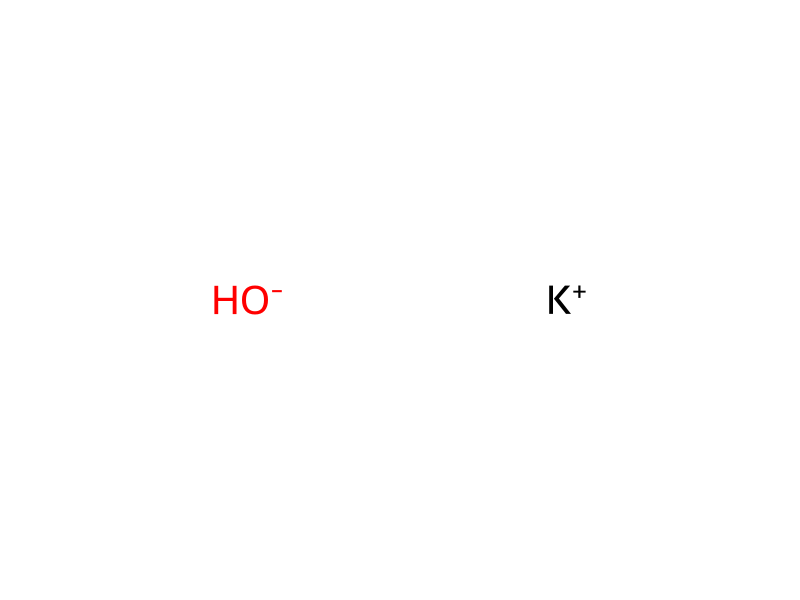 HCID 14797Potassium Hydroxide
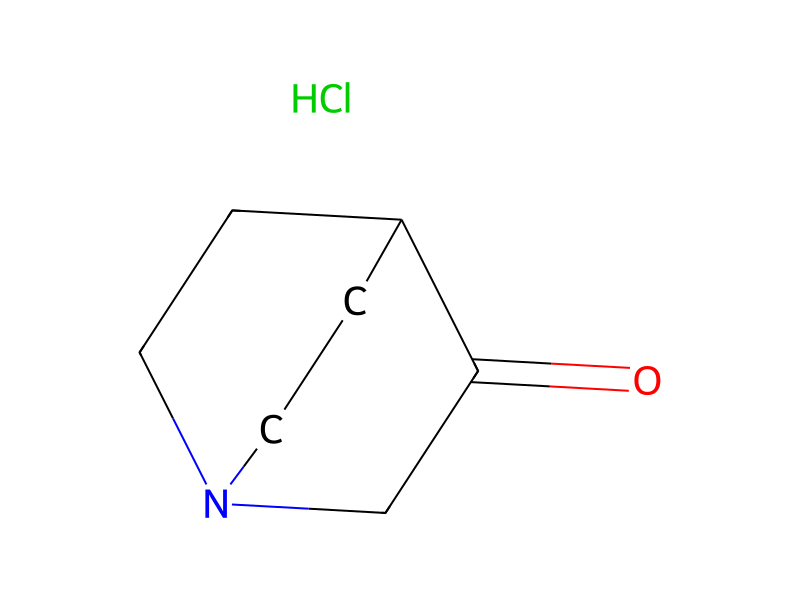 HCID 1020191-Azabicyclo(2.2.2)octan-3-one, hydrochloride (1:1)
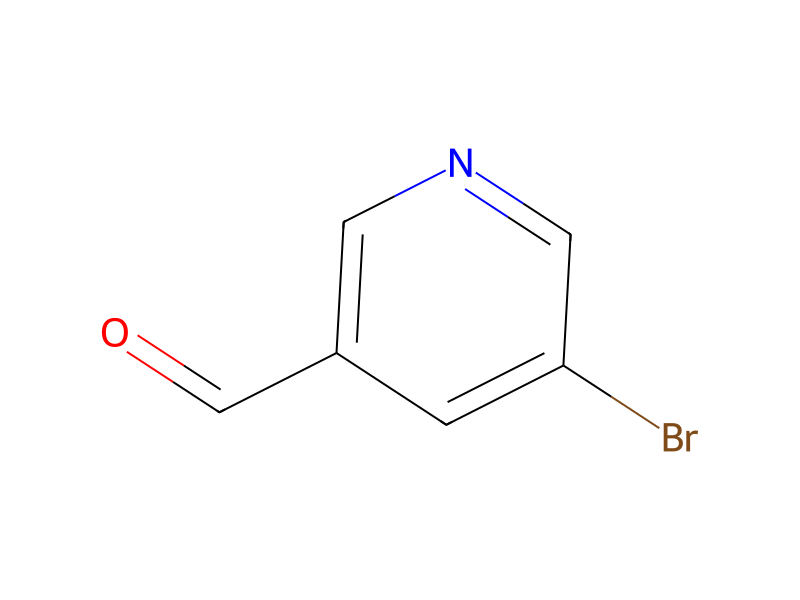 HCID 27847345-Bromo-3-pyridinecarboxaldehyde
 HCID 3611392Lithium tri-s-butylborohydride
 HCID 4304157Potassium;tri(butan-2-yl)boranuide
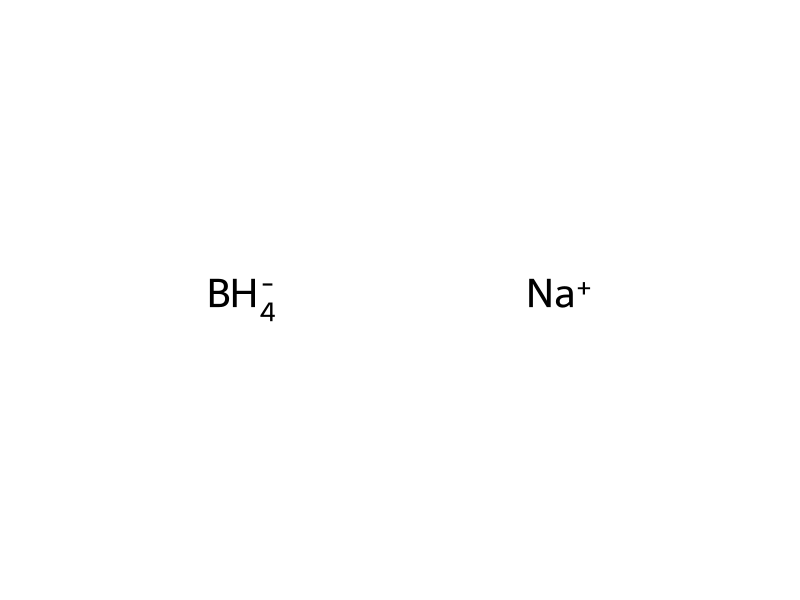 HCID 4311764Sodium borohydride
 HCID 129882222-((5-Bromo-3-pyridyl)methyl)-1-azabicyclo[2.2.2]octane2×
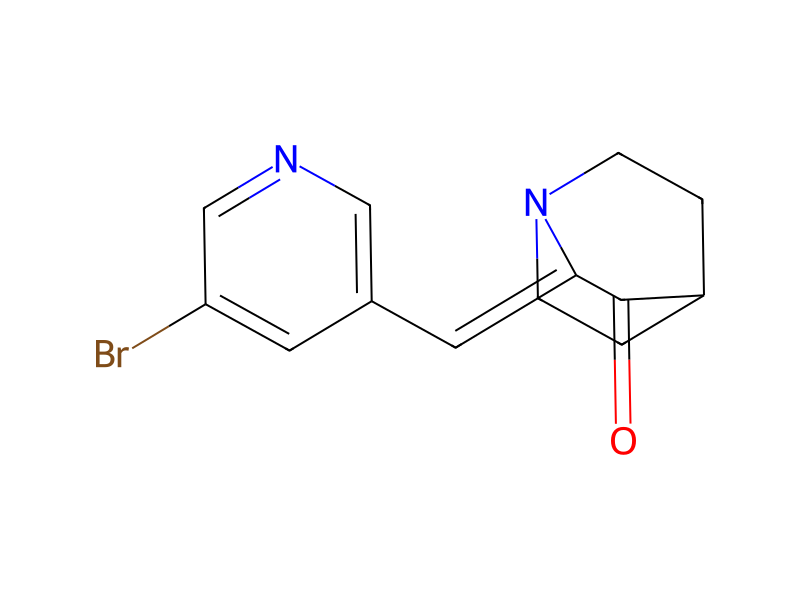 HCID 545251862-((5-Bromo-3-pyridinyl)methylene)-1-azabicyclo[2.2.2]octan-3-one
 HCID 178420941HCID 178420941, compound
Product 1
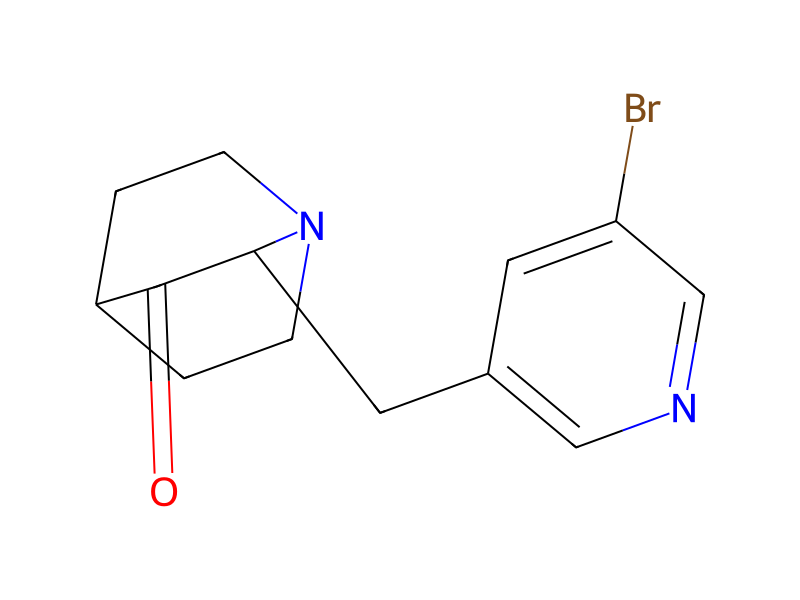
Reagents, catalysts & solvents 3

Procedure
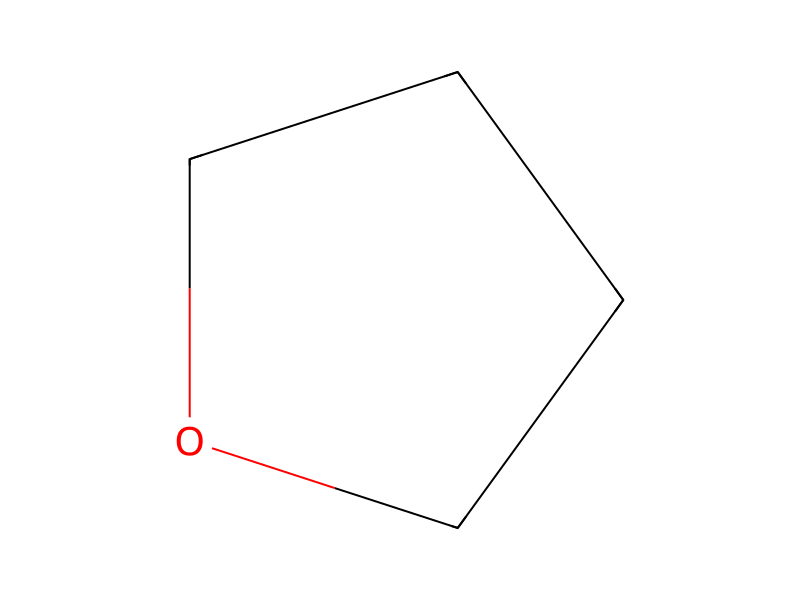
The manner in which 2-((5-bromo-3-pyridyl)methyl)-1-azabicyclo[2.2.2]octane and other analogous compounds possessing substituents at the C-5 position of the pyridine ring are synthesized can vary. In another example, 2-((5-bromo-3-pyridyl)methyl)-1-azabicyclo[2.2.2]octane can be prepared starting with the aldol condensation of 5-bromo-3-pyridinecarboxaldehyde and 3-quinuclidinone hydrochloride (commercially available from Aldrich Chemical Company) which proceeds in 75% yield using potassium hydroxide in methanol. The carbon-carbon double bond of the resulting 2-((5-bromo-3-pyridyl)methylene)-1-azabicyclo[2.2.2]octan-3-one can be selectively reduced with an appropriate reducing agent, such as lithium tri-sec-butylborohydride (L-Selectride®) or potassium tri-sec-butylborohydride (K-Selectride®) (available from Aldrich Chemical Company) in tetrahydrofuran at −78° C. using methodology described by J. M. Fortunato et al., J Org. Chem. 41 (12): 2194-2200 (1976) or with sodium borohydride modified with nickel(1) chloride hexahydrate in an ethanolic or aqueous solution to give 2-((5-bromo-3-pyridyl)methyl)-1-azabicyclo[2.2.2]octan-3-one. The latter ketone can be reduced under Wolff-Kishner conditions with hydrazine and base (or under modified Wolff-Kishner conditions with tosylhydrazine and sodium cyanoborohydride) to yield 2-((5-bromo-3-pyridyl)methyl)-1-azabicyclo[2.2.2]octane.
Workup
- customare synthesized can
- customat −78° C.
Sources & evidence
- ORD record
- ord-728ef7d744a245bfb7284c2bdf24fcf9
- Source dataset
- uspto-grants-2002_08
- Patent number
- US06432975B1
Reaction notes
Loading…