3-Pyridinecarboxaldehyde → 2-(Pyridin-3-ylmethylidene)-1-azabicyclo[2.2.2]octan-3-one
Reaction equation

Cl.[N:2]12[CH2:9][CH2:8][CH:5]([CH2:6][CH2:7]1)[C:4](=[O:10])[CH2:3]2.[OH-].[K+].[N:13]1[CH:18]=[CH:17][CH:16]=[C:15]([CH:19]=O)[CH:14]=1>CO.O>[N:13]1[CH:18]=[CH:17][CH:16]=[C:15]([CH:19]=[C:3]2[C:4](=[O:10])[CH:5]3[CH2:8][CH2:9][N:2]2[CH2:7][CH2:6]3)[CH:14]=1Participants
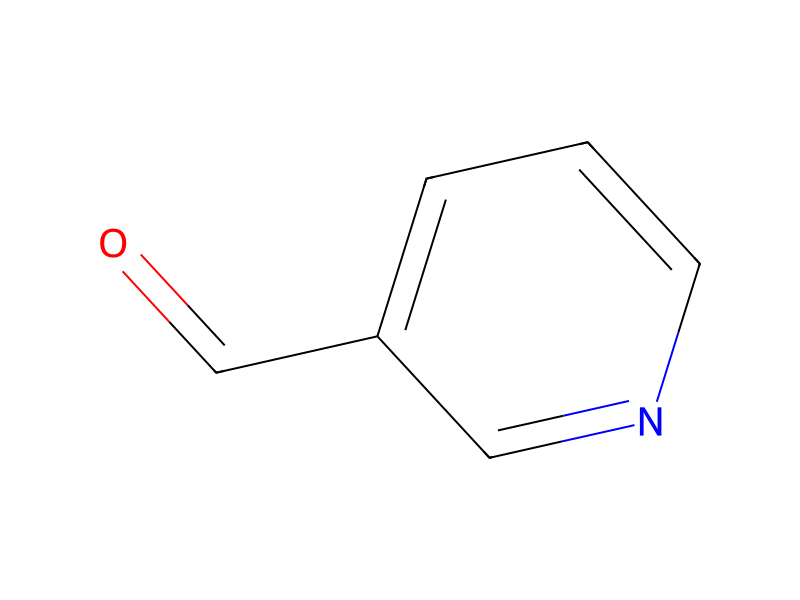

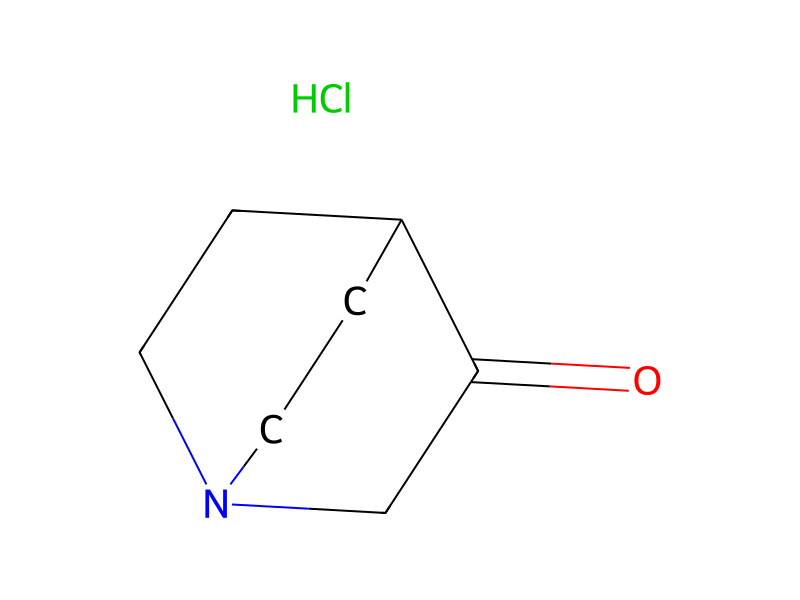
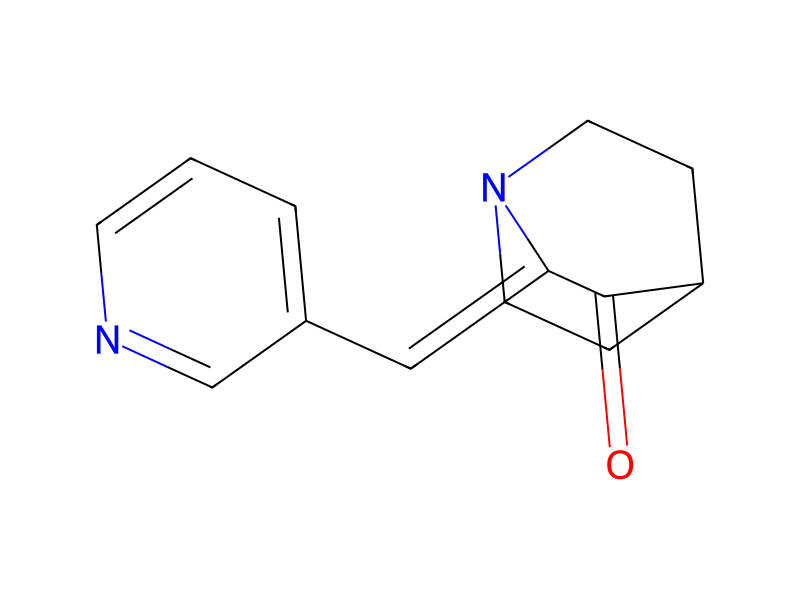


Conditions
- Temperature
- 0 °C
Procedure
Quinuclidin-3-one hydrochloride (4.6 g, 28.3 mmol) and powdered anhydrous potassium hydroxide (2.1 g, 37.2 mmol) were dissolved in methanol (25 ml) and stirred for 15 mins. Pyridine-3-carboxaldehyde (3.2 g, 29.5 mmol) was then added in one portion and the mixture was stirred for an additional 20 hrs. The reaction mixture was then diluted with 40 m water and cooled to 0° C. yielding 2-((3-pyridyl)methylene)-1-azabicyclo[2.2.2]octan-3-one as a yellow precipitate, which was collected, washed with distilled water and dried under vacuum (5.16 g, 81.4%). 2-((3-Pyridyl)methylene)-1-azabicyclo[2.2.2]octan-3-one (3 g, 14.0 mmol) was dissolved in 200 ml methanol and sodium borohydride (3 g, 79.6 mmol) was added in portions (exothermic reaction) with vigorous stirring. After 1 hr of continued stirring, acetone (100 ml) was slowly added to neutralize the remaining borohydride reagent. The mixture was evaporated to dryness and the resulting residue suspended in water (200 ml) and extracted three times with 200 ml portions of chloroform. The chloroform phases were combined, dried over MgSO4, and rotary evaporated to give a clear oil; crystallization of the free base gave a quantitative yield of 2-((3-pyridyl)methylene)-1-azabicyclo[2.2.2]octan-3-ol as a white precipitate. 2-((3-pyridyl)methylene)-1-azabicyclo[2.2.2]octan-3-ol (1 g, 4.7 mmol) was combined with neat thionyl chloride (20 ml, 26.9 mmol) under a nitrogen atmosphere at 0° C., the reaction was than brought to room temperature and stirred for one additional hour. Rotary evaporation at 60° C. produced a viscous oil which, when suspended in ether, afforded 3-chloro-2-((3-Pyridyl)methylene)-1-azabicyclo[2.2.2]octane dihydrochloride as a hygroscopic precipitate (0.98 g, 91%). This chloroquinuclidine (0.3 g, 15 mmol) was dissolved in ethanol (50 ml) and wet Rainey nickel (0.5 g) was carefully added under nitrogen. The suspension was hydrogenated at 50 psig in a Parr hydrogenation apparatus for 6 hrs followed by filtration through a pad of Celite filter aid and additional washing of the pad with methanol. Rotary evaporation of the pooled solvents gave 2-((3-pyridyl)methylene)-1-azabicyclo[2.2.2]octane as a clear oil that solidified upon cooling (0.2 g, 70%). This material (120 mg) was dissolved in 50 ml methanol followed by the careful addition of 0.1 g 10% palladium on charcoal. The suspension was hydrogenated at 50 psig in a Parr hydrogenation apparatus for 28 hrs followed by filtration through a pad of Celite filter aid and additional washing of the pad with methanol. Evaporation of the solvents afforded a white residue which was crystallized from ethanol-ether to give the desired material, 2-((3-pyridyl)methyl)-1-azabicyclo[2.2.2]octane, as a white solid (99 mg, 81%).
Workup
- stirringthe mixture was stirred for an additional 20 hrs
Sources & evidence
- ORD record
- ord-4e947b5b1bc340418b3fbbdc2a8e6e3f
- Source dataset
- uspto-grants-2002_08
- Patent number
- US06432975B1
Reaction notes
Loading…