Potassium Carbonate → Dimethyl 4-(3-bromophenylsulphanylmethyl)phthalate
Reaction equation

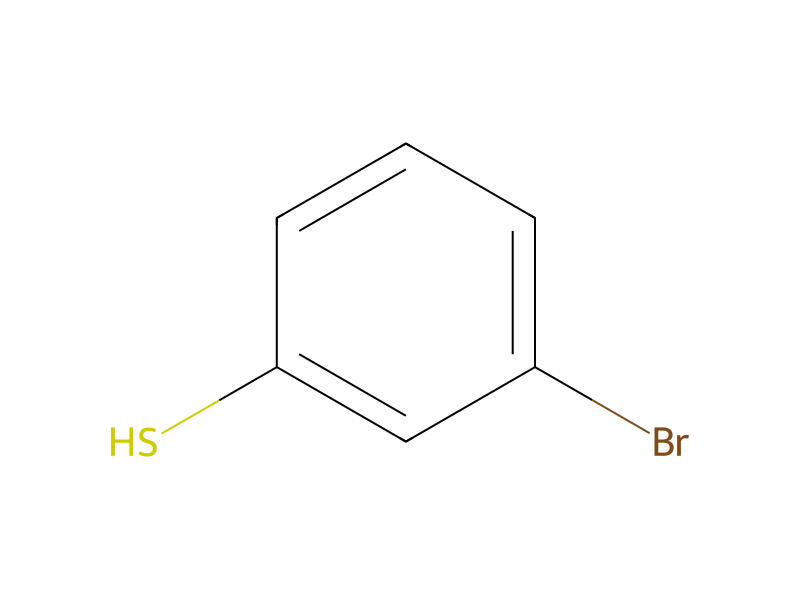
[Br:1][C:2]1[CH:3]=[C:4]([SH:8])[CH:5]=[CH:6][CH:7]=1.Br[CH2:10][C:11]1[CH:12]=[C:13]([C:21]([O:23][CH3:24])=[O:22])[C:14](=[CH:19][CH:20]=1)[C:15]([O:17][CH3:18])=[O:16].C(=O)([O-])[O-].[K+].[K+]>CC(=O)CC>[Br:1][C:2]1[CH:3]=[C:4]([S:8][CH2:10][C:11]2[CH:12]=[C:13]([C:21]([O:23][CH3:24])=[O:22])[C:14](=[CH:19][CH:20]=2)[C:15]([O:17][CH3:18])=[O:16])[CH:5]=[CH:6][CH:7]=1Participants
5



Procedure
5 g (26 mmol) of 3-bromothiophenol and 9.2 g (32 mmol) of dimethyl 4-bromomethylphthalate are dissolved in 150 mL of 2-butanone. 4 g (29 mmol) of potassium carbonate are added and the mixture is brought to reflux and stirred for 2 h. The reaction medium is then filtered and concentrated under reduced pressure and the residue is purified by chromatography on a column of silica. A yellow oil (10 g) is obtained in a yield of 100%.
Workup
- temperatureto reflux
- filtrationThe reaction medium is then filtered
- concentrationconcentrated under reduced pressure
- customthe residue is purified by chromatography on a column of silica
Sources & evidence
- ORD record
- ord-9f5a235766624b5fb1c49602789d8351
- Source dataset
- uspto-grants-2004_12
- Patent number
- US06831106B1
Reaction notes
Loading…