Hydrogen Bromide → HCID 9969884, compound
Reaction equation

[C:1]1([C@@H:7]([NH:9][C:10](=[O:23])[CH2:11][C@H:12]([C:16]2[CH:21]=[CH:20][C:19]([F:22])=[CH:18][CH:17]=2)[CH2:13][CH2:14]O)[CH3:8])[CH:6]=[CH:5][CH:4]=[CH:3][CH:2]=1.P(Br)(Br)[Br:25].Br>C(OCC)C>[C:1]1([C@@H:7]([NH:9][C:10](=[O:23])[CH2:11][C@H:12]([C:16]2[CH:21]=[CH:20][C:19]([F:22])=[CH:18][CH:17]=2)[CH2:13][CH2:14][Br:25])[CH3:8])[CH:6]=[CH:5][CH:4]=[CH:3][CH:2]=1Participants
Reactant 3

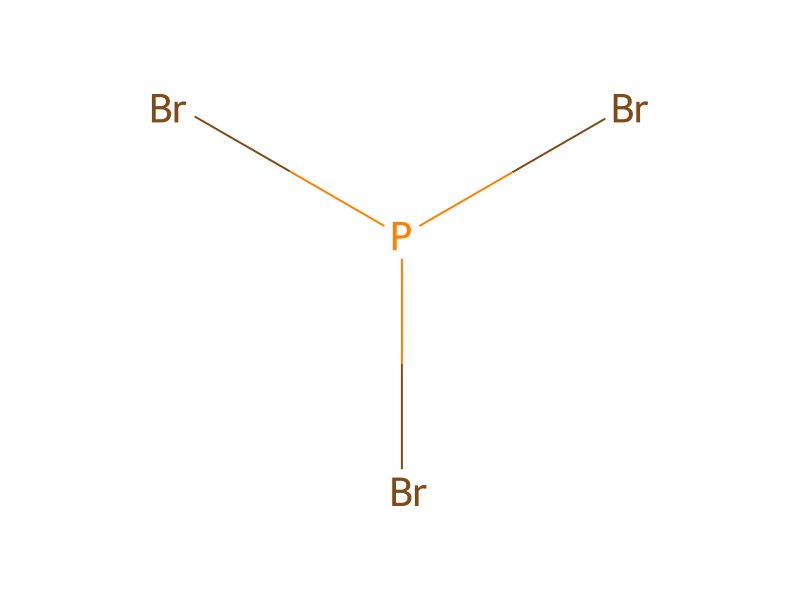

Product 1

Reagents, catalysts & solvents 1

Procedure
To a solution of 4.5 g of alcohol 8 250 mL of dry ethyl ether in an ice bath was added dropwise of 1.7 mL of phosphorous tribromide. After stirring for 3 days in an ice bath, 0.5 mL of conc. hydrobromic acid was added to this mixture. The resulting solution was stirred continuously at room temperature overnight, and 100 mL of ice was added to quench the reaction. The white solid was collected, dissolved in ethyl acetate, washed with saturated sodium hydrocarbonate solution and saturated brine. The organic layer was filtered through a silica gel pad. After the solvent evaporated, the crude solid was recrystallized from ethyl acetate and hexanes to form 3.8 g of the title compound as a white solid (72% yield, >95% de): mp 156.5-157.5 ° C.; [α]25D=−38.2 (c 1.0, CH3OH); 1H NMR (200 MHz, CDCl3) δ 7.40-7.10 (m, 7 H), 6.99 (m, 2 H), 5.52 (br d, J=7.6 Hz, 1 H), 4.98 (m, 1 H), 3.35-3.20 (m, 2 H), 3.05 (m, 1 H), 2.51 (dd, J=6.3, 14.0 Hz, 1 H), 2.37 (dd, J=8.7, 14.0 Hz, 1 H), 2.25-2.05 (m, 2 H), 1.25 (d, J=6.9 Hz, 3 H); 13C NMR (125 MHz, CDCl3) δ 169.7, 161.8, 142.8, 137.7, 129.1, 128.6, 127.4, 126.1, 115.7, 48.6, 44.0, 40.6, 38.7, 30.9, 21.3. Anal. Calcd for C19H21BrFNO: C, 60.33; H, 5.60; N, 3.70. Found: C, 60.57; H, 5.54; N, 3.82.
Workup
- stirringThe resulting solution was stirred continuously at room temperature overnight
- customto quench
- customthe reaction
- customThe white solid was collected
- dissolutiondissolved in ethyl acetate
- washwashed with saturated sodium hydrocarbonate solution and saturated brine
- filtrationThe organic layer was filtered through a silica gel pad
- customAfter the solvent evaporated
- customthe crude solid was recrystallized from ethyl acetate and hexanes
Sources & evidence
- ORD record
- ord-322a08148f1f4c74a18571ae401d7297
- Source dataset
- uspto-grants-2004_12
- Patent number
- US06833458B2
Reaction notes
Loading…