Triethylamine → HCID 13910128, compound
Reaction equation

C(N(CC)CC)C.[CH3:8][C:9]1[CH:18]=[C:17]([CH2:19][CH:20]([O:22][CH3:23])[CH3:21])[CH:16]=[CH:15][C:10]=1[O:11][CH2:12][CH2:13][NH2:14].Cl[C:25]1[C:34]2[C:29](=[CH:30][CH:31]=[CH:32][CH:33]=2)[N:28]=[CH:27][N:26]=1>C1(C)C=CC=CC=1>[CH3:8][C:9]1[CH:18]=[C:17]([CH2:19][CH:20]([O:22][CH3:23])[CH3:21])[CH:16]=[CH:15][C:10]=1[O:11][CH2:12][CH2:13][NH:14][C:25]1[C:34]2[C:29](=[CH:30][CH:31]=[CH:32][CH:33]=2)[N:28]=[CH:27][N:26]=1Participants
5
Reactant 3

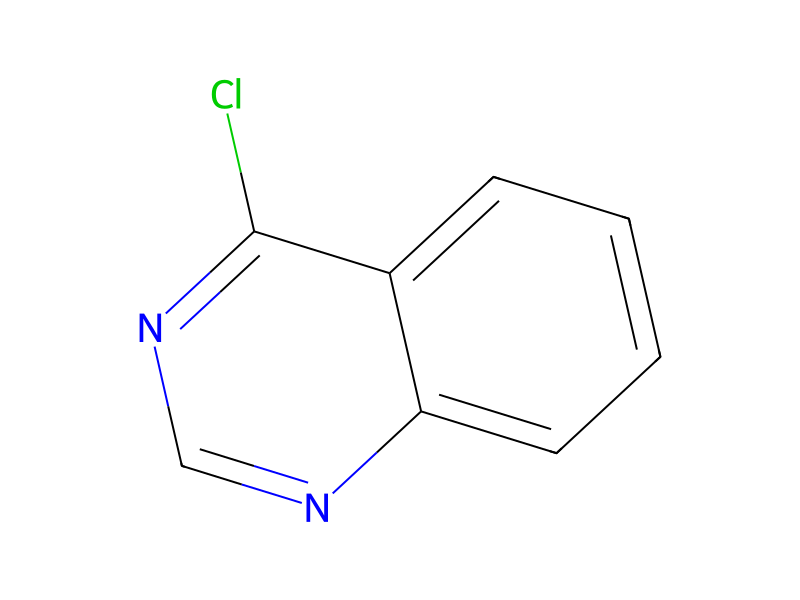

Product 1

Reagents, catalysts & solvents 1

Procedure
1.0 g of triethylamine and 2.2 g of 2-[2-methyl-4-(2-methoxypropyl)phenoxy]ethylamine were added to 1.7 g of 4-chloroquinazoline dissolved in 50 ml of toluene. The mixture was then heated under reflux, whilst stirring, for 3 hours. At the end of this time, the reaction product was washed with water and dried over anhydrous sodium sulfate. Toluene was removed by distillation under reduced pressure. The oily product thus obtained was subjected to column chromatography (Wakogel C-200, eluted with a 1:1 by volume mixture of toluene and ethyl acetate) to isolate the product, and the crystals obtained were recrystallized from hexane, to give 2.2 g of the title compound as a colorless crystalline powder, melting at 95°-97° C.
Workup
- temperatureThe mixture was then heated
- temperatureunder reflux
- washAt the end of this time, the reaction product was washed with water
- dry with materialdried over anhydrous sodium sulfate
- customToluene was removed by distillation under reduced pressure
- customThe oily product thus obtained
- washeluted with a 1:1 by volume mixture of toluene and ethyl acetate)
- customto isolate the product
- customthe crystals obtained
- customwere recrystallized from hexane
Sources & evidence
- ORD record
- ord-658ccb437fc74d5c9931f17ae3649811
- Source dataset
- uspto-grants-1989_07
- Patent number
- US04845097
Reaction notes
Loading…