(4-Nitrophenyl)acetic acid → 1-(4-Nitrophenyl)propan-2-one
Reaction equation

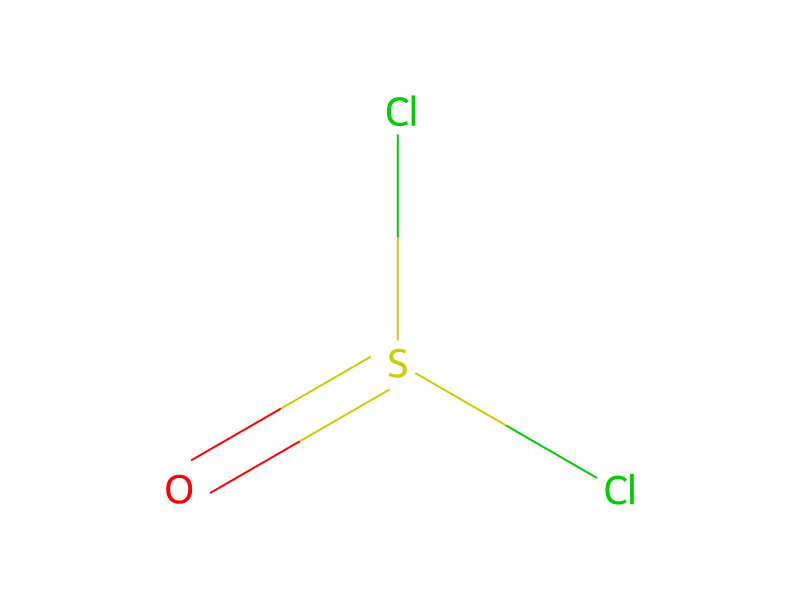
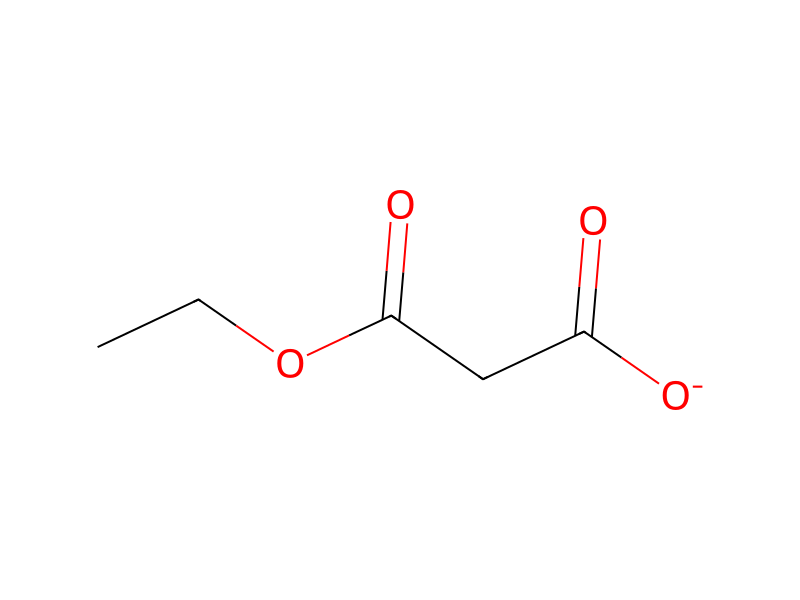
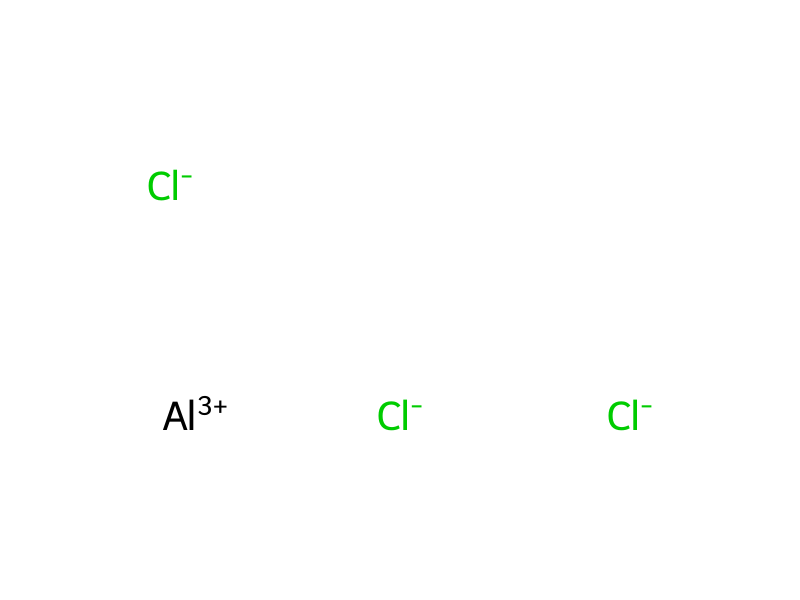
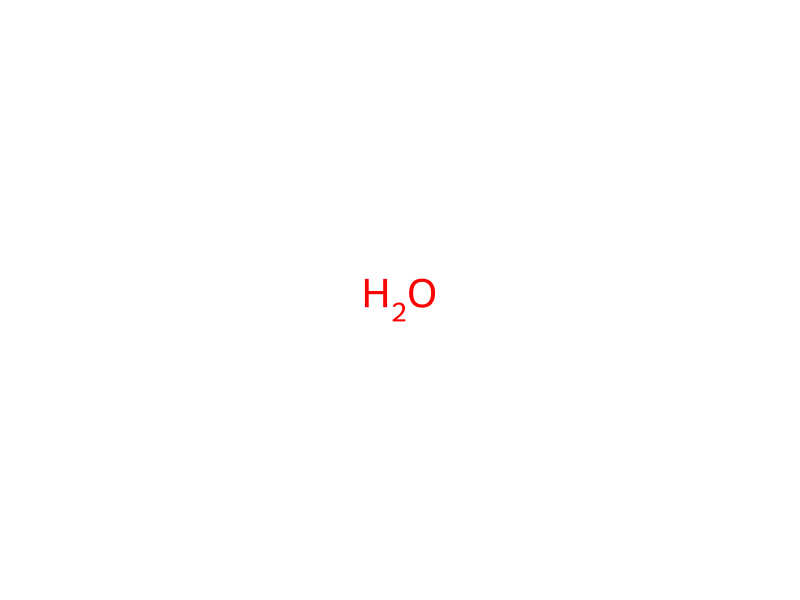
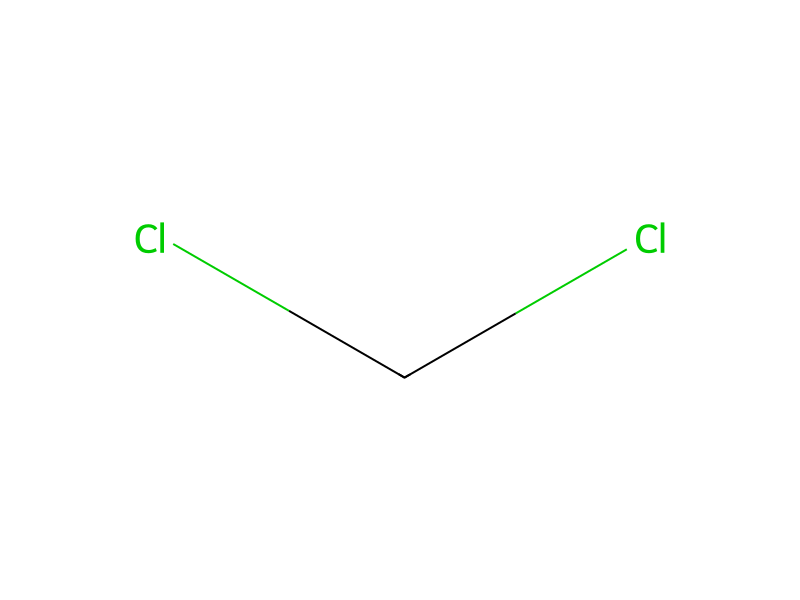
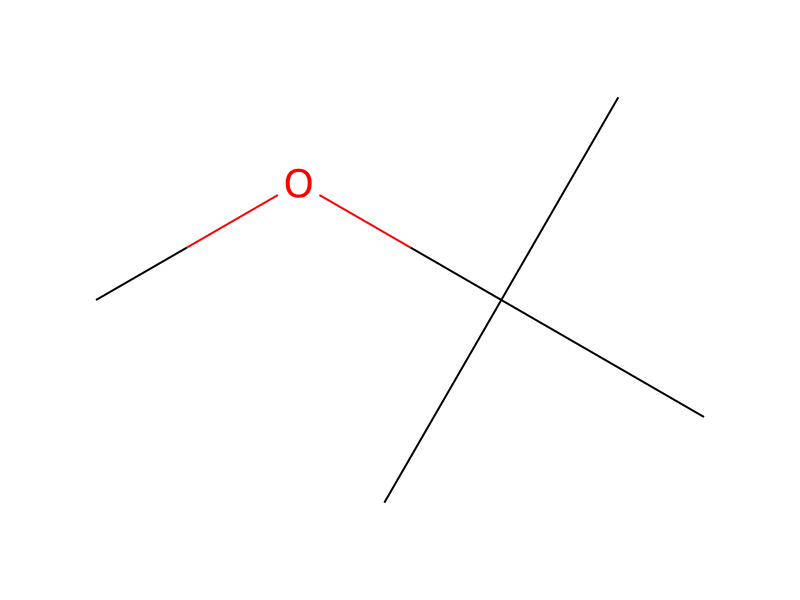
[C:1](OCC)(=O)CC([O-])=O.[Cl-].[Al+3].[Cl-].[Cl-].S(Cl)(Cl)=O.[N+:18]([C:21]1[CH:26]=[CH:25][C:24]([CH2:27][C:28]([OH:30])=O)=[CH:23][CH:22]=1)([O-:20])=[O:19]>O.COC(C)(C)C.ClCCl>[N+:18]([C:21]1[CH:22]=[CH:23][C:24]([CH2:27][C:28](=[O:30])[CH3:1])=[CH:25][CH:26]=1)([O-:20])=[O:19]Participants
Reactant 4

Product 1

Reagents, catalysts & solvents 3
Conditions
- Temperature
- 72.5 °C
Procedure
Dichloromethane (3 ml) and ethyl malonate (1.31 g, 8.15 mmol) were added to aluminium chloride (1.10 g, 8.28 mmol) (hereinafter, abbreviated as Solution B). Thionyl chloride (1.58 g, 13.25 mmol) was added to 4-nitrophenylacetic acid (1.00 g, 5.52 mol), followed by stirring at 70-75° C. for 45 minutes. Thionyl chloride was distilled off under reduced pressure, followed by azeotropy with toluene (3 ml) twice. Dichloromethane (3 ml) was added to the azeotropic residue to dissolve the residue, which was added to Solution B dropwise. After stirred for 7 hours under reflux, the reaction solution was cooled to room temperature and poured into water (10 ml). The layers were separated, and the aqueous layer was extracted with dichloromethane (3 ml). The organic layers were combined, and the solvent was distilled off under reduced pressure. After the solvent was distilled off, acetic acid (1.7 ml), water (1.1 ml) and concentrated sulfuric acid (0.21 ml) were added thereto, which was refluxed at an external temperature of 125° C. for 4 hours while stirring vigorously. After completion of the reaction, the mixture was ice-cooled, returned to room temperature, and t-butyl methyl ether (6 ml) and water (6 ml) were added thereto, followed by extraction. After the organic layer was washed with an aqueous saturated sodium hydrogen carbonate solution (6 ml) twice and brine (6 ml) twice, the solvent was distilled off under reduced pressure, and the residue was purified by silica gel column chromatography to give 4-nitrophenylacetone (0.51 g, 2.87 mmol, 52%).
Workup
- distillationThionyl chloride was distilled off under reduced pressure
- additionDichloromethane (3 ml) was added to the azeotropic residue
- dissolutionto dissolve the residue, which
- additionwas added to Solution B dropwise
- stirringAfter stirred for 7 hours
- temperatureunder reflux
- temperaturethe reaction solution was cooled to room temperature
- additionpoured into water (10 ml)
- customThe layers were separated
- extractionthe aqueous layer was extracted with dichloromethane (3 ml)
- distillationthe solvent was distilled off under reduced pressure
- distillationAfter the solvent was distilled off
- additionacetic acid (1.7 ml), water (1.1 ml) and concentrated sulfuric acid (0.21 ml) were added
- temperaturewhich was refluxed at an external temperature of 125° C. for 4 hours
- stirringwhile stirring vigorously
- customAfter completion of the reaction
- temperaturecooled
- customreturned to room temperature
- extractionfollowed by extraction
- washAfter the organic layer was washed with an aqueous saturated sodium hydrogen carbonate solution (6 ml) twice
- distillationbrine (6 ml) twice, the solvent was distilled off under reduced pressure
- customthe residue was purified by silica gel column chromatography
Sources & evidence
- ORD record
- ord-8d48c8d503d84a29b2cc1623fb97d3d0
- Source dataset
- uspto-grants-2005_02
- Patent number
- US06849738B2
Reaction notes
Loading…