Ethyl 2-chloroacetoacetate → HCID 14500740, compound
Reaction equation

[CH2:1]([N:5]([CH2:10][CH2:11][CH2:12][CH3:13])[C:6](=S)[NH:7][NH2:8])[CH2:2][CH2:3][CH3:4].[Cl:14][CH:15]([C:21]([CH3:23])=O)[C:16]([O:18][CH2:19][CH3:20])=[O:17]>C(O)C>[ClH:14].[CH2:1]([N:5]([CH2:10][CH2:11][CH2:12][CH3:13])[C:6]1[C:15]([C:16]([O:18][CH2:19][CH3:20])=[O:17])=[C:21]([CH3:23])[NH:8][N:7]=1)[CH2:2][CH2:3][CH3:4]Participants
4
Reactant 2
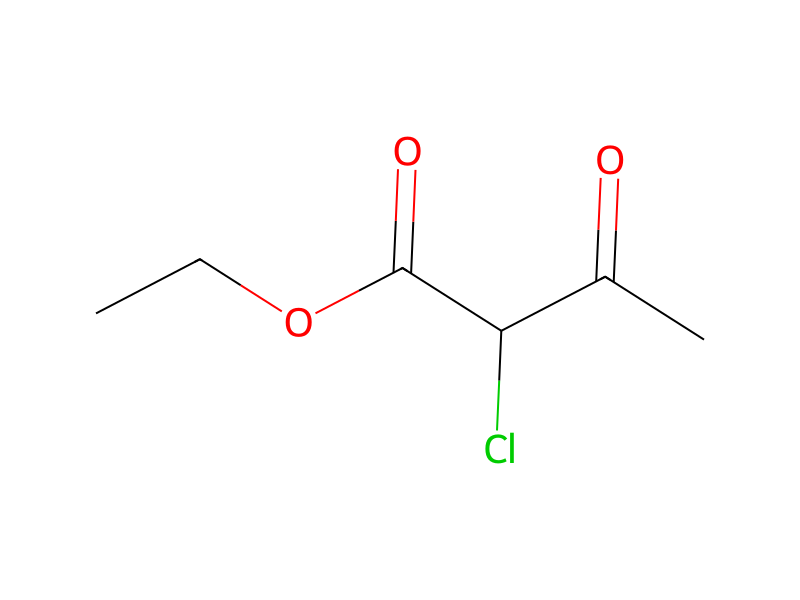

Product 1

Reagents, catalysts & solvents 1

Conditions
- Temperature
- 60 °C
Procedure
A stirred solution of 14.3 g (0.07 mole) of 4,4-di-n-butyl-3-thiosemicarbazide in 100 mL of absolute ethanol was cooled to 10° C. under nitrogen atmosphere, treated with 11.6 g (0.07 mole) of ethyl 2-choroacetoacetate, warmed to 60° C., then cooled to ambient temperature and stirred for 18 hr. The reaction mixture was heated to reflux in order to dissolve the precipitate, filtered to remove amorphous sulfur and concentrated in vacuo to give a solid. The solid was recrystallized from acetone to yield 8 g of white crystalline product, mp 159°-162° C., as the hydrochloride salt.
Workup
- temperaturecooled to ambient temperature
- temperatureThe reaction mixture was heated
- temperatureto reflux in order
- dissolutionto dissolve the precipitate
- filtrationfiltered
- customto remove amorphous sulfur
- concentrationconcentrated in vacuo
- customto give a solid
- customThe solid was recrystallized from acetone
Sources & evidence
- ORD record
- ord-95dbcabb25464cb090796e0ded972e0d
- Source dataset
- uspto-grants-1989_10
- Patent number
- US04871737
Reaction notes
Loading…