Methanol → Methyl 3-oxo-3-phenylpropanoate
Reaction equation

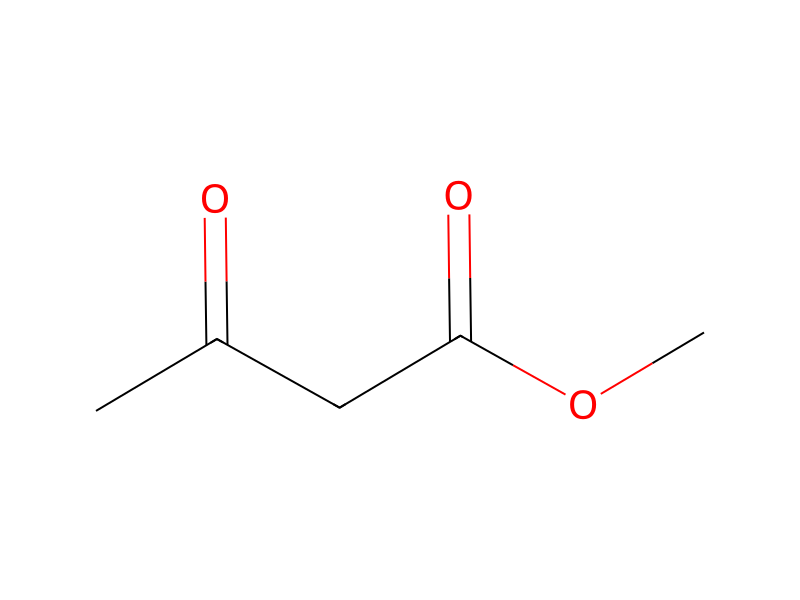
[C:1]([O:9]C)(=O)[C:2]1[CH:7]=[CH:6][CH:5]=[CH:4][CH:3]=1.[C:11]([O:14][CH3:15])(=[O:13])[CH3:12].CO.C(OC)(=O)CC(C)=O>>[C:1]([CH2:12][C:11]([O:14][CH3:15])=[O:13])(=[O:9])[C:2]1[CH:3]=[CH:4][CH:5]=[CH:6][CH:7]=1Participants




Procedure
A 1-I flask fitted with a mechanical stirrer, reflux condenser, and nitrogen sweep (to protect the Na), was immersed in a water bath to control temperature (i.e., to provide heat and to cool if need be). In the flask was placed 272.3 g (2 moles) of methyl benzoate; 74.1 g (1 mole) of methyl acetate; 1 gm. atom--23 g., Na; and 32 g (1 mole) of methanol (to react with the Na and to initiate the reaction). The flask was purged with nitrogen and was maintained under a positive nitrogen pressure throughout the reaction. The solution was heated to 80°-85° C. overnight, during which time all the Na metal was consumed. The resulting yellow heterogeneous solution was cooled to room temperature and poured into a separatory funnel containing 130 ml of concentrated hydrochloric acid and 200 g. of crushed ice. This was shaken and the lower aqueous phase removed. (In this step the Na in the Na methyl benzoyl acetate reacts with the HCl and is removed as NaCl.) The residual material was then washed with water, 2×100 mls, saturated NaHCO3 olution, 2×100 mls, and finally 2×100 mls of saturated brine (NaCl). (Byproduct methanol leaves with the water in the water washes.) The residual yellow organic phase was then transferred to a distilling flask and fractionated through a 12-inch Vigreux column at 0.5 mm Hg pressure. A forerun containing methyl benzoate and methyl acetoacetate was collected at 37°-42° C. at 0.5 mm Hg. This was followed by a fraction of 82.5 g. methyl benzoyl acetate boiling at 81°-84° C. at 0.5 mm Hg. Yield of the pure product methyl benzoyl acetate based on Na was 46.3%, as a water white liquid.
Workup
- customA 1-I flask fitted with a mechanical stirrer
- temperaturereflux condenser
- customwas immersed in a water bath to control temperature (i.e., to provide heat and to cool if need be)
- customthe reaction)
- customThe flask was purged with nitrogen
- temperaturewas maintained under a positive nitrogen pressure
- customthroughout the reaction
- customwas consumed
- additionpoured into a separatory funnel
- additioncontaining 130 ml of concentrated hydrochloric acid and 200 g
- customthe lower aqueous phase removed
- custom(In this step the Na in the Na methyl benzoyl acetate reacts with the HCl
- customis removed as NaCl
- wash) The residual material was then washed with water, 2×100 mls, saturated NaHCO3 olution, 2×100 mls, and finally 2×100 mls of saturated brine (NaCl)
- custom(Byproduct methanol leaves with the water in the water washes
- custom) The residual yellow organic phase was then transferred to a distilling flask
- customwas collected at 37°-42° C. at 0.5 mm Hg
Sources & evidence
- ORD record
- ord-cd8aed2c167546a9815e092f9b2ff023
- Source dataset
- uspto-grants-1989_10
- Patent number
- US04873359
Reaction notes
Loading…