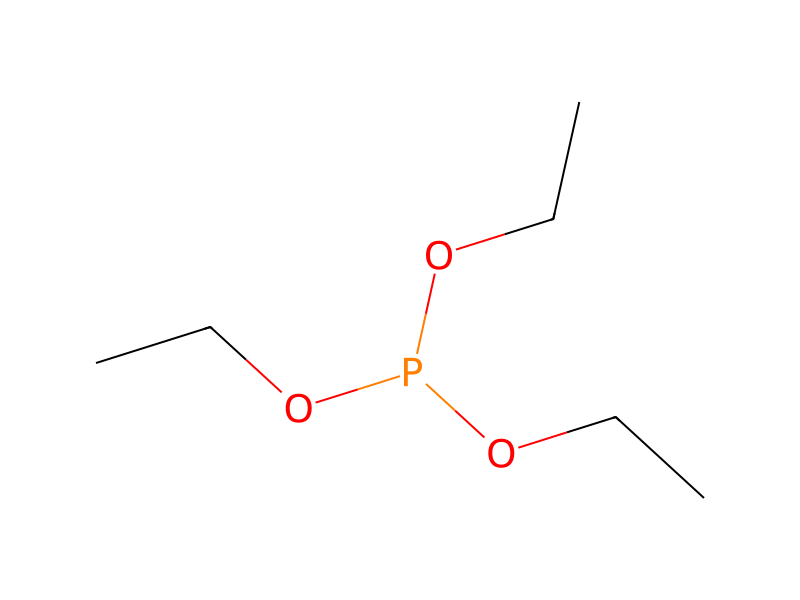
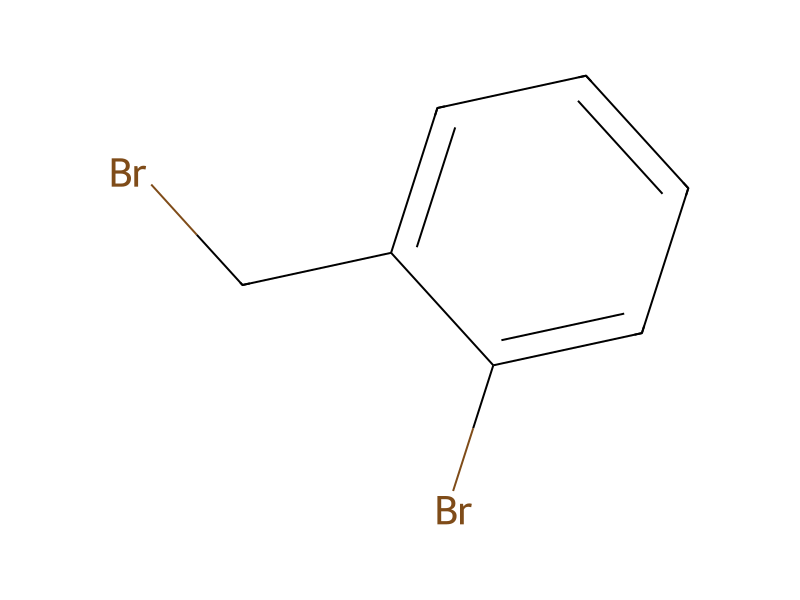
Triethyl phosphite → Diethyl [(2-bromophenyl)methyl]phosphonate
Reaction equation

[Br:1][C:2]1[CH:9]=[CH:8][CH:7]=[CH:6][C:3]=1[CH2:4]Br.[P:10]([O:17]CC)([O:14][CH2:15][CH3:16])[O:11][CH2:12][CH3:13]>C1(C)C(C)=CC=CC=1>[CH2:12]([O:11][P:10]([CH2:4][C:3]1[CH:6]=[CH:7][CH:8]=[CH:9][C:2]=1[Br:1])(=[O:17])[O:14][CH2:15][CH3:16])[CH3:13]Participants
4
Reactant 2
Product 1

Reagents, catalysts & solvents 1

Conditions
- Temperature
- 80 °C
Procedure
2-Bromobenzyl bromide (1048 g, 4.2 mol) was melted in a water bath of 60° C. and dissolved in xyleen (734 ml). The solution was heated to 80° C. Next triethyl phosphite (766 ml, 4.46 mol) was added in three equal portions to the reaction mixture in 60 minutes. The mixture was stirred overnight at 110° C. The reaction mixture was co-evaporated twice with 400 ml of xylene. The xylene was removed in vacuo at 60° C. The product was dried in a vacuum oven at 60° C. and was used without further purification.
Workup
- dissolutiondissolved in xyleen (734 ml)
- customThe xylene was removed in vacuo at 60° C
- customThe product was dried in a vacuum oven at 60° C.
- customwas used without further purification
Sources & evidence
- ORD record
- ord-24c9227083cf48d88a7b38cbe4dcb2bc
- Source dataset
- uspto-grants-2010_07
- Patent number
- US07750167B2
Reaction notes
Loading…