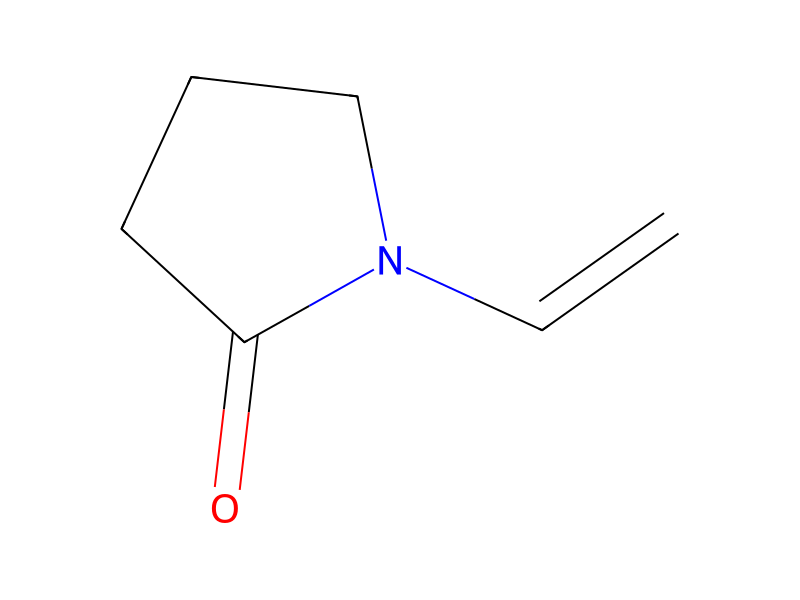
N-vinyl-2-pyrrolidone → Hexanitrobenzene
Reaction equation

NN.C=CN1C(=O)CCC1.[N+:11]([C:14]1[CH:19]=[CH:18][C:17](S(O)(=O)=O)=[C:16]([N+:24]([O-:26])=[O:25])[C:15]=1[N+:27]([O-:29])=[O:28])([O-:13])=[O:12]>>[N+:11]([C:14]1[C:19]([N+:11]([O-:13])=[O:12])=[C:18]([N+:24]([O-:26])=[O:25])[C:17]([N+:27]([O-:29])=[O:28])=[C:16]([N+:24]([O-:26])=[O:25])[C:15]=1[N+:27]([O-:29])=[O:28])([O-:13])=[O:12]Participants
4



Procedure
FIG. 2 illustrates the decrease in concentration of hydrazine in solution over time at 50° C. after the addition of PVPP. FIG. 3 also illustrates the decrease in concentration of hydrazine in solution over time at 50° C. after the addition of PVPP. FIG. 4 illustrates the reaction between trinitrobenzene sulfonic acid and hydrazine to form hexanitrobenzene, used to detect the concentration of hydrazine in solution.
Workup
- customat 50° C.
- customat 50° C.
Sources & evidence
- ORD record
- ord-9b12223c5da04063b4ad0f03503e735d
- Source dataset
- uspto-grants-2010_07
- Patent number
- US07758757B2
Reaction notes
Loading…