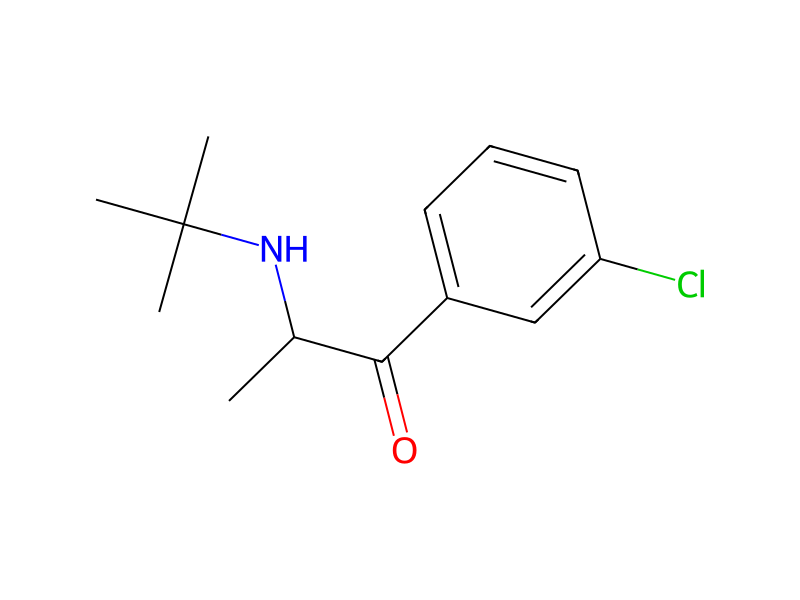
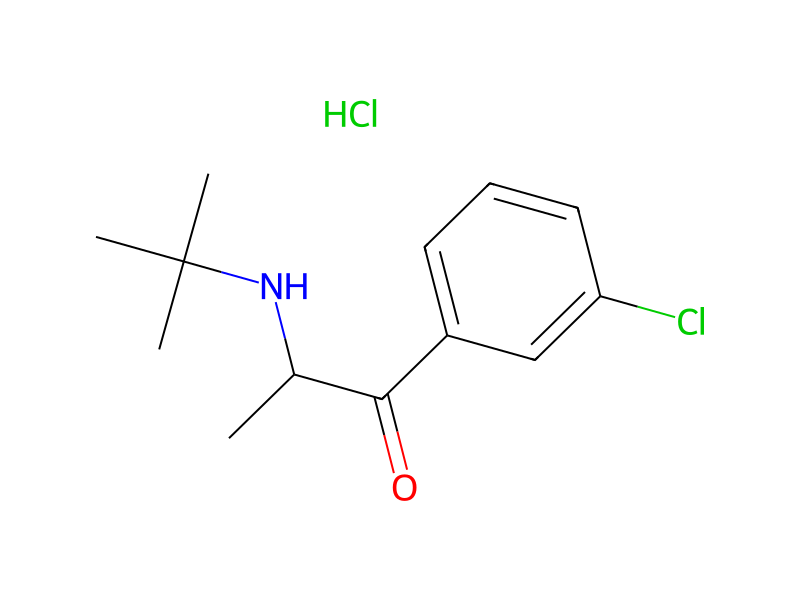
Bupropion → 2-[(6-(2-Chloro-4-[(2-furanylmethyl)amino]-5-(2,2,2-trichloroethoxycarbonyl)phenylsulfonamidomethoxy)(6-oxo)hexanoyloxymethyl)(1,1-dimethylethyl)amino]-1-(3-chlorophenyl)-1-propanone
Reaction equation

[CH3:1][CH:2]([NH:12][C:13]([CH3:16])([CH3:15])[CH3:14])[C:3]([C:5]1[CH:6]=[CH:7][CH:8]=[C:9]([Cl:11])[CH:10]=1)=[O:4].Cl.ClC1C=C(C(=O)C(NC(C)(C)C)C)C=CC=1.C(N(CC)CC)C.[Cl:41][C:42]1[CH:47]=[C:46]([NH:48][CH2:49][C:50]2[O:51][CH:52]=[CH:53][CH:54]=2)[C:45]([C:55]([O:57][CH2:58][C:59]([Cl:62])([Cl:61])[Cl:60])=[O:56])=[CH:44][C:43]=1[S:63]([NH:66][CH2:67][O:68][C:69](=[O:79])[CH2:70][CH2:71][CH2:72][CH2:73][C:74]([O:76][CH2:77]Cl)=[O:75])(=[O:65])=[O:64]>C(#N)C>[Cl:41][C:42]1[CH:47]=[C:46]([NH:48][CH2:49][C:50]2[O:51][CH:52]=[CH:53][CH:54]=2)[C:45]([C:55]([O:57][CH2:58][C:59]([Cl:60])([Cl:62])[Cl:61])=[O:56])=[CH:44][C:43]=1[S:63]([NH:66][CH2:67][O:68][C:69](=[O:79])[CH2:70][CH2:71][CH2:72][CH2:73][C:74]([O:76][CH2:77][N:12]([C:13]([CH3:15])([CH3:14])[CH3:16])[CH:2]([CH3:1])[C:3]([C:5]1[CH:6]=[CH:7][CH:8]=[C:9]([Cl:11])[CH:10]=1)=[O:4])=[O:75])(=[O:65])=[O:64]Participants
Reactant 4


Product 1

Reagents, catalysts & solvents 1

Procedure
A solution of bupropion[1-(3-chlorophenyl)-2-[(1,1-dimethylethyl)amino]-1-propanone hydrochloride, (700) (U.S. Pat. No. 3,819,706; U.S. Pat. No. 3,885,046) (0.025 mole), triethylamine (0.055 mole) and acetonitrile (30 mL) are stirred with cooling on an ice bath. A solution of chloromethyl 6-(2-chloro-4-[(2-furanylmethyl)amino]-5-(2,2,2-trichloroethoxycarbonyl)phenylsulfonamidomethoxy)(6-oxo)hexanoate (0.025 mole) in acetonitrile (30 mL) is added dropwise. After the addition is complete, the reaction is heated to reflux for 2 hours. The reaction is cooled, the volatiles are removed by spin evaporation, and the residue is partitioned between dichloromethane and 5% aqueous sodium bicarbonate. The organic layer is washed with water, and then with a saturated sodium chloride solution. The organic layer may be dried over sodium sulfate, filtered and concentrated in vacuo to give crude product, which may be purified by column chromatography on silica gel with hexanes/ethyl acetate as eluent. The fractions that contain pure product may be combined and spin evaporated in vacuo to give a solid that is recrystallized to give 2-[(6-(2-chloro-4-[(2-furanylmethyl)amino]-5-(2,2,2-trichloroethoxycarbonyl)phenylsulfonamidomethoxy)(6-oxo)hexanoyloxymethyl)(1,1-dimethylethyl)amino]-1-(3-chlorophenyl)-1-propanone. See U.S. Pat. No. 5,104,870; Sandler et al., Organic Functional Group Preparations, (1968) p. 324.
Workup
- temperaturewith cooling on an ice bath
- additionAfter the addition
- temperaturethe reaction is heated
- temperatureto reflux for 2 hours
- temperatureThe reaction is cooled
- customthe volatiles are removed by spin evaporation
- customthe residue is partitioned between dichloromethane and 5% aqueous sodium bicarbonate
- washThe organic layer is washed with water
- dry with materialThe organic layer may be dried over sodium sulfate
- filtrationfiltered
- concentrationconcentrated in vacuo
- customto give crude product, which
- custommay be purified by column chromatography on silica gel with hexanes/ethyl acetate as eluent
- customspin evaporated in vacuo
- customto give a solid
- customthat is recrystallized
Sources & evidence
- ORD record
- ord-af30aee849f1430abf6023109fed2695
- Source dataset
- uspto-grants-2010_07
- Patent number
- US07763612B2
Reaction notes
Loading…