Hydrochloric Acid → 4-nitrobenzyl (5R,6R)-6-[1-methyl-1-(4-nitrobenzyloxycarbonyloxy)ethyl]-7-oxo-3-(3-pyridylthio)-1-azabicyclo[3.2.0]hept-2-ene-2-carboxylate
Reaction equation

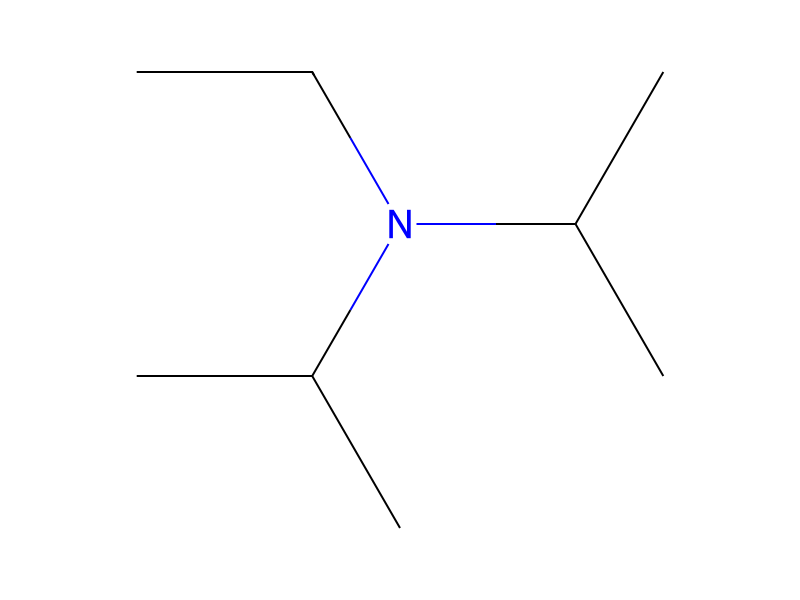
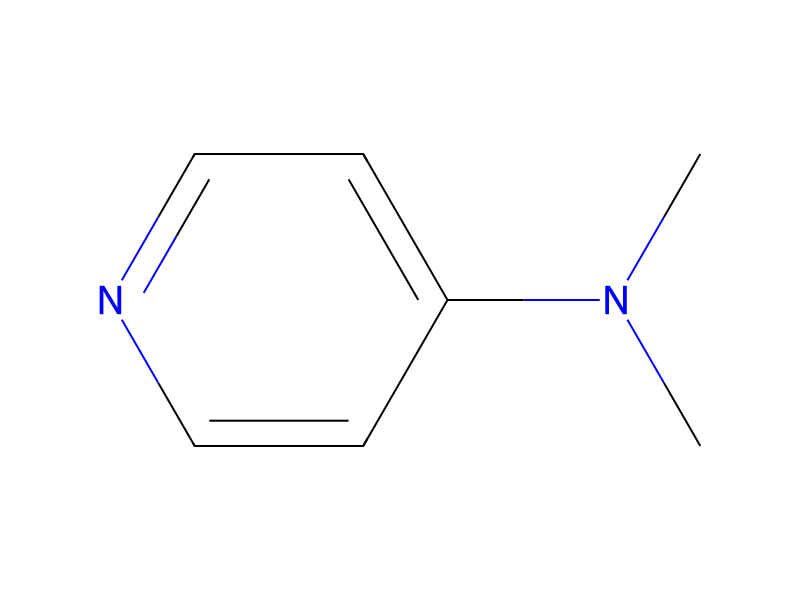
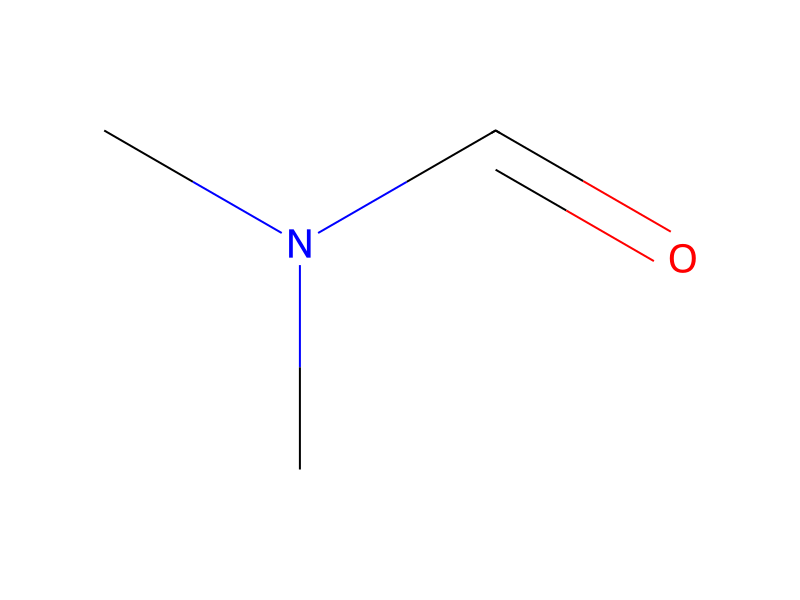
C(N(C(C)C)CC)(C)C.O=[C:11]1[CH2:17][C@H:16]2[N:13]([C:14](=[O:35])[C@H:15]2[C:18]([CH3:34])([O:20][C:21]([O:23][CH2:24][C:25]2[CH:30]=[CH:29][C:28]([N+:31]([O-:33])=[O:32])=[CH:27][CH:26]=2)=[O:22])[CH3:19])[C@H:12]1[C:36]([O:38][CH2:39][C:40]1[CH:45]=[CH:44][C:43]([N+:46]([O-:48])=[O:47])=[CH:42][CH:41]=1)=[O:37].FC(F)(F)S(OS(C(F)(F)F)(=O)=O)(=O)=O.Cl.[SH:65][C:66]1[CH:67]=[N:68][CH:69]=[CH:70][CH:71]=1>ClCCl.CN(C1C=CN=CC=1)C.CN(C)C=O>[CH3:19][C:18]([C@@H:15]1[C:14](=[O:35])[N:13]2[C@@H:16]1[CH2:17][C:11]([S:65][C:66]1[CH:67]=[N:68][CH:69]=[CH:70][CH:71]=1)=[C:12]2[C:36]([O:38][CH2:39][C:40]1[CH:41]=[CH:42][C:43]([N+:46]([O-:48])=[O:47])=[CH:44][CH:45]=1)=[O:37])([O:20][C:21]([O:23][CH2:24][C:25]1[CH:30]=[CH:29][C:28]([N+:31]([O-:33])=[O:32])=[CH:27][CH:26]=1)=[O:22])[CH3:34]Participants
Reactant 5
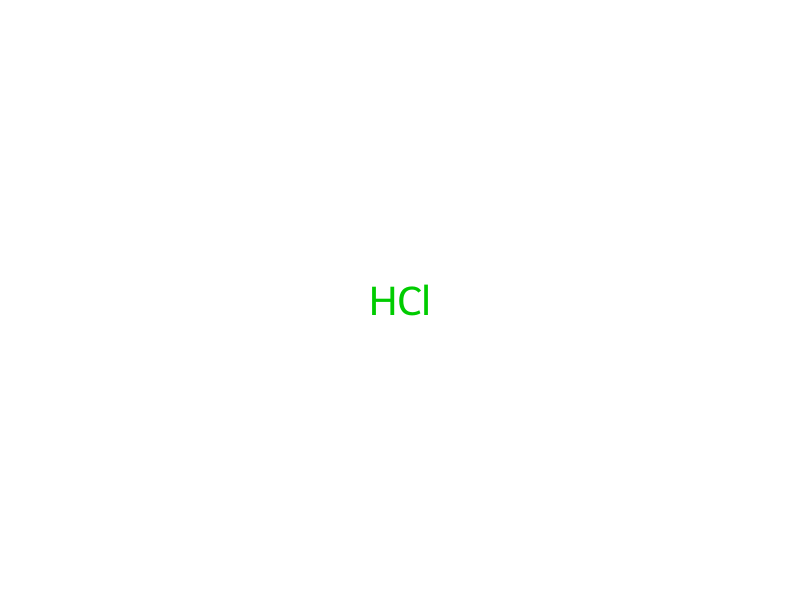



Product 1

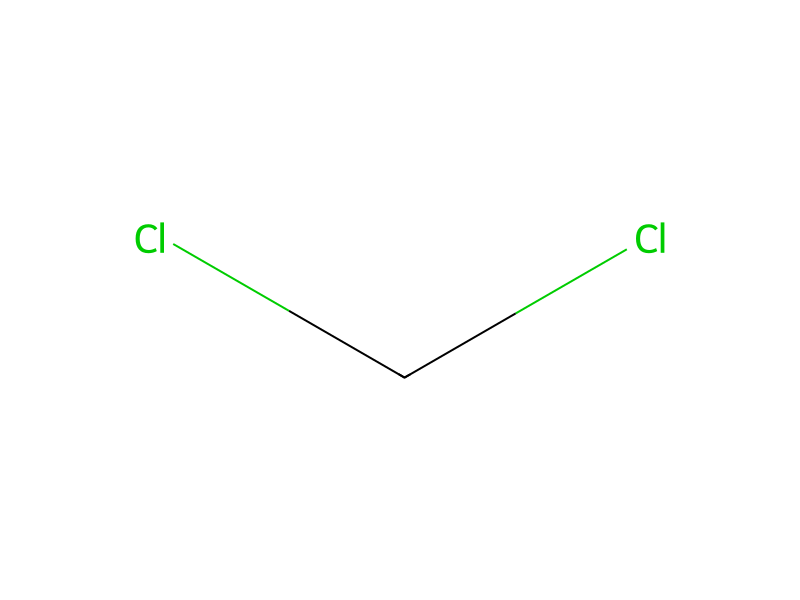
Reagents, catalysts & solvents 3
Conditions
- Temperature
- -30 °C
Procedure
A solution of N,N-diisopropyl-N-ethylamine (0.579 ml) in dichloromethane (5.21 ml) was added to a solution of 4-nitrobenzyl (2R, 5R, 6R)-3,7-dioxo-6-[1-methyl-1-(4-nitrobenzyloxycarbonyloxy)ethyl]-1-azabicyclo[3.2.0]heptane-2-carboxylate (1.50 g) and 4-(N,N-dimethylamino)pyridine (33.8 mg) in dichloromethane (75.0 ml) at -30° C. To this solution was added a solution of trifluoromethanesulfonic anhydride (0.489 ml) in dichloromethane (9.29 ml) and the mixture was stirred at -30° C. for 20 minutes. N,N-Diisopropyl-N-ethylamine (5.31 ml) and a solution of stannic chloride and hydrochloric acid salts of 3-mercaptopyridine (1.70 g) in N,N-dimethylformamide (15.3 ml) were then added to the mixture and the resultant mixture was allowed to warm to 20° C. over a period of 3 hours. After cooling to 0° C., additional N,N-diisopropyl-N-ethylamine (2.89 ml) and a solution of stannic chloride and hydrochloric acid salts of 3-mercaptopyridine (0.570 g) in N,N-dimethylformamide (5.13 ml) were added to the mixture. The resultant mixture was allowed to warm to 20° C. over a period of an hour and evaporated in vacuo. The residue was dissolved in dichloromethane (250 ml), washed in turn with cold water (x6) and an aqueous sodium chloride, dried over magnesium sulfate, and evaporated in vacuo. The residue was chromatographed on deactivated silica gel with 15% water (150 g), eluting with a mixture of benzene and acetone (50:1 to 8:1). Crystallization from a mixture of dichloromethane and diethyl ether gave 4 -nitrobenzyl (5R,6R)-6-[1-methyl-1-(4-nitrobenzyloxycarbonyloxy)ethyl]-7-oxo-3-(3-pyridylthio)-1-azabicyclo[3.2.0]hept-2-ene-2-carboxylate (0.9747 g). The mother liquor was purified by column chromatography on silica gel, followed by crystallization to give the same product (0.2680 g) as a pale yellow powder. Total yield is 1.2427 g.
Workup
- temperatureto warm to 20° C. over a period of 3 hours
- temperatureAfter cooling to 0° C.
- temperatureto warm to 20° C. over a period of an hour
- customevaporated in vacuo
- dissolutionThe residue was dissolved in dichloromethane (250 ml)
- washwashed in turn with cold water (x6)
- dry with materialan aqueous sodium chloride, dried over magnesium sulfate
- customevaporated in vacuo
- customThe residue was chromatographed on deactivated silica gel with 15% water (150 g)
- washeluting with a mixture of benzene and acetone (50:1 to 8:1)
- customCrystallization
- additionfrom a mixture of dichloromethane and diethyl ether
Sources & evidence
- ORD record
- ord-19dfff13e2b9441282d351a2f89c5500
- Source dataset
- uspto-grants-1987_02
- Patent number
- US04640915
Reaction notes
Loading…