Potassium Carbonate → HCID 13773057, compound
Reaction equation

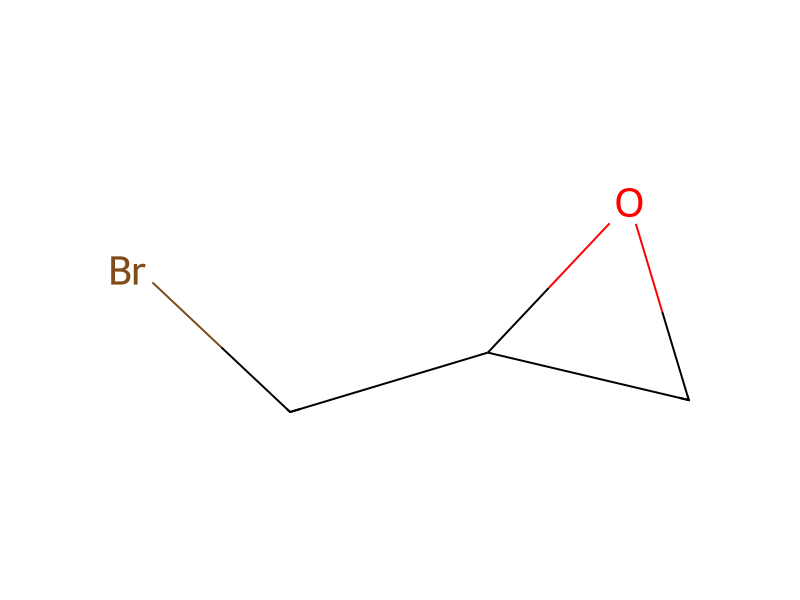
[Cl:1][C:2]1[C:7]([N:8]2[CH2:13][CH2:12][CH2:11][CH2:10][CH2:9]2)=[CH:6][CH:5]=[CH:4][C:3]=1[OH:14].[CH2:15]([CH:17]1[O:19][CH2:18]1)Br.C(=O)([O-])[O-].[K+].[K+]>C(#N)C>[Cl:1][C:2]1[C:7]([N:8]2[CH2:13][CH2:12][CH2:11][CH2:10][CH2:9]2)=[CH:6][CH:5]=[CH:4][C:3]=1[O:14][CH2:15][CH:17]1[O:19][CH2:18]1Participants
Reactant 3


Product 1

Reagents, catalysts & solvents 1

Procedure
A mixture of 7.47 grams of 2-chloro-3-piperidinophenol, 29.00 grams of epibromohydrin, 28.79 grams of potassium carbonate and 400 ml of acetonitrile is heated to reflux for twenty hours, insoluble matters are removed therefrom by filtration, the filtrate is entirely concentrated to dryness, and the residue is purified by a silica gel chromatography followed by recrystallization from n-hexane to give 8.0 grams (85%) of 1-(2-chloro-3-piperidinophenoxy)-2,3-epoxypropane as colorless crystals of m.p. 55°-57° C. NMR (CDCl3): δ 1.55-1.95 (m, 6H), 2.75-3.19 (m, 7H), 4.10 (dd, 1H, J=11 Hz and 14 Hz), 4.18 (dd, 1H, J=11 Hz and 21 Hz), 6.54-6.77 (m, 2H). Elementary analysis calculated as C14H18ClNO2 : C 62.80, H 6.78, N 5.23, Cl 13.24; Found: C 62.61, H 6.87, N 5.08, Cl 13.15.
Workup
- temperatureis heated
- temperatureto reflux for twenty hours
- custominsoluble matters are removed
- filtrationby filtration
- concentrationthe filtrate is entirely concentrated to dryness
- customthe residue is purified by a silica gel chromatography
- customfollowed by recrystallization from n-hexane
Sources & evidence
- ORD record
- ord-7f74458c088f4423853e01f48d62ab18
- Source dataset
- uspto-grants-1987_02
- Patent number
- US04642307
Reaction notes
Loading…