Dichloromethane → HCID 67260951, compound
Reaction equation

[Br:1][C:2]1[S:6][C:5]([C:7]2[C:11]([C:12]3[CH:17]=[CH:16][N:15]=[CH:14][CH:13]=3)=[CH:10][NH:9][N:8]=2)=[CH:4][CH:3]=1.Br[CH2:19][CH:20]([CH3:22])[CH3:21].C(=O)([O-])[O-].[Cs+].[Cs+].ClCCl>CN(C)C=O.O>[CH2:19]([N:9]1[CH:10]=[C:11]([C:12]2[CH:17]=[CH:16][N:15]=[CH:14][CH:13]=2)[C:7]([C:5]2[S:6][C:2]([Br:1])=[CH:3][CH:4]=2)=[N:8]1)[CH:20]([CH3:22])[CH3:21]Participants
7

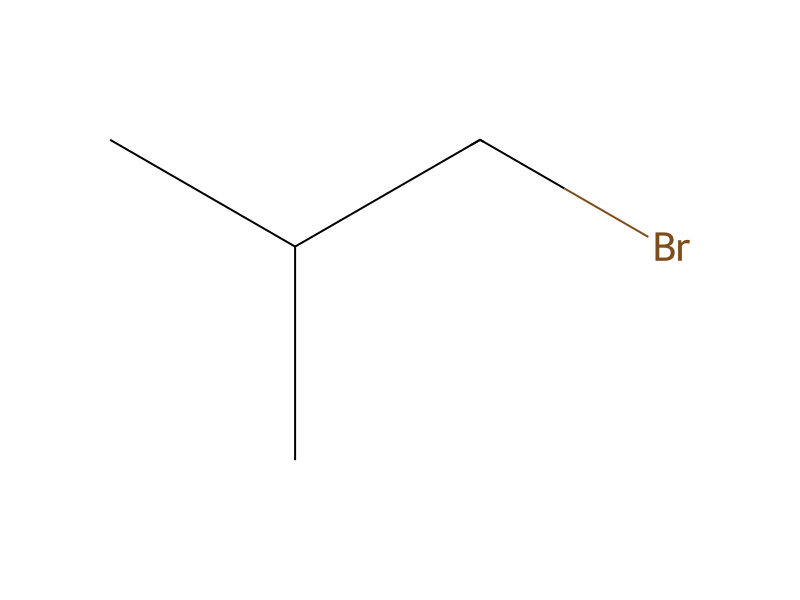





Procedure
To a solution of 4-[3-(5-bromo-2-thienyl)-1H-pyrazol-4-yl]pyridine (1 eq, 8.8 mmol) in 50 mL N,N-dimethylformamide were added 1-bromo-2-methylpropane (1.5 eq, 13.2 mmol) and cesium carbonate (1.1 eq, 9.7 mmol). The reaction mixture was stirred overnight at room temperature and poured in 500 mL of water. The resulting precipitate was filtered and dried. The solid was then recristallised in a mixture diisopropylether:dichloromethane to afford 1.81 g of 4-[1-isobutyl-3-(5-bromo-2-thienyl)-1H-pyrazol-4-yl]pyridine (53% yield).
Workup
- filtrationThe resulting precipitate was filtered
- customdried
Sources & evidence
- ORD record
- ord-5357b1ad14ef4a6bb3dcb50a3a53ba91
- Source dataset
- uspto-grants-2014_04
- Patent number
- US08685974B2
Reaction notes
Loading…