Methyl iodide → 2-Imidazolidinethione, 4,4-dimethyl-
Reaction equation

NCC(N)(C)C.CI.I.C[S:11][C:12]1[NH:13][CH2:14][C:15]([CH3:18])([CH3:17])[N:16]=1.[Cl:19][C:20]1[CH:27]=[CH:26][C:23]([CH2:24][NH2:25])=[CH:22][CH:21]=1.[Na].[N:29](=[C:31]([C:37]#[N:38])[C:32](OCC)=[O:33])[OH:30]>O.C(O)(=O)C.CCO.C(Cl)Cl.C(=S)=S>[CH3:17][C:15]1([CH3:18])[CH2:14][NH:13][C:12](=[S:11])[NH:16]1.[NH2:38][C:37]1[N:25]([CH2:24][C:23]2[CH:26]=[CH:27][C:20]([Cl:19])=[CH:21][CH:22]=2)[C:12]2[N:13]([CH2:14][C:15]([CH3:18])([CH3:17])[N:16]=2)[C:32](=[O:33])[C:31]=1[N:29]=[O:30]Participants
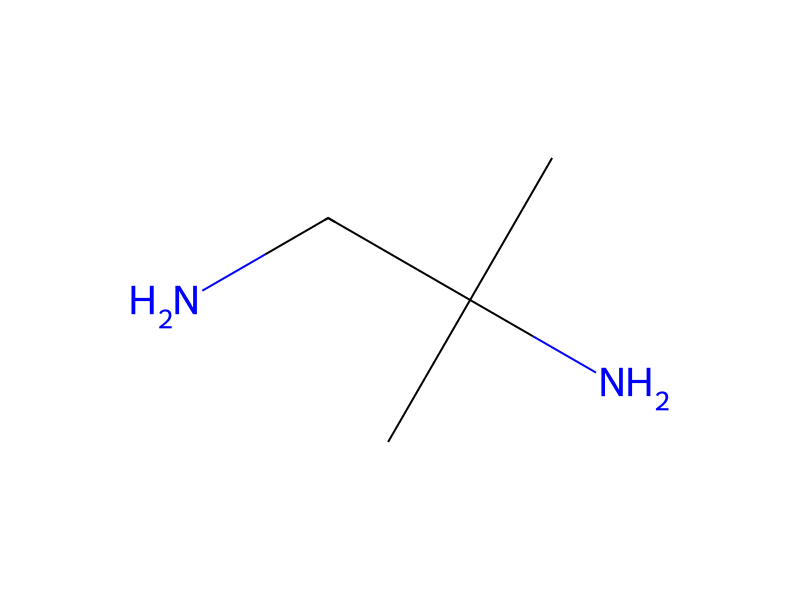
Reactant 6





Product 2


Reagents, catalysts & solvents 5





Procedure
4,4-Dimethylimidazoline-2-thione was prepared by adding a solution of 50 g. of 1,2-diamino-2-methylpropane in 35 ml. of methylene chloride dropwise with stirring to a solution of 43 g. of carbon disulfide in 200 ml. of methylene chloride during about 3 hrs. The product formed as a white precipitate immediately on mixing of the two solutions. The solvent was removed by distillation in vacuo and replaced with water, and the mixture was refluxed for 7 hrs. It was concentrated to one-half the original volume, clarified by filtration while hot, and the product allowed to crystallize from the filtrate, yield 60.6 g., m.p. 114°-115°. A portion of this material, 43.9 g., (0.337 mole), was treated with 47.9 g. (0.337 mole) of methyl iodide in 400 ml. of ethanol. The methyl iodide was added by dropwise addition. The mixture was then concentrated in vacuo to an oil which was mixed with i-Pr2O to induce crystallization resulting in the formation of a light yellow solid, yield 90.7 g. (99%), of 2-methylthio-4,4-dimethyl-2-imidazoline hydroiodide. A portion of this material, 27.2 g. (0.1 mole), and 14.1 g. (0.1 mole) of p-chlorobenzylamine were dissolved in 100 ml. of abs. EtOH and added to a solution of 9.0 g. (0.4 mole) of sodium in 400 ml. of abs. EtOH at the reflux temperature. The solution was stirred for 10 min. and 14.2 g. (0.1 mole) of ethyl oximinocyanoacetate was added in portions during a period of about 5 min. The reaction solution became clear and bright yellow in color. It was refluxed for 41/2 hrs. and then concentrated in vacuo to yield an oily solid. The latter was dissolved in water and treated with acetic acid resulting in formation of the desired product as a red precipitate which was collected and air dried, m.p. 214°-215°, yield 16.7 g. (50%).
Workup
- additionby adding a solution of 50 g
- customThe product formed as a white precipitate immediately
- additionon mixing of the two solutions
- customThe solvent was removed by distillation in vacuo
- temperaturethe mixture was refluxed for 7 hrs
- concentrationIt was concentrated to one-half the original volume
- filtrationclarified by filtration while hot, and the product
- customto crystallize from the filtrate, yield 60.6 g
- addition, (0.337 mole), was treated with 47.9 g
- concentrationThe mixture was then concentrated in vacuo to an oil which
- additionwas mixed with i-Pr2O
- customcrystallization
- customresulting in the formation of a light yellow solid, yield 90.7 g
- temperatureIt was refluxed for 41/2 hrs
- concentrationand then concentrated in vacuo
- customto yield an oily solid
- customwas collected
- customair dried
Sources & evidence
- ORD record
- ord-6abf894912444d1498d95be0b6acdcbb
- Source dataset
- uspto-grants-1987_02
- Patent number
- US04642345
Reaction notes
Loading…