Cyclobutanone → HCID 58513750, compound
Reaction equation

Br[C:2]1[CH:3]=[CH:4][C:5](I)=[N:6][CH:7]=1.C([Mg]Cl)(C)C.[C:14]1(=[O:18])[CH2:17][CH2:16][CH2:15]1.C([Li])CCC.[CH2:24]([Sn:28](Cl)([CH2:33][CH2:34][CH2:35][CH3:36])[CH2:29][CH2:30][CH2:31][CH3:32])[CH2:25][CH2:26][CH3:27]>O1CCCC1>[CH2:33]([Sn:28]([CH2:24][CH2:25][CH2:26][CH3:27])([CH2:29][CH2:30][CH2:31][CH3:32])[C:2]1[CH:3]=[CH:4][C:5]([C:14]2([OH:18])[CH2:17][CH2:16][CH2:15]2)=[N:6][CH:7]=1)[CH2:34][CH2:35][CH3:36]Participants



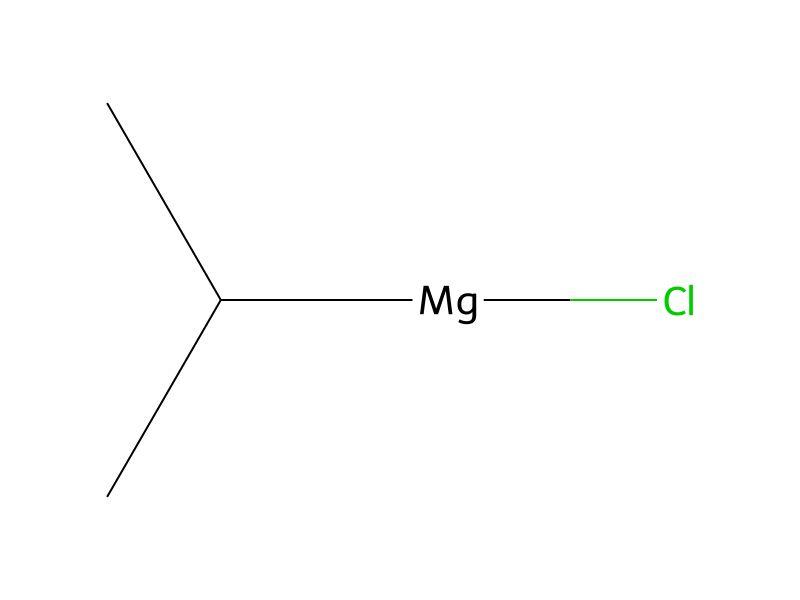


Conditions
- Temperature
- 0 °C
Procedure
To a cold (−10° C.) solution of 5-bromo-2-iodopyridine (3.0 g, 10.57 mmol) in tetrahydrofuran (35 mL) was added isopropylmagnesium chloride (5.55 ml, 11.10 mmol, 2 M solution in tetrahydrofuran) dropwise over 10 minutes. The reaction was allowed to warm to 0° C. over 1 hour and then cooled to −10° C. Cyclobutanone (0.792 ml, 10.57 mmol) was added dropwise, and the reaction was warmed to 15° C. over 1 hour to give a homogenous solution. The reaction was cooled to −78° C. (precipitate formed). The reaction was warmed to ˜0° C. and diluted with an additional 50 mL tetrahydrofuran to dissolve the precipitate. The reaction was cooled to −78° C., and n-butyllithium (4.23 ml, 10.57 mmol, 2.5 M in hexane) was added dropwise. The reaction was stirred for 0.5 hours, and tributyltin chloride (2.87 mL, 10.57 mmol) was added dropwise. The reaction was stirred at −78° C. for 15 minutes, and was then quenched by the dropwise addition of saturated aqueous sodium bicarbonate solution. The layers were separated, and the aqueous layer was extracted with ethyl acetate (3×30 mL). The combined organic layers were washed with water, brine, dried with anhydrous sodium sulfate, filtered and concentrated under reduced pressure. The residue was purified by chromatography on silica gel, eluting with a gradient of 0 to 10% ethyl acetate in hexane, to give the title compound. MS ESI(+) m/z 440.2 [M+H]+.
Workup
- temperaturecooled to −10° C
- temperaturethe reaction was warmed to 15° C. over 1 hour
- customto give a homogenous solution
- temperatureThe reaction was cooled to −78° C.
- custom(precipitate formed)
- temperatureThe reaction was warmed to ˜0° C.
- dissolutionto dissolve the precipitate
- temperatureThe reaction was cooled to −78° C.
- stirringThe reaction was stirred at −78° C. for 15 minutes
- customwas then quenched by the dropwise addition of saturated aqueous sodium bicarbonate solution
- customThe layers were separated
- extractionthe aqueous layer was extracted with ethyl acetate (3×30 mL)
- washThe combined organic layers were washed with water, brine
- dry with materialdried with anhydrous sodium sulfate
- filtrationfiltered
- concentrationconcentrated under reduced pressure
- customThe residue was purified by chromatography on silica gel
- washeluting with a gradient of 0 to 10% ethyl acetate in hexane
Sources & evidence
- ORD record
- ord-29516a9ac83740bc8d4a54511b42d05b
- Source dataset
- uspto-grants-2014_04
- Patent number
- US08691810B2
Reaction notes
Loading…