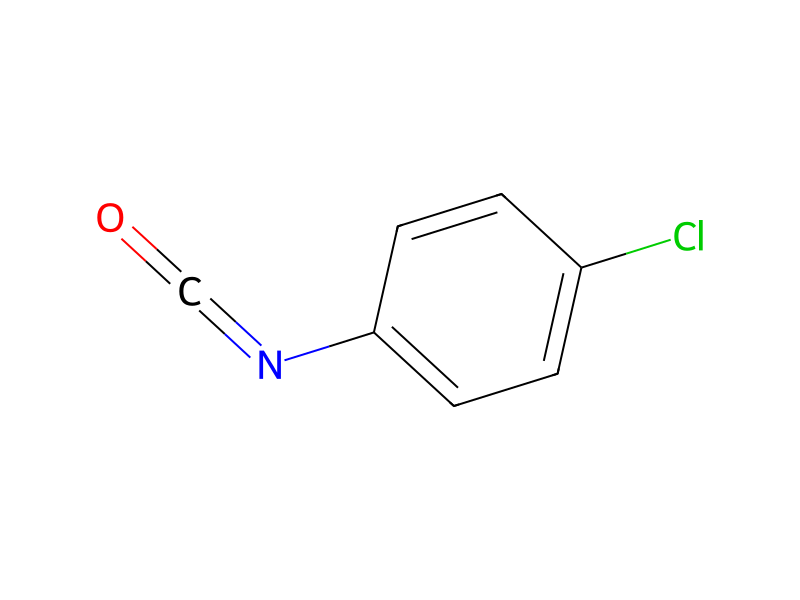
4-Chlorophenyl Isocyanate → beta-Oxo-alpha-(4-chlorophenyl carbamoyl)-beta-(2-pyrrolyl)propionitrile
Reaction equation

[NH:1]1[CH:5]=[CH:4][CH:3]=[C:2]1[C:6]([CH2:8][C:9]#[N:10])=[O:7].CCN(CC)CC.[Cl:18][C:19]1[CH:24]=[CH:23][C:22]([N:25]=[C:26]=[O:27])=[CH:21][CH:20]=1>C(COC)OC>[O:7]=[C:6]([C:2]1[NH:1][CH:5]=[CH:4][CH:3]=1)[CH:8]([C:26](=[O:27])[NH:25][C:22]1[CH:23]=[CH:24][C:19]([Cl:18])=[CH:20][CH:21]=1)[C:9]#[N:10]Participants




Procedure
To the solution of 6.7 g of 2-pyrroloylacetonitrile in 25 ml of glyme and 5.5 g of Et3N is added a solution of 8.6 g of 4-chlorophenyl isocyanate in 25 ml of glyme. After the exothermic reaction, the mixture is let stand overnight. Part of the solvent is evaporated and the cooled residue is poured into a solution of 10 ml of 6N HCl in 250 ml of water. After the addition of some methanol, the crude material is collected. It is dissolved in dilute NaOH solution, the solution is treated with charcoal, filtered, and acidified with 6N HCl. The reprecipitated product is collected, washed with water, and triturated with methanol to give solid, m.p. 219°-221°. Recrystallization from methanol gives β-oxo-α-(4-chlorophenyl carbamoyl)-β-(2-pyrrolyl)propionitrile, m.p. 223°-5°.
Workup
- customAfter the exothermic reaction
- customPart of the solvent is evaporated
- additionthe cooled residue is poured into a solution of 10 ml of 6N HCl in 250 ml of water
- additionAfter the addition of some methanol
- customthe crude material is collected
- dissolutionIt is dissolved in dilute NaOH solution
- additionthe solution is treated with charcoal
- filtrationfiltered
- customThe reprecipitated product is collected
- washwashed with water
- customtriturated with methanol
- customto give solid, m.p. 219°-221°
- customRecrystallization from methanol
Sources & evidence
- ORD record
- ord-6e9d6fb7d44149648f016b9dffb61771
- Source dataset
- uspto-grants-1987_02
- Patent number
- US04644010
Reaction notes
Loading…