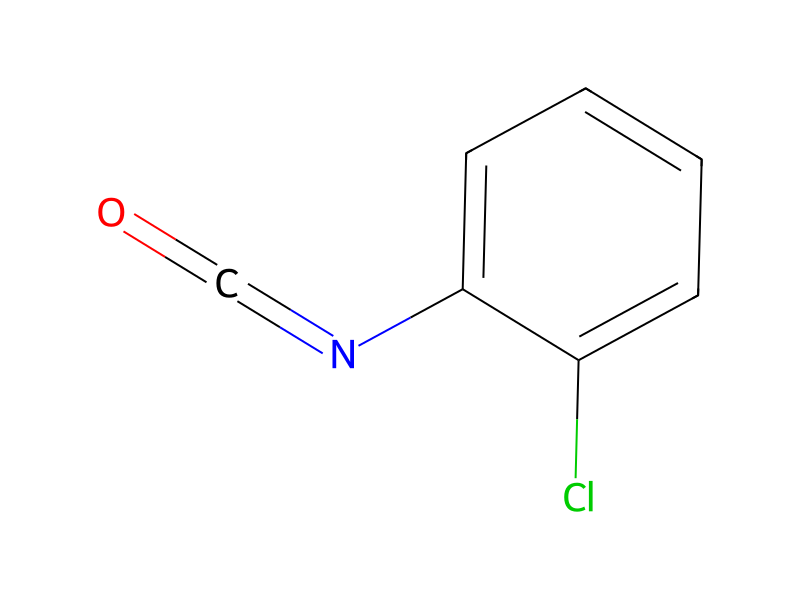
Chlorophenyl isocyanate → HCID 86686925, compound
Reaction equation

[CH3:1][O:2][C:3](=[O:23])[CH2:4][C:5]1[C:14]([CH3:15])=[C:13]([CH:16]2[CH2:21][CH2:20][NH:19][CH2:18][CH2:17]2)[C:12]2[C:7](=[CH:8][CH:9]=[C:10]([F:22])[CH:11]=2)[CH:6]=1.[Cl:24][C:25]1[CH:30]=[CH:29][CH:28]=[CH:27][C:26]=1[N:31]=[C:32]=[O:33].C(N(CC)C(C)C)(C)C>CO.O>[CH3:1][O:2][C:3](=[O:23])[CH2:4][C:5]1[C:14]([CH3:15])=[C:13]([CH:16]2[CH2:17][CH2:18][N:19]([C:32](=[O:33])[NH:31][C:26]3[CH:27]=[CH:28][CH:29]=[CH:30][C:25]=3[Cl:24])[CH2:20][CH2:21]2)[C:12]2[C:7](=[CH:8][CH:9]=[C:10]([F:22])[CH:11]=2)[CH:6]=1Participants
Reactant 3


Product 1

Reagents, catalysts & solvents 2


Procedure
A solution of (6-fluoro-3-methyl-4-piperidin-4-yl-naphthalen-2-yl)-acetic acid methyl ester (which may be prepared as described above; 153 mg, 0.485 mmol) in methanol (6.0 mL) was added to neat 1-chloro-2-isocyanatobenzene (81.9 mg, 0.534 mmol) at room temperature under nitrogen. The resulting light brown solution was heated at reflux for 15 hours at which time LCMS analysis indicated the presence of significant starting material. Reflux was continued over the weekend. LCMS analysis indicated little change in the reaction progress. To the reaction mixture was added N,N-diisopropylethylamine (93.2 μL, 0.534 mmol) at room temperature and the reaction mixture was then refluxed again for 24 hours. Significant starting material still remained. The reaction mixture was diluted with water (25 mL) and resulting mixture was extracted with ethyl acetate (2×50 mL). The combined extracts were washed with brine, dried over anhydrous MgSO4, filtered, and concentrated to give the crude product as a semi-solid (230 mg). Flash chromatography (40 g ISCO column, eluting with 0-100% ethyl acetate/hexanes and finally 25% MeOH/dichloromethane) provided {4-[1-(2-chloro-phenylcarbamoyl)-piperidin-4-yl]-6-fluoro-3-methyl-naphthalen-2-yl}-acetic acid methyl ester (10.5 mg, 4.6%) as a viscous oil. MS cald. for C26H27ClFN2O3 [(M+H)+] 469, obsd. 469.0.
Workup
- temperatureThe resulting light brown solution was heated
- temperatureat reflux for 15 hours at which time LCMS analysis
- temperatureReflux
- temperaturethe reaction mixture was then refluxed again for 24 hours
- customresulting mixture
- extractionwas extracted with ethyl acetate (2×50 mL)
- washThe combined extracts were washed with brine
- dry with materialdried over anhydrous MgSO4
- filtrationfiltered
- concentrationconcentrated
- customto give the crude product as a semi-solid (230 mg)
- washFlash chromatography (40 g ISCO column, eluting with 0-100% ethyl acetate/hexanes and finally 25% MeOH/dichloromethane)
Sources & evidence
- ORD record
- ord-f3c28f4fdf0443a7848a531e8a972d1e
- Source dataset
- uspto-grants-2014_04
- Patent number
- US08691993B2
Reaction notes
Loading…