2-Ethylhexyl acrylate → Urethane acrylate
Reaction equation

O=C=[N:3]C1CC(C)(C)CC(C)(CN=C=O)C1.[C:17]([O:21][CH2:22][CH:23](CC)CCCC)(=[O:20])[CH:18]=[CH2:19]>C([O-])(=O)CCCCCCCCCCC.C([O-])(=O)CCCCCCCCCCC.C([Sn+2]CCCC)CCC>[C:17]([OH:21])(=[O:20])[CH:18]=[CH2:19].[NH2:3][C:17]([O:21][CH2:22][CH3:23])=[O:20]Participants
Reactant 2

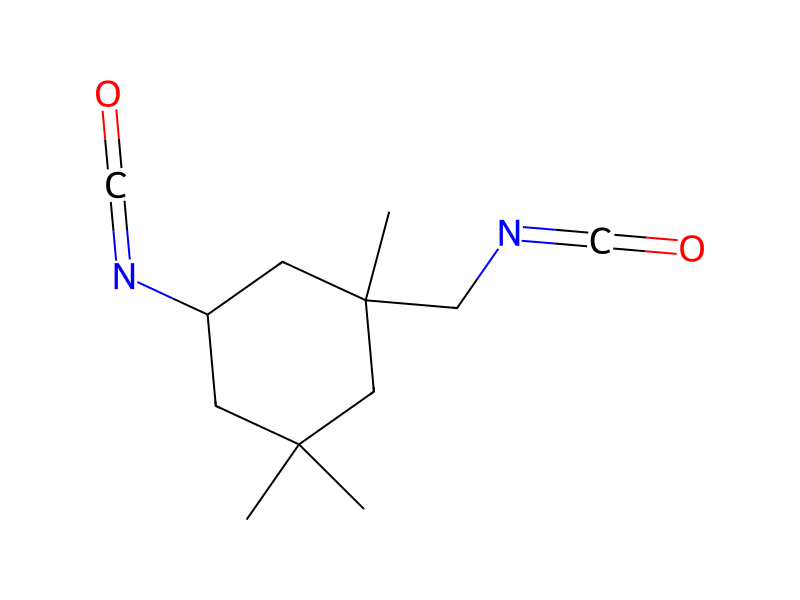
Product 1

Reagents, catalysts & solvents 1

Procedure
A four-neck flask fitted with a stirrer, a dropping funnel, a nitrogen inlet tube and a thermometer was charged with 1,000 g of the previously prepared polyoxyalkylene polyol (a1-1), 100 g of isophorone diisocyanate (IPDI), 700 g of 2-ethylhexyl acrylate as a diluent, and 0.1 g of dibutyltin dilaurate as a catalyst, and these components were reacted for 4 hours at a temperature of 100° C. The infrared absorption spectrum of the reaction mixture was measured, and once it had been confirmed that the isocyanate group absorption (2250 cm−1) had disappeared, 23 g of the monoisocyanate (HEA-H6XDI) was added to the reaction mixture, and reaction was continued for a further 2 hours at a temperature of 100° C. Subsequently, the infrared absorption spectrum of the resulting reaction mixture was measured again, confirming that the isocyanate group absorption (2250 cm−1) had disappeared.
Workup
- customA four-neck flask fitted with a stirrer, a dropping funnel, a nitrogen inlet tube
- customthese components were reacted for 4 hours at a temperature of 100° C
- customThe infrared absorption spectrum of the reaction mixture
- customonce it had been confirmed that the isocyanate group absorption (2250 cm−1)
- addition23 g of the monoisocyanate (HEA-H6XDI) was added to the reaction mixture, and reaction
- customSubsequently, the infrared absorption spectrum of the resulting reaction mixture
- customconfirming that the isocyanate group absorption (2250 cm−1)
Sources & evidence
- ORD record
- ord-10379c49d4814c24bd0e2ff0ab9c07f9
- Source dataset
- uspto-grants-2014_04
- Patent number
- US08697240B2
Reaction notes
Loading…