Sodium Carbonate → HCID 86696690, compound
Reaction equation

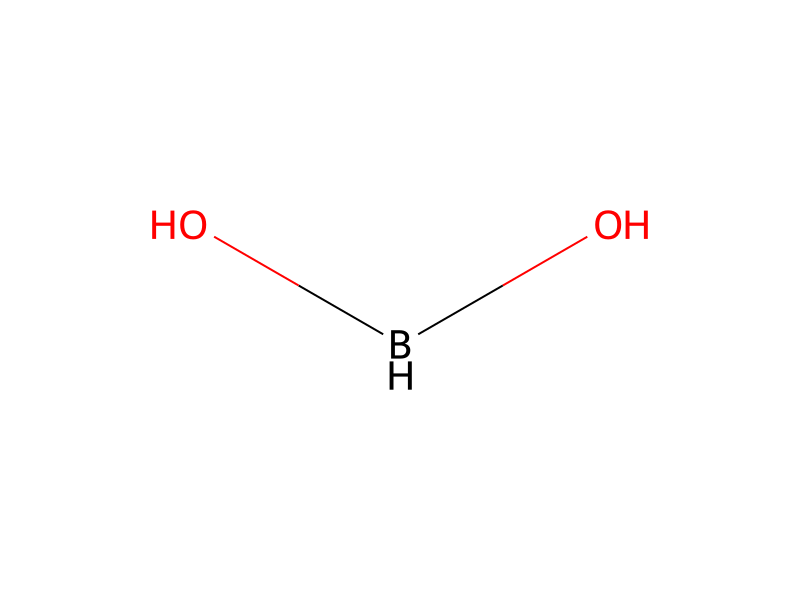
C(=O)([O-])[O-].[Na+].[Na+].[Cl:7][C:8]1[C:13]([F:14])=[C:12](B(O)O)[CH:11]=[CH:10][N:9]=1.[Cl:18][C:19]1[N:24]=[C:23](Cl)[CH:22]=[CH:21][N:20]=1.B(O)O>O.C1C=CC(P(C2C=CC=CC=2)[C-]2C=CC=C2)=CC=1.C1C=CC(P(C2C=CC=CC=2)[C-]2C=CC=C2)=CC=1.Cl[Pd]Cl.[Fe+2].O1CCOCC1.O>[Cl:18][C:19]1[N:24]=[C:23]([C:12]2[CH:11]=[CH:10][N:9]=[C:8]([Cl:7])[C:13]=2[F:14])[CH:22]=[CH:21][N:20]=1Participants
8
Reactant 4



Product 1

Reagents, catalysts & solvents 3



Conditions
- Temperature
- 80 °C
Procedure
Sodium carbonate (2.13 g, 20.1 mmol) was added to 2-chloro-3-fluoropyridin-4-ylboronic acid (1.41 g, 8.05 mmol) and 2,4-dichloropyrimidine (1.0 g, 6.71 mmol) in 4:1 dioxane/water (50 mL), and the mixture was sparged with argon. PdCl2(dppf)*DCM (0.274 g, 0.336 mmol) was added, and the mixture was heated at 80° C. under argon. After 4.5 hours, more boronic acid (approximately 0.2 g) was added and heating continued for a total of 8.5 hours. The reaction mixture was diluted with water, and the resulting solid was collected by vacuum filtration to afford the desired 2-chloro-4-(2-chloro-3-fluoropyridin-4-yl)pyrimidine (1.18 g, 4.84 mmol, 72.0% yield) with minor impurities.
Workup
- customthe mixture was sparged with argon
- temperatureheating
- customcontinued for a total of 8.5 hours
- filtrationthe resulting solid was collected by vacuum filtration
Sources & evidence
- ORD record
- ord-b32108bd6b42498fbea711756308ea26
- Source dataset
- uspto-grants-2014_04
- Patent number
- US08697715B2
Reaction notes
Loading…