Pyridine → 3-Methylcarbamoylisoxazol-5-ylmethyl 4-nitrophenyl carbonate
Reaction equation

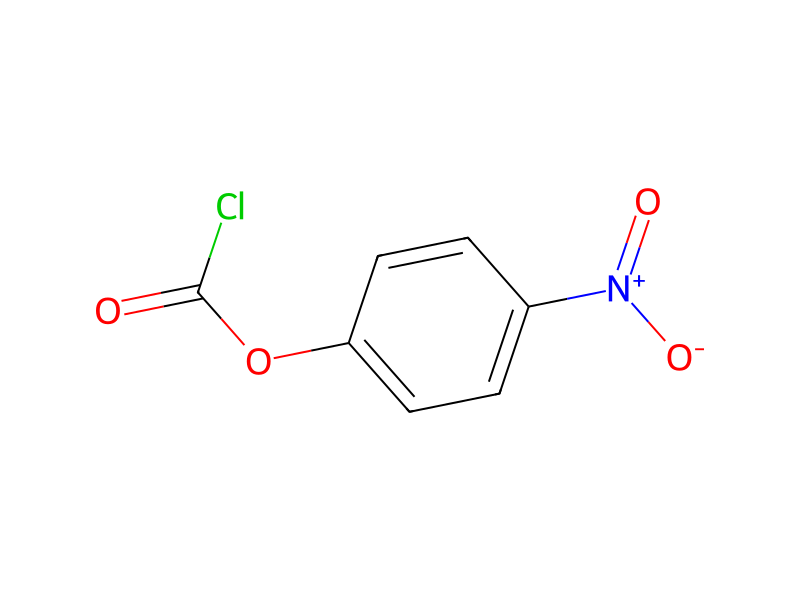
[CH3:1][NH:2][C:3]([C:5]1[CH:9]=[C:8]([CH2:10][OH:11])[O:7][N:6]=1)=[O:4].Cl[C:13]([O:15][C:16]1[CH:21]=[CH:20][C:19]([N+:22]([O-:24])=[O:23])=[CH:18][CH:17]=1)=[O:14].N1C=CC=CC=1>>[C:13](=[O:14])([O:15][C:16]1[CH:17]=[CH:18][C:19]([N+:22]([O-:24])=[O:23])=[CH:20][CH:21]=1)[O:11][CH2:10][C:8]1[O:7][N:6]=[C:5]([C:3](=[O:4])[NH:2][CH3:1])[CH:9]=1Participants
4



Procedure
The process is performed according to the procedure described in Example 4 (step 4.2.). Starting with 2.00 g (12.81 mmol) of 3-methylcarbamoylisoxazol-5-ylmethanol, 2.58 g (12.81 mmol) of 4-nitrophenyl chloroformate, 1.52 g (19.21 mmol) of pyridine and 0.157 g (1.28 mmol) of N,N-dimethylaminopyridine, 2.6 g (63%) of pure product are obtained in the form of a white powder.
Workup
- customare obtained in the form of a white powder
Sources & evidence
- ORD record
- ord-0da9150036294f75942f2b8b600a2326
- Source dataset
- uspto-grants-2014_04
- Patent number
- US08697883B2
Reaction notes
Loading…