Diisobutylaluminum hydride → 5-Nitropyridine-2-carbaldehyde
Reaction equation

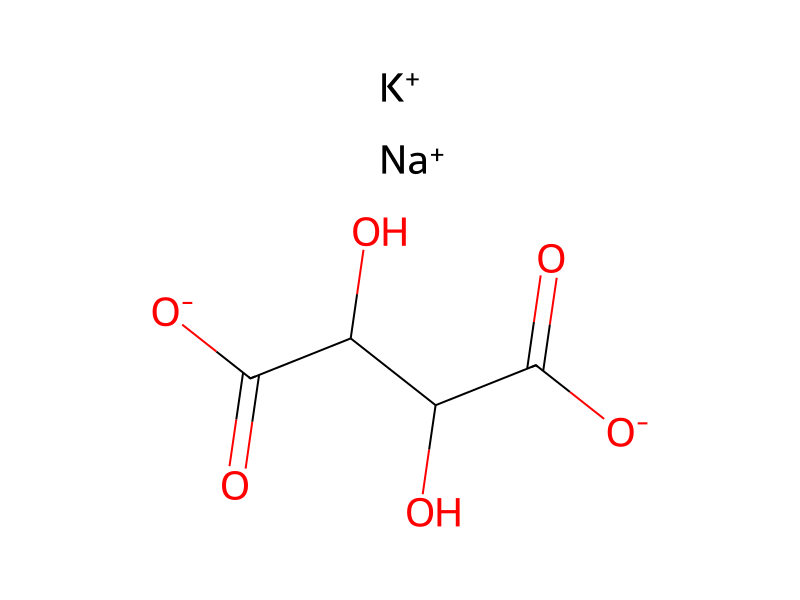
[N+:1]([C:4]1[CH:5]=[CH:6][C:7]([C:10](OC)=[O:11])=[N:8][CH:9]=1)([O-:3])=[O:2].CC(C[AlH]CC(C)C)C.C(C(C(C([O-])=O)O)O)([O-])=O.[Na+].[K+]>C(Cl)Cl.O>[N+:1]([C:4]1[CH:5]=[CH:6][C:7]([CH:10]=[O:11])=[N:8][CH:9]=1)([O-:3])=[O:2]Participants





Conditions
- Temperature
- -78 °C
Procedure
To a suspension of methyl 5-nitropicolinate (LIX) (1.282 g, 7.03 mmol) in DCM (25 mL) stirred at −78° C. under argon was slowly added DIBAL (1M in toluene) (9.14 mL, 9.14 mmol). The solution was allowed to warm to room temperature over 3 h. An aqueous solution of potassium sodium tartrate was added, diluted further with water and DCM. The solution was stirred at room temperature for another 30 min before the organic layer was separated. The aqueous layer was extracted 2×DCM, combined with the organic layer, dried over MgSO4, filtered and evaporated under reduced pressure. The residue was purified by column chromatography to produce 5-nitropicolinaldehyde (LX) as a brown oil (0.64 g, 4.2 mmol, 60% yield). 1H NMR (DMSO-d6) δ ppm 8.17 (d, J=9 Hz, 1H), 8.81 (dd, J=9 Hz, J=2 Hz, 1H), 9.56 (d, J=2 Hz, 1H), 10.08 (s, 1H).
Workup
- temperatureto warm to room temperature over 3 h
- stirringThe solution was stirred at room temperature for another 30 min before the organic layer
- customwas separated
- extractionThe aqueous layer was extracted 2×DCM
- dry with materialdried over MgSO4
- filtrationfiltered
- customevaporated under reduced pressure
- customThe residue was purified by column chromatography
Sources & evidence
- ORD record
- ord-6b83dd15f9dc4ac9a8da14930289bbe5
- Source dataset
- uspto-grants-2014_04
- Patent number
- US08697887B2
Reaction notes
Loading…