Dichloromethane → HCID 49855063, compound
Reaction equation

Br[C:2]1[CH:3]=[C:4]2[C:8](=[CH:9][CH:10]=1)[NH:7][CH:6]=[C:5]2/[C:11](=[CH:14]/[C:15]1[CH:16]=[N:17][CH:18]=[CH:19][CH:20]=1)/[C:12]#[N:13].[O-]P([O-])([O-])=O.[K+].[K+].[K+].C(Cl)Cl.[F:32][C:33]1[CH:38]=[CH:37][C:36](B(O)O)=[CH:35][CH:34]=1>C1C=CC(P(C2C=CC=CC=2)[C-]2C=CC=C2)=CC=1.C1C=CC(P(C2C=CC=CC=2)[C-]2C=CC=C2)=CC=1.Cl[Pd]Cl.[Fe+2].C(OCC)C.C1COCC1>[F:32][C:33]1[CH:38]=[CH:37][C:36]([C:2]2[CH:3]=[C:4]3[C:8](=[CH:9][CH:10]=2)[NH:7][CH:6]=[C:5]3/[C:11](=[CH:14]/[C:15]2[CH:16]=[N:17][CH:18]=[CH:19][CH:20]=2)/[C:12]#[N:13])=[CH:35][CH:34]=1Participants
Reactant 4



Product 1

Reagents, catalysts & solvents 3



Conditions
- Temperature
- 50 °C
Procedure
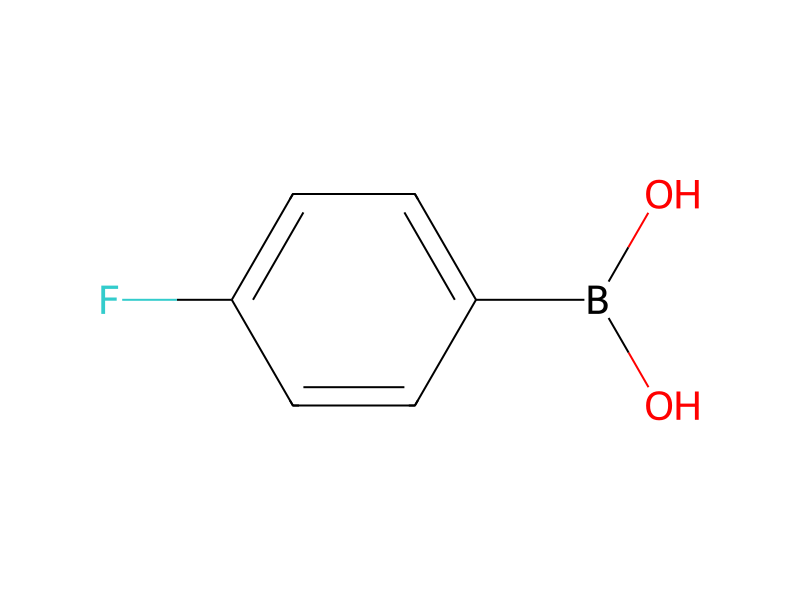
To a solution of (Z)-2-(5-bromo-1H-indol-3-yl)-3-pyridin-3-yl-acrylonitrile (180 mg, 0.56 mmol, 1.0 eq.) in anhydrous and degazed THF (6.0 mL) were added, under an argon atmosphere, K3PO4 (236 mg, 1.11 mmol, 2.0 eq.), PdCl2(dppf).CH2Cl2 (41 mg, 0.056 mmol, 0.1 eq.) and 4-fluorophenylboronic acid (155 mg, 1.11 mmol, 2.0 eq.). The reaction apparatus was protected from light and the mixture was heated at 50° C. for 16 hours, and then, quenched with a saturated aqueous ammonium chloride solution, after cooling to room temperature. The mixture was extracted with ethyl acetate and the organic layer was washed with water, dried over MgSO4, and then, evaporated under reduced pressure. The residue was purified by silica gel flash-column chromatography (eluent: heptane/AcOEt, 50/50 to 30/70) to afford, after trituration with diethyl ether, the compound (39) as an orange solid (175 mg, 92%). IR νmax (cm−1): 2217 (νCN); 1H NMR (DMSO, 500 MHz) δ (ppm): 7.29 (2H, t, J10′-9′=J12′-13′=J10′-F=J12′-F=8.5 Hz, H10′ and H12′), 7.52 (1H, dm, J6′-7′=8.9 Hz, H6′), 7.55 (1H, dd, J5″-4″=7.9 Hz, J5″-6″=4.9 Hz, H5″), 7.59 (1H, d, J7′-6′=8.9 Hz, H7′), 7.78 (2H, dd, J9′-10′=J13′-12′=8.5 Hz et J9′-F=J13′-F=5.5 Hz, H9′ and H13′), 7.89 (1H, m, H4′), 7.91 (1H, s, H3), 8.23 (1H, s, H2′), 8.34 (1H, d, J4″-5″=7.9 Hz, H4″), 8.60 (1H, d, J6″-5″=4.9 Hz, H6″), 9.01 (1H, s, H2″), 11.86 (1H, s, indolic H); 13C NMR (DMSO, 75.5 MHz) δ (ppm): 108.4 (C2), 111.4 (C3′), 113.4 (C7′), 116.0 (2C, d, 2JC—F=21 Hz, C10′ and C12′), 118.1 (C2′), 118.6 (C1), 122.6 (C6′), 124.1 (C5″), 124.7 (C3a′), 128.4 (C4′), 129.4 (2C, d, 3JC—F=8 Hz, C9′ and C13′), 131.4 (C3″), 132.9 (C7a′), 133.8 (C3), 135.2 (C4″), 137.2 (C5′), 138.4 (C8′), 150.1 (C6″), 150.5 (C2″), 162.0 (1C, d, 1JC—F=244 Hz, C4″); ESI-MS: m/z 340.1 ([M+H]+); HRESI-MS: m/z 340.1241 (calcd for C22H15N3F, 340.1250).
Workup
- customquenched with a saturated aqueous ammonium chloride solution
- temperatureafter cooling to room temperature
- extractionThe mixture was extracted with ethyl acetate
- washthe organic layer was washed with water
- dry with materialdried over MgSO4
- customevaporated under reduced pressure
- customThe residue was purified by silica gel flash-column chromatography (eluent: heptane/AcOEt, 50/50 to 30/70)
- customto afford
Sources & evidence
- ORD record
- ord-53e3fe10590f44af98b5c554296d3d3e
- Source dataset
- uspto-grants-2014_04
- Patent number
- US08703808B2
Reaction notes
Loading…