1,1-Dimethylhydrazine → N-[(E)-[(E)-3-(4-bromo-2-prop-2-ynoxyphenyl)prop-2-enylidene]amino]-N-methylmethanamine
Reaction equation

[Br:1][C:2]1[CH:7]=[CH:6][C:5](/[CH:8]=[CH:9]/[CH:10]=O)=[C:4]([O:12][CH2:13][C:14]#[CH:15])[CH:3]=1.[O-]S([O-])(=O)=O.[Mg+2].[CH3:22][N:23]([CH3:25])[NH2:24]>ClCCl>[Br:1][C:2]1[CH:7]=[CH:6][C:5](/[CH:8]=[CH:9]/[CH:10]=[N:24]/[N:23]([CH3:25])[CH3:22])=[C:4]([O:12][CH2:13][C:14]#[CH:15])[CH:3]=1Participants
Reactant 3

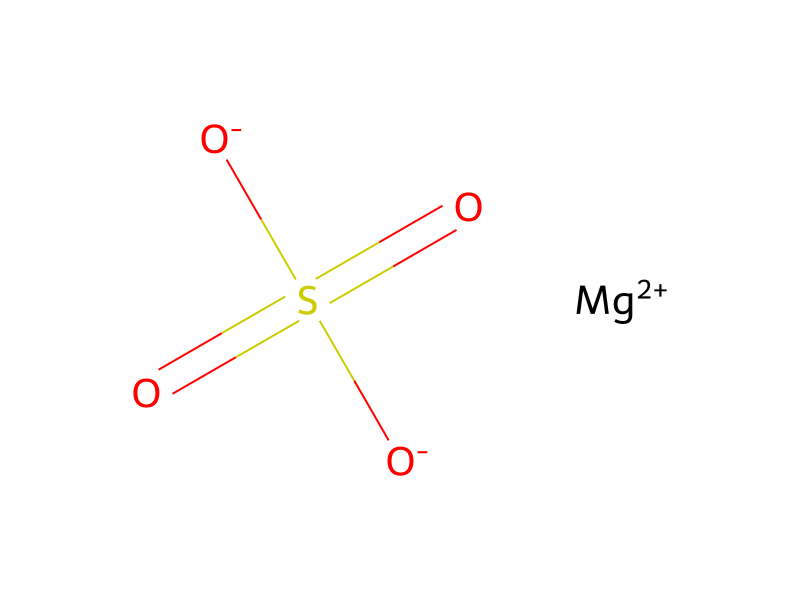

Product 1

Reagents, catalysts & solvents 1

Procedure
A solution of (E)-3-(4-bromo-2-(prop-2-ynyloxy)phenyl)acrylaldehyde (2.85 g, 10.8 mmol) in dichloromethane (200 mL) containing anhydrous MgSO4 (16 g) was cooled in an ice bath with stirring. To the ice-cold solution was added 1,1-dimethylhydrazine (2.45 mL, 32.4 mmol) dropwise and the reaction mixture was allowed to warm up to ambient temperature and was stirred for 18 h. The volatiles were concentrated under reduced pressure and the residue was coevaporated sequentially with dichloromethane (50 mL), dichloroethane (50 mL) and heptane (50 mL). (E)-2-((E)-3-(4-bromo-2-(prop-2-ynyloxy)phenyl)allylidene)-1,1-dimethylhydrazine (2.7 g, 8.79 mmol, 90% yield, 90% purity) was obtained as a yellow powder. 1H NMR (500 MHz, CDCl3) δ 7.39 (d, J=7.9 Hz, 1H), 7.20-7.10 (m, 3H), 7.00-6.86 (m, 2H), 4.75 (d, J=2.3 Hz, 2H), 2.95 (s, 6H), 2.58 (t, J=2.3 Hz, 1H); LCMS (Method B) (ESI) m/e 307.0, 309.0 Br pattern [(M+H)+, calcd for C14H15BrN2O 307.0].
Workup
- temperaturewas cooled in an ice bath
- stirringwas stirred for 18 h
- concentrationThe volatiles were concentrated under reduced pressure
Sources & evidence
- ORD record
- ord-7869d09514fd4a4186a0c6e318d64e43
- Source dataset
- uspto-grants-2014_04
- Patent number
- US08703953B2
Reaction notes
Loading…