Potassium Phosphate, Tribasic → HCID 86674045, compound
Reaction equation

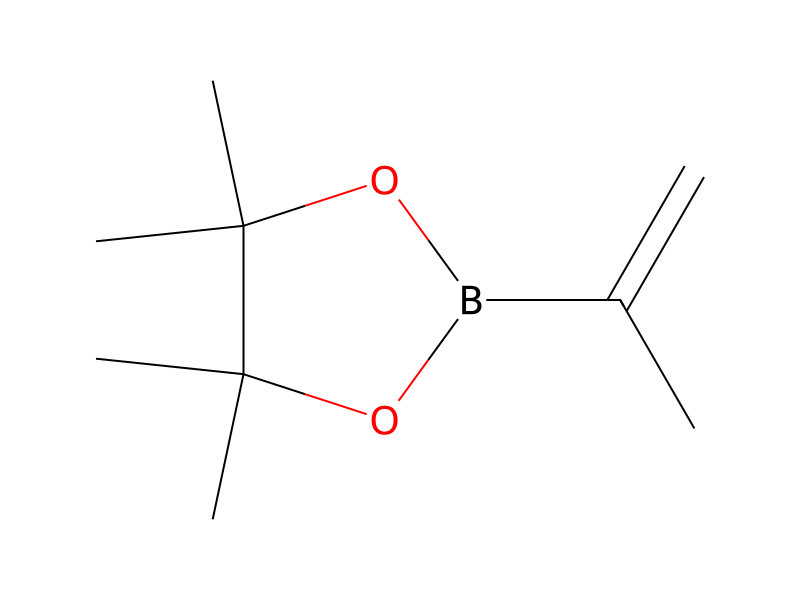
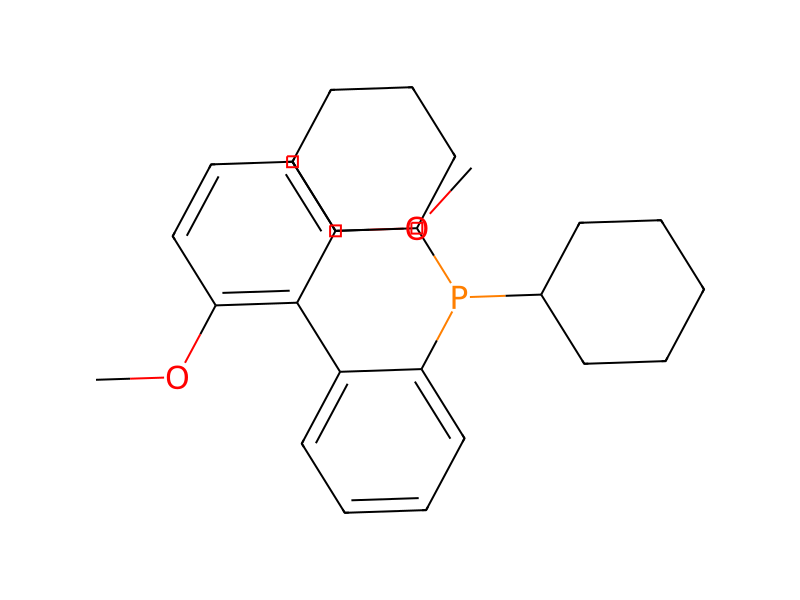
Cl[C:2]1[CH:7]=[CH:6][N:5]=[C:4]([C:8]2[CH:13]=[CH:12][CH:11]=[CH:10][CH:9]=2)[CH:3]=1.P([O-])([O-])([O-])=O.[K+].[K+].[K+].[CH3:22][C:23]1(C)[C:27](C)(C)OB(C(C)=C)O1>C1(C)C=CC=CC=1.O.C1C=CC(/C=C/C(/C=C/C2C=CC=CC=2)=O)=CC=1.C1C=CC(/C=C/C(/C=C/C2C=CC=CC=2)=O)=CC=1.C1C=CC(/C=C/C(/C=C/C2C=CC=CC=2)=O)=CC=1.[Pd].[Pd].COC1C=CC=C(OC)C=1C1C=CC=CC=1P(C1CCCCC1)C1CCCCC1>[C:8]1([C:4]2[CH:3]=[C:2]([C:23]([CH3:27])=[CH2:22])[CH:7]=[CH:6][N:5]=2)[CH:13]=[CH:12][CH:11]=[CH:10][CH:9]=1Participants
Reactant 3


Product 1

Reagents, catalysts & solvents 4



Procedure
4-Chloro-2-phenylpyridine (14 g, 73.8 mmol) and potassium phosphate (51.0 g, 221 mmol) were dissolved in 300 mL of toluene and 30 mL of water. The reaction was purged with nitrogen for 20 minutes and then 4,4,5,5-tetramethyl-2-(prop-1-en-2-yl)-1,3,2-dioxaborolane (16.65 mL, 89 mmol), Pd2(dba)3 (1.35 g, 1.48 mmol) and S-Phos (2.42 g, 5.91 mmol) were added. The reaction was brought to reflux for 18 h. After cooling, 100 mL of water was added, separated and the aqueous layer extracted twice with 100 mL of ethyl acetate. The organic layers were passed through a plug of silica gel, eluting with DCM. After evaporation of the solvent, the crude product was subjected to column chromatography (SiO2, 5% EtOAc in hexane to 10% EtOAc in hexane) to get 13.5 g (90%) of 2-phenyl-4-(prop-1-en-2-yl)pyridine.
Workup
- customThe reaction was purged with nitrogen for 20 minutes
- temperatureto reflux for 18 h
- temperatureAfter cooling
- customseparated
- extractionthe aqueous layer extracted twice with 100 mL of ethyl acetate
- washeluting with DCM
- customAfter evaporation of the solvent
Sources & evidence
- ORD record
- ord-57674675c75349f88e69517c5c54234f
- Source dataset
- uspto-grants-2014_04
- Patent number
- US08709615B2
Reaction notes
Loading…