Triethylamine → 4-Fluoro-2-[(1-oxopropyl)amino]benzoic acid
Reaction equation

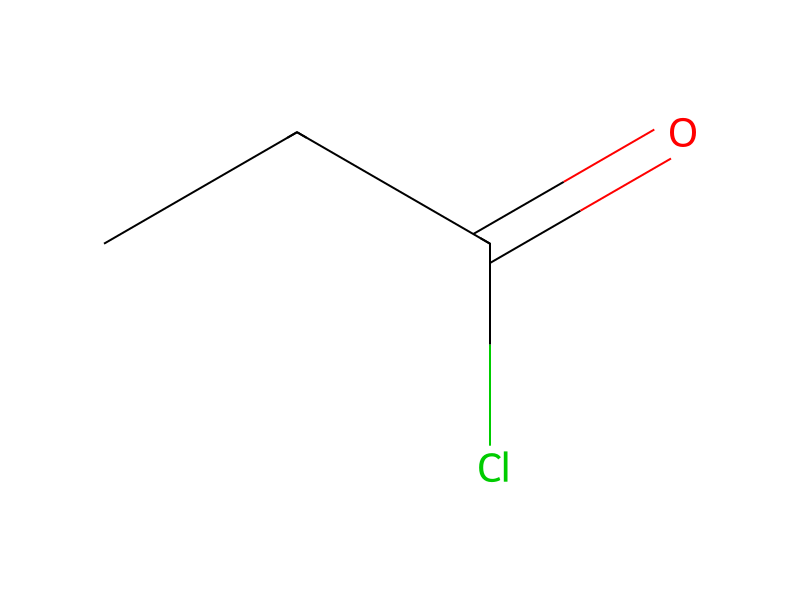
[C:1](Cl)(=[O:4])[CH2:2][CH3:3].[F:6][C:7]1[CH:8]=[C:9]([NH2:16])[C:10](=[CH:14][CH:15]=1)[C:11]([OH:13])=[O:12].C(N(CC)CC)C>O1CCOCC1>[F:6][C:7]1[CH:8]=[C:9]([NH:16][C:1](=[O:4])[CH2:2][CH3:3])[C:10](=[CH:14][CH:15]=1)[C:11]([OH:13])=[O:12]Participants
5
Reactant 3


Product 1

Reagents, catalysts & solvents 1

Procedure
Propionyl chloride (1.7 ml) was added to a solution of 4-fluoroanthranilic acid (1 g) and triethylamine (2.8 ml) in 1,4-dioxane (30 ml). The mixture was heated under reflux for 4 hours, cooled and concentrated under reduced pressure. The residue was suspended in ethyl acetate and extracted with water. The organic phase was dried and evaporated and the residue purified by silica gel chromatography to give 4-fluoro-N-propionylanthranilic acid, mp 170°-171°. (Compound 9).
Workup
- temperatureThe mixture was heated
- temperatureunder reflux for 4 hours
- temperaturecooled
- concentrationconcentrated under reduced pressure
- extractionextracted with water
- customThe organic phase was dried
- customevaporated
- customthe residue purified by silica gel chromatography
Sources & evidence
- ORD record
- ord-c2d1eb11bc534865acec2db3d6c493a4
- Source dataset
- uspto-grants-1992_03
- Patent number
- US05093364
Reaction notes
Loading…