Isopropanol → Dicyclohexylamine
Reaction equation

[S:1]([CH2:5][CH2:6][N:7]1[C:11]([SH:12])=[N:10][N:9]=[N:8]1)([OH:4])(=[O:3])=[O:2].[CH:13]1([NH2:19])[CH2:18][CH2:17][CH2:16][CH2:15][CH2:14]1.[C:20](#N)[CH3:21].[CH:23](O)([CH3:25])[CH3:24]>>[S:1]([CH2:5][CH2:6][N:7]1[C:11]([SH:12])=[N:10][N:9]=[N:8]1)([OH:4])(=[O:3])=[O:2].[CH:13]1([NH:19][CH:21]2[CH2:20][CH2:5][CH2:25][CH2:23][CH2:24]2)[CH2:18][CH2:17][CH2:16][CH2:15][CH2:14]1Participants
6




Procedure
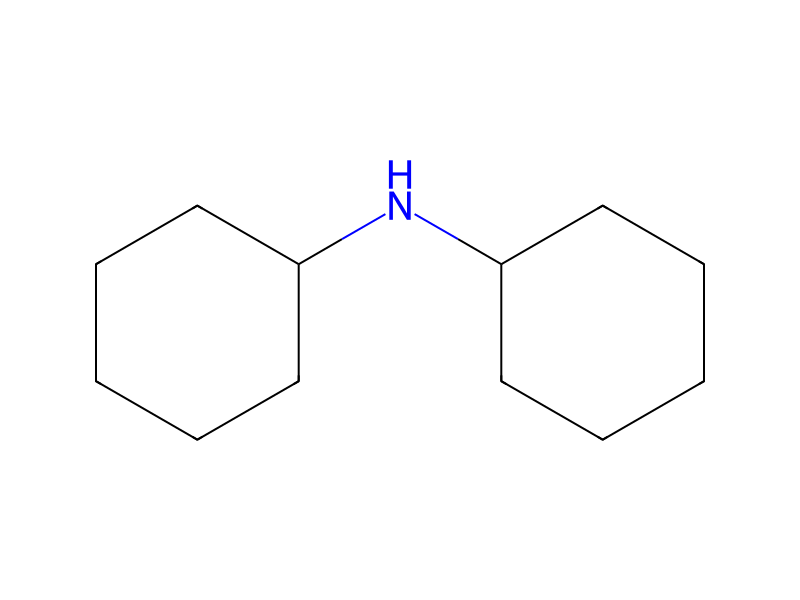
A mixture of 21.5 g. (0.087 mol.) of methyl 2-sulfoethyldithiocarbamate potassium salt (0.5 hydrate) and 7.16 g. (0.11 mol.) of sodium azide in 200 ml. of water was refluxed for two hours. The solution was cooled to 25° and extracted with ethyl acetate. The aqueous phase was treated with Amberlite IR-12OH resin, washed with ether and evaporated to give an oil. The oil was dissolved in acetone, the solution was filterd and the filtrate was evaporated to dryness to give 1-(2-sulfoethyl)-tetrazole-5-thiol. The thiol was dissolved in isopropanol, cyclohexylamine was added until pH 8-9 and acetonitrile was added to give 1-(2-sulfoethyl)tetrazole-5-thiol as the di-cyclohexylamine salt.
Workup
- additionwas added
Sources & evidence
- ORD record
- ord-258d90da242647ef99485e0bf4ccc70e
- Source dataset
- uspto-grants-1979_06
- Patent number
- US04159373
Reaction notes
Loading…