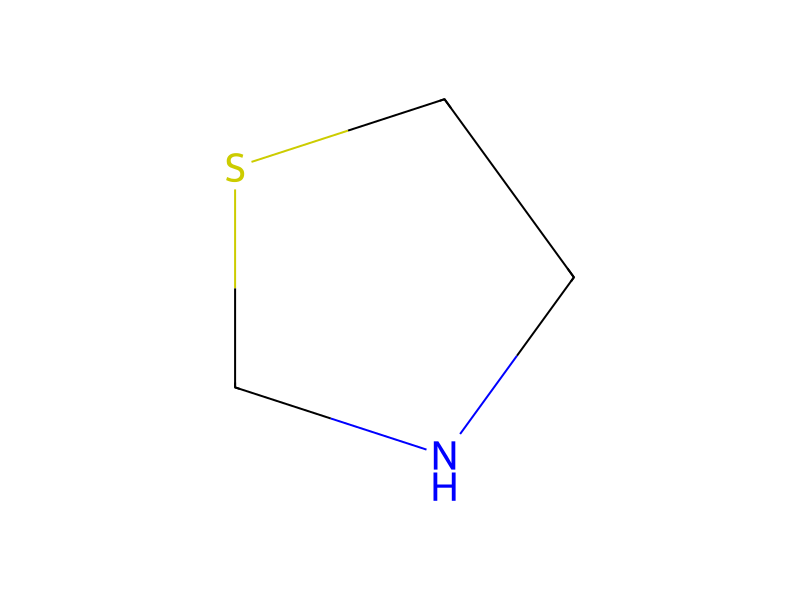
Thiazolidine → HCID 19905280, compound
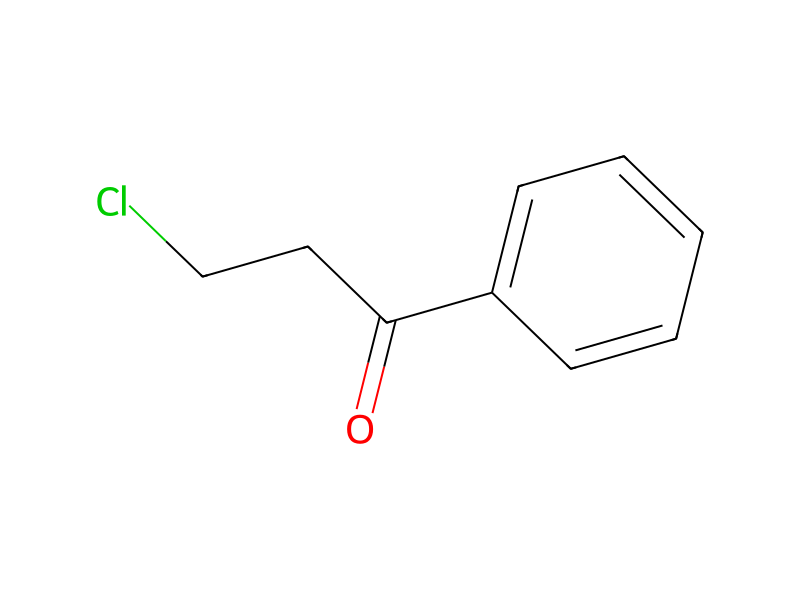
Reaction equation

Cl[CH2:2][CH2:3][C:4]([C:6]1[CH:11]=[CH:10][CH:9]=[CH:8][CH:7]=1)=[O:5].C([O-])(=O)C.[Na+].[S:17]1[CH2:21][CH2:20][NH:19][CH2:18]1>C(O)C>[C:6]1([C:4](=[O:5])[CH2:3][CH2:2][N:19]2[CH2:20][CH2:21][S:17][CH2:18]2)[CH:11]=[CH:10][CH:9]=[CH:8][CH:7]=1Participants
5
Reactant 3

Product 1

Reagents, catalysts & solvents 1

Conditions
- Temperature
- 25 °C
Procedure
A solution containing 8.43 g (0.05 mol) of β-chloropropiophenone, 4.10 g (0.05 mol) of anhydrous sodium acetate and 4.01 g (0.045 mol) of thiazolidine in 30 ml of ethanol is stirred at 25° C. for 8 hours. After filtering off the precipitate and evaporating the solvent from the solution, the oily yellowish residue weighing 9.3 g is converted to the hydrochloride in a mixture of acetone and ether in the usual way to give 9.9 g of product. After recrystallization from methanol, the hydrochloride of the title product thus obtained melts at 170°-171° C.; it is identical to the hydrochloride described in Examples 1 and 43.
Workup
- filtrationAfter filtering off the precipitate
- customevaporating the solvent from the solution
- additionis converted to the hydrochloride in a mixture of acetone and ether in the usual way
Sources & evidence
- ORD record
- ord-ca994aea17d04181a430b21888b3c3b0
- Source dataset
- uspto-grants-1992_03
- Patent number
- US05096902
Reaction notes
Loading…