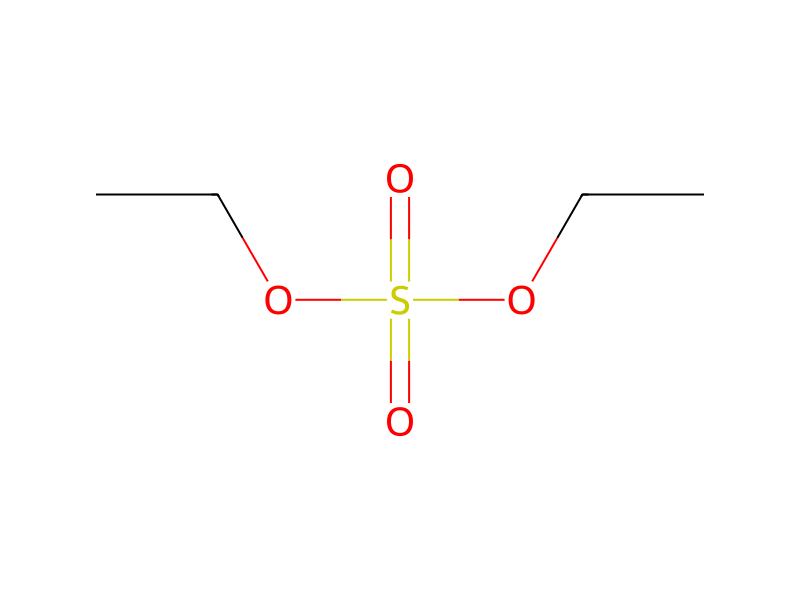
Diethyl Sulfate → HCID 13853879, compound
Reaction equation

[Cl:1][C:2]1[C:3](=[O:23])[N:4]([C:19]([CH3:22])([CH3:21])[CH3:20])[N:5]=[CH:6][C:7]=1[NH:8][CH2:9][C:10]1[CH:15]=[CH:14][C:13]([C:16]([OH:18])=[O:17])=[CH:12][CH:11]=1.S(OCC)(O[CH2:28]C)(=O)=O>>[Cl:1][C:2]1[C:3](=[O:23])[N:4]([C:19]([CH3:20])([CH3:22])[CH3:21])[N:5]=[CH:6][C:7]=1[NH:8][CH2:9][C:10]1[CH:11]=[CH:12][C:13]([C:16]([O:18][CH3:28])=[O:17])=[CH:14][CH:15]=1Participants
3


Procedure
The compounds as identified in Table 12 were prepared in the synthetic manner and after-treatment similar to those in Example 5 except that the carboxylic acids with Y1, Y2, Y3, R1, R2 and R3 as identified in Table 12 were used instead of the starting 4-chloro-5-(4-carboxybenzylamino)-2-t-butyl-3(2H)pyridazinone used in Example 5. For the preparation of Compound No. 52, diethyl sulfate was used as an esterifying agent. In the NMR data, only the characteristic absorptions are given in Table 12.
Workup
- customwere prepared in the synthetic manner
- customFor the preparation of Compound No
Sources & evidence
- ORD record
- ord-0e0dc27573624cb581aba73b8e62de39
- Source dataset
- uspto-grants-1992_03
- Patent number
- US05098900
Reaction notes
Loading…