Potassium Hydroxide → HCID 19904422, compound
Reaction equation

[C:1]([C:6]1([C:13](OCC)=[O:14])[CH2:11][CH2:10][CH2:9][CH2:8][C:7]1=[O:12])(OCC)=[O:2].[H-].[Al+3].[Li+].[H-].[H-].[H-].[OH-].[K+].P([O-])([O-])(O)=O.[K+].[K+].P([O-])(O)(O)=O.[K+]>CCOCC.O>[OH:14][CH2:13][C:6]1([CH2:1][OH:2])[CH2:11][CH2:10][CH2:9][CH2:8][CH:7]1[OH:12]Participants
Reactant 5

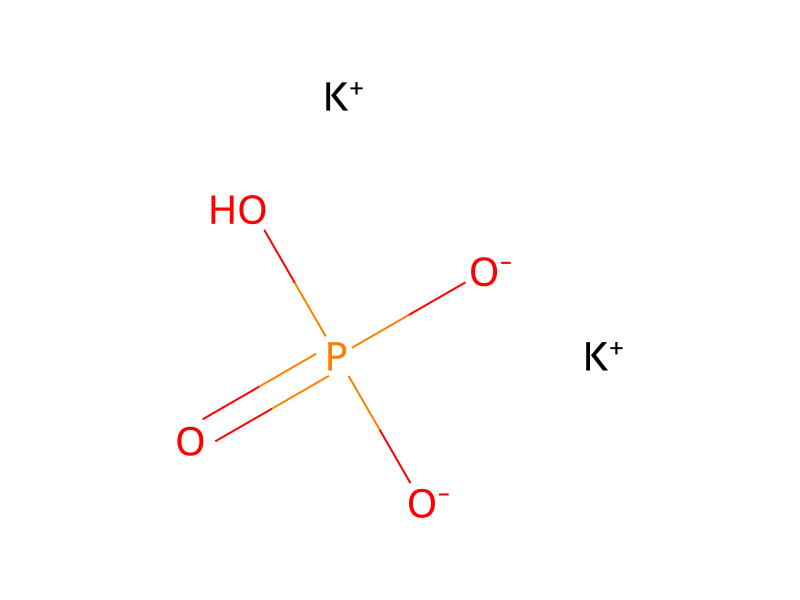



Product 1

Reagents, catalysts & solvents 2


Procedure
A solution of 2,2-dicarbethoxycyclohexanone (3.0 g.) in dry ether (15 ml.) was added dropwise to a stirred suspension of lithium aluminium hydride (1.4 g.) in dry ether (50 ml.) at 0°, under nitrogen. The mixture was refluxed, with stirring, for six hours. Potassium hydroxide (6 g.) in water (100 ml) was added to the stirred mixture. Dipotassium hydrogen phosphate (4.2 g.) and potassium dihydrogen phosphate (3.3 g.) in water (50 ml.) was added. Ether was removed by passing a current of nitrogen through the mixture. The resultant slurry was acidified with glacial acetic acid and the solid was filtered off. The filtrate was evaporated in vacuo. The residue was extracted with acetone and the solution was evaporated in vacuo. 2,2Di-(hydroxymethyl)-cyclohexanol (1.2 g.) was obtained as a pale yellow oil.
Workup
- temperatureThe mixture was refluxed
- customEther was removed
- filtrationthe solid was filtered off
- customThe filtrate was evaporated in vacuo
- extractionThe residue was extracted with acetone
- customthe solution was evaporated in vacuo
Sources & evidence
- ORD record
- ord-b58d505661ee43bc907e035160e47acb
- Source dataset
- uspto-grants-1992_03
- Patent number
- US05098929
Reaction notes
Loading…