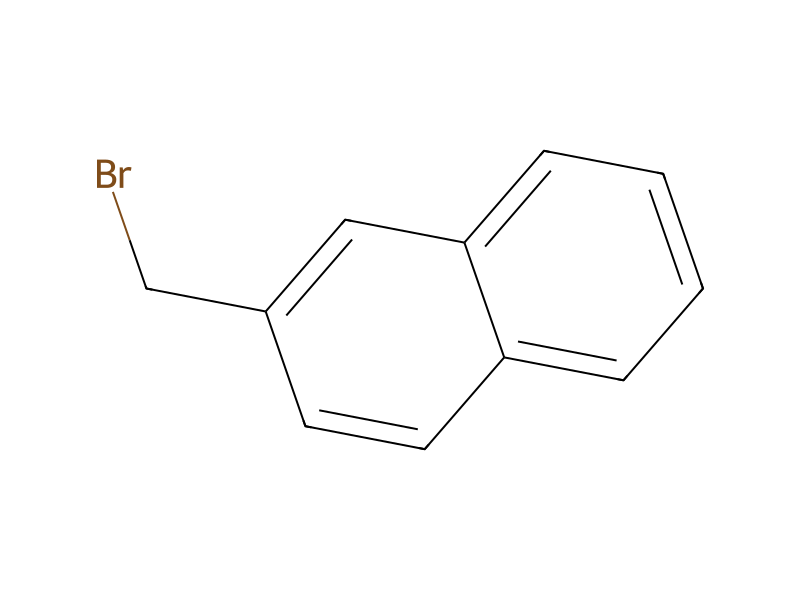
2-Bromomethylnaphthalene → HCID 20080626, compound
Reaction equation

Br[CH2:2][C:3]1[CH:12]=[CH:11][C:10]2[C:5](=[CH:6][CH:7]=[CH:8][CH:9]=2)[CH:4]=1.[I:13][C:14]1[CH:23]=[C:18]([C:19]([O:21][CH3:22])=[O:20])[C:17]([OH:24])=[CH:16][CH:15]=1>>[I:13][C:14]1[CH:15]=[CH:16][C:17]([O:24][CH2:2][C:3]2[CH:12]=[CH:11][C:10]3[C:5](=[CH:6][CH:7]=[CH:8][CH:9]=3)[CH:4]=2)=[C:18]([CH:23]=1)[C:19]([O:21][CH3:22])=[O:20]Participants
3


Procedure
Using the procedure described in Example 5, 2-bromomethylnaphthalene was reacted with methyl 5-iodosalicylate to give methyl 5-iodo-2-(naphth-2-ylmethoxy)benzoate (68%). Using conventional procedures the ester was hydrolysed with base to give the corresponding acid; the acid chloride was prepared by reaction with oxalyl chloride; and the acid chloride was reacted with ethanolic ammonia to give 5-iodo-2-(naphth-2-ylmethoxy)benzamide (84% from the ester), m.p. 163° C. The benzamide so obtained was reacted with trifluoroacetic anhydride in the presence of pyridine and dimethoxyethane as reaction solvent. There was thus obtained 3-cyano-4-(naphth-2-ylmethoxy)phenyl iodide (72%), m.p. 108°-110° C.
Sources & evidence
- ORD record
- ord-73aae6f39cfd4b1aa3c091292ee38188
- Source dataset
- uspto-grants-1992_03
- Patent number
- US05098930
Reaction notes
Loading…