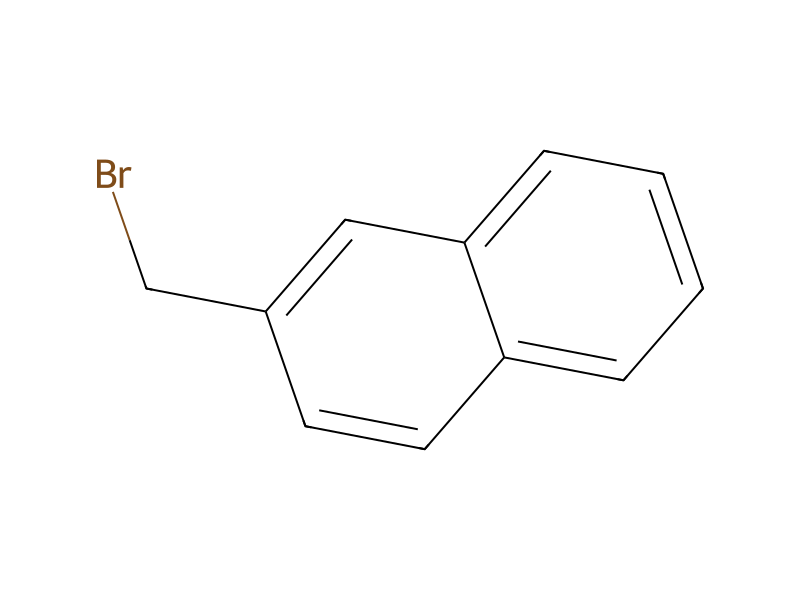
2-Bromomethylnaphthalene → 4-Methoxy-2,6-dimethyl-4-[3-(naphth-2-ylmethoxy)phenyl]tetrahydropyran
Reaction equation

Br[CH2:2][C:3]1[CH:12]=[CH:11][C:10]2[C:5](=[CH:6][CH:7]=[CH:8][CH:9]=2)[CH:4]=1.[OH:13][C:14]1[CH:15]=[C:16]([C:20]2([O:28][CH3:29])[CH2:25][CH:24]([CH3:26])[O:23][CH:22]([CH3:27])[CH2:21]2)[CH:17]=[CH:18][CH:19]=1>>[CH3:29][O:28][C:20]1([C:16]2[CH:17]=[CH:18][CH:19]=[C:14]([O:13][CH2:2][C:3]3[CH:12]=[CH:11][C:10]4[C:5](=[CH:6][CH:7]=[CH:8][CH:9]=4)[CH:4]=3)[CH:15]=2)[CH2:25][CH:24]([CH3:26])[O:23][CH:22]([CH3:27])[CH2:21]1Participants
3


Procedure
Using the procedure described in Example 5, 2-bromomethylnaphthalene (0.234 g) was reacted with 4-(3-hydroxyphenyl)-4-methoxy-2,6-dimethyltetrahydropyran (0.2 g, less polar isomer) to give 4-methoxy-2,6-dimethyl-4-[3-(naphth-2-ylmethoxy)phenyl]tetrahydropyran (0.29 g, 92%), m.p. 105°-107° C.
Sources & evidence
- ORD record
- ord-20fe286057ef4a168dcaa71420e67b3e
- Source dataset
- uspto-grants-1992_03
- Patent number
- US05098930
Reaction notes
Loading…