Acrylonitrile → 5-Hydroxy-6-methylpyridine-3-carbonitrile
Reaction equation

Br[C:2]1[CH:3]=[C:4]([OH:9])[C:5]([CH3:8])=[N:6][CH:7]=1.N([O-])=O.[Na+].C(OC(=O)[C@H:18](C)[NH2:19])C.C(OCC)=O.C(OC1OC=NC=1C)C.O=P12OP3(OP(OP(O3)(O1)=O)(=O)O2)=O.C(#N)C=C>S(=O)(=O)(O)O>[OH:9][C:4]1[C:5]([CH3:8])=[N:6][CH:7]=[C:2]([CH:3]=1)[C:18]#[N:19]Participants
Reactant 7




Product 1

Reagents, catalysts & solvents 1

Procedure
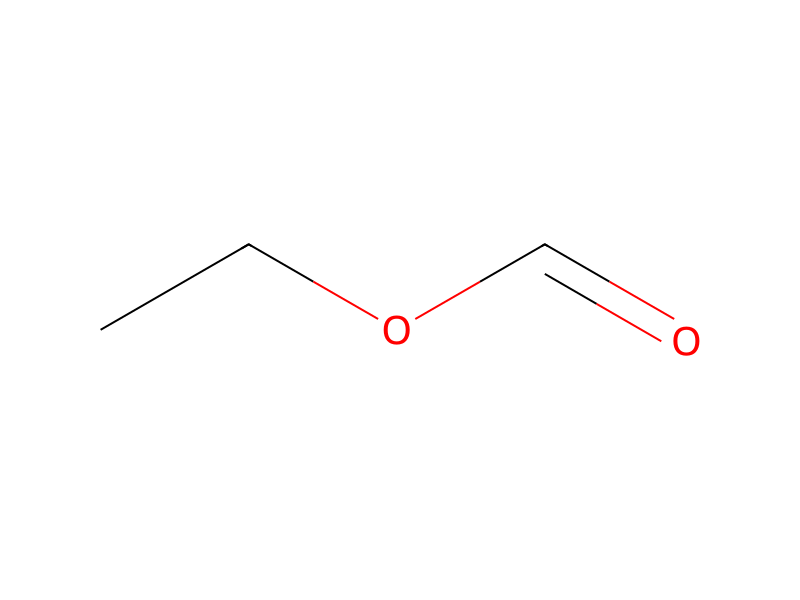
The 5-bromo-2-methyl-3-pyridinol, used to synthesize the brominated dihydrofuro- and dihydropyranopyridines, is produced by standard transformations of commercially available materials. Thus, 2-methyinicotinic acid (Aldrich Chemical Company) can be converted, by sequential treatment with thionyl chloride, bromine, and ammonia (methodology described by C. V. Greco et al., J. Heterocyclic Chem. 7: 761-766 (1970)), into 5-bromo-2-methylnicotinamide. Hofmann rearrangement of 5-bromo-2-methylnicotinamide with hypochlorite will give 3-amino-5-bromo-2-methylpyridine, which can be converted to 5-bromo-2-methyl-3-pyridinol by diazotization with sodium nitrite in aqueous sulfuric acid. Alternatively, alanine ethyl ester (Aldrich Chemical Company) is converted (using ethyl formate) into its N-formyl derivative, which is then converted to 5-ethoxy-4-methyloxazole using phosphorous pentoxide (N. Takeo et al., Japan Patent No. 45,012,732). Diels-Alder reaction of 5-ethoxy-4-methyloxazole with acrylonitrile gives 5-hydroxy-6-methylnicotinonitrile (T. Yoshikawa et al., Chem. Pharm. Bull. 13: 873 (1965)), which is converted to 5-amino-2-methyl-3-pyridinol by hydration and Hofmann rearrangement (Y. Morisawa et al., Agr. Biol. Chem. 39: 1275-1281 (1975)). The 5-amino-2-methyl-3-pyridinol can then be converted, by diazotization in the presence of cuprous bromide, to the desired 5-bromo-2-methyl-3-pyridinol.
Sources & evidence
- ORD record
- ord-bd7912803b49410abfe620e9703ebc9e
- Source dataset
- uspto-grants-2008_12
- Patent number
- US07459469B2
Reaction notes
Loading…