L-Aspartic Acid → Vanillin
Reaction equation

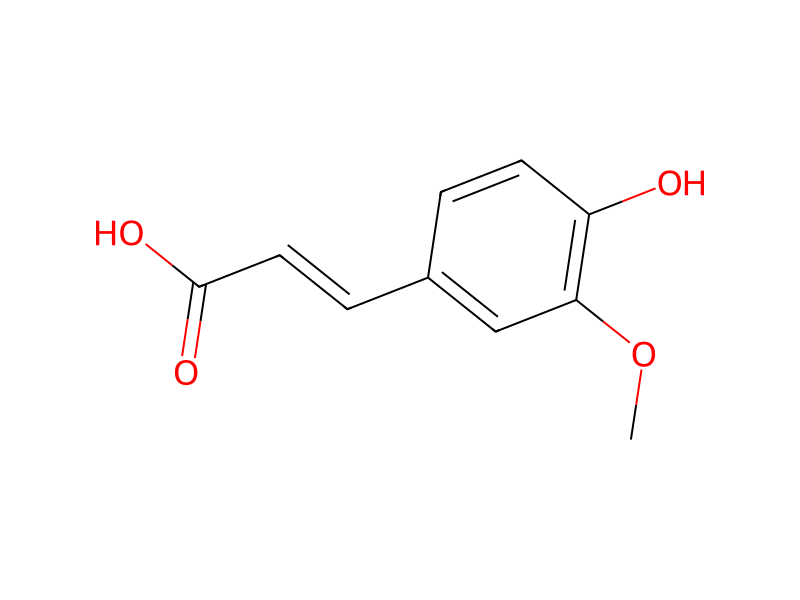
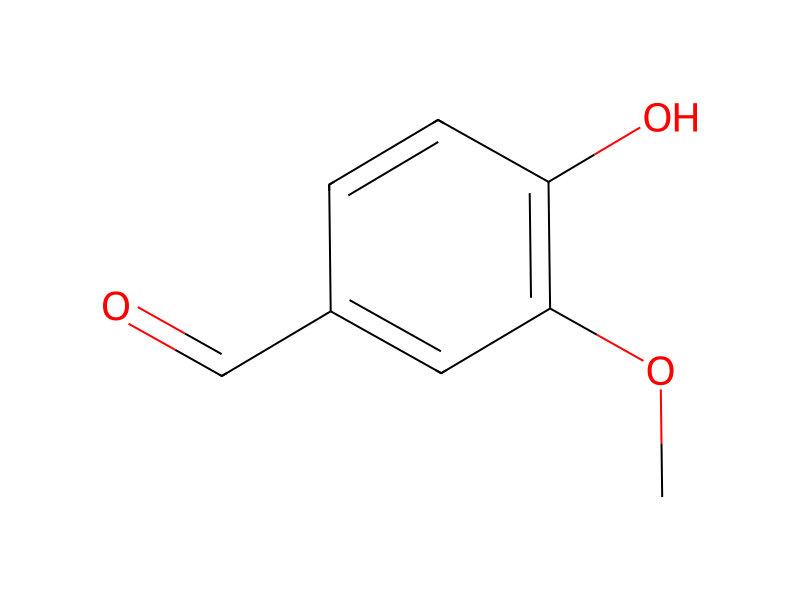
C(O)(=O)/C=C/C1C=CC(O)=C(OC)C=1.N[C@H](C(O)=O)CC(=O)O.[C:24](O)(=[O:34])[C:25]1[CH:33]=[CH:32][C:30]([OH:31])=[C:27]([O:28][CH3:29])[CH:26]=1>>[O:34]=[CH:24][C:25]1[CH:33]=[CH:32][C:30]([OH:31])=[C:27]([O:28][CH3:29])[CH:26]=1.[CH3:29][O:28][C:27]1[CH:26]=[C:25]([CH2:24][OH:34])[CH:33]=[CH:32][C:30]=1[OH:31]Participants



Procedure
Ferulic acid, chemically similar to vanillin, is an important substrate for the whole transformation process from glucose to vanillin in plant, and therefore is considered as a promising precursor for vanillin. Gross et al. (U.S. Pat. No. 5,262,315) provides a process for producing vanillin by bioconversion of benzenoid precursors (the group consisting of vanillic acid and ferulic acid) by a basidiomycete fungus of the genus Pycnoporus, discloses that 0.3 g/L of ferulic acid is converted into 0.045 g/L of vanillin by P. cinnabarinus CNCMnDEG I-937 or CNCMnDEG I-938 with a molar conversion yield of 20.5%, wherein vanillic acid is transformed into vanillin with a conversion yield of 35.1%. Lesage-Meessen et al. (U.S. Pat. Nos. 5,866,380; 6,162,637) employs a two-step method using filamentous fungi to produce vanillin with an increased yield. The first step of the two-step method is to add ferulic acid to fermentation broth of microbial strain Asp. niger MIC 373, wherein ferulic acid is added in continuous fashion in the proportion of 430 mg/l per 24 hours to a final concentration of 5.05 g/L. After culturing for 15 days, the final concentration of vanillic acid in the culture is detected by HPLC to be 3.60 g/L. The added ferulic acids are consumed completely, wherein most of them (82%) are converted into vanillic acid, a minor part (2%) is metabolized into methoxyl hydroquinone and no vanillin or vanillin alcohol is produced. Alternatively, the fermentation broth of Streptomyces setonii strain ATCC 25497 is used to transform 0.88 g/L of ferulic acid into 0.332 g/L of vanillic acid after 100 hours of growth of the culture. The second step of the two-step method is to add vanillic acid to fermentation broth of microbial strain Phanerochaete chrysosporium MIC 247, wherein 0.3 g/L of vanillic acid is added sequentially (namely: 0.3 g/l at the end of 3 days of culture, then 0.3 g/l every day), and sterile resin XAD2 (Amberlite) is added in the proportion of 10% (weight/volume) after 3 days+6 h of culture of the fungus (that is to say 6 h after adding vanillic acid). Finally, 1.2 g/L of vanillic acid is reduced to 0.628 g/L of vanillin. The subsequent laboratory scale-up study on fermentor employs P. cinnabarinus MUCL 39533 in the conversion of vanillic acid into vanillin and the concentration of vanillin can reach 1,575 mg/L (Stenielaire C., Lesage-meessen. L., Oddou J. et.al., J of Biosci and Bioengineering. 2000, 89, 223-230). The above method employs two kinds of microbes in the conversion of ferulic acid (precursor) into vanillin, wherein the culturing of two kinds of microbes, the conversion reactions of two substrates and extraction of intermediate products (vanillic acid) are involved. Therefore, the whole production process is long and the production yield is low. Rabenhorst et al. (U.S. Pat. No. 6,133,003) discloses the cultivation of Amycolatopsis sp. DSM 9992, wherein ferulic acid is added to the culture in a stepwise manner. After 47 hours of culture, 7,317 ppm of vanillin is produced and 1,526 ppm of ferulic acid is left. This is a conversion rate of approximately 72% of theory. Muheim et al. (U.S. Pat. No. 6,235,507) discloses the cultivation of S. setonii ATCC 39116, wherein 5-40 g/L of ferulic acid is added to the culture in a stepwise manner when the carbon source (glucose) is almost exhausted after 5-40 hours of culture. The culture (biotransformation) is continued for about 5-50 hours and the accumulated vanillin from ferulic acid amounts to 8-16 g/L. A variety of byproducts such as vanillin alcohol, vanillic acid, guaiacol, p-ethenyl guaiacol and 2-methyl-4-ethylphenol, however, are produced in the above biotransformation, which results in a difficulty in separating and extracting converted product.
Workup
- customyield
- customThe added ferulic acids are consumed completely
Sources & evidence
- ORD record
- ord-c437a67b752541d8b11a45930b5bcc12
- Source dataset
- uspto-grants-2008_12
- Patent number
- US07462470B2
Reaction notes
Loading…