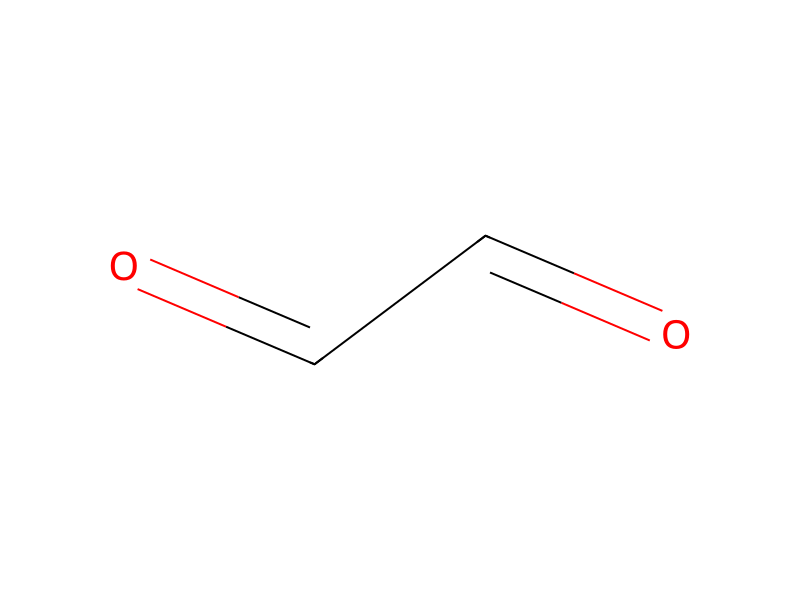
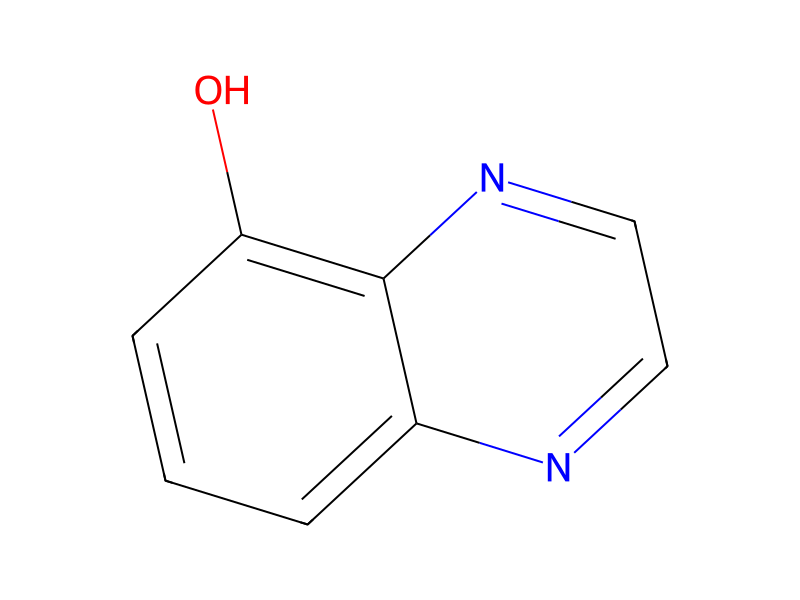
Glyoxal → 5-Quinoxalinol
Reaction equation

[NH2:1][C:2]1[C:7]([NH2:8])=[CH:6][CH:5]=[CH:4][C:3]=1[OH:9].[CH:10](=O)[CH:11]=O>C(O)(=O)C.C([O-])(=O)C.[Na+].O>[N:8]1[C:7]2[CH:6]=[CH:5][CH:4]=[C:3]([OH:9])[C:2]=2[N:1]=[CH:11][CH:10]=1Participants
6
Reactant 2

Product 1
Reagents, catalysts & solvents 3



Conditions
- Temperature
- 60 °C
Procedure
2,3-Diaminophenol (2 g) in 10 ml acetic acid and 20 ml 4M sodium acetate and a solution of oxalaldehyde (4.8 g) dissolved in 20 ml water were combined and the resulting mixture was heated at 60° C. for 1.5 h. After cooling to RT water (100 ml) was added and the mixture extracted with EtOAc. The organic layer was dried over Na2SO4, and concentrated to give quinoxalin-5-ol. MS (ESI+) for m/z 147 [M+H]+.
Workup
- additionwas added
- extractionthe mixture extracted with EtOAc
- dry with materialThe organic layer was dried over Na2SO4
- concentrationconcentrated
Sources & evidence
- ORD record
- ord-bf9fa961e2814090b734943dcbfe8b35
- Source dataset
- uspto-grants-2008_12
- Patent number
- US07462600B2
Reaction notes
Loading…