Water → HCID 15491246, compound
Reaction equation

[Cl:1][C:2]1[CH:7]=[CH:6][C:5]([NH:8][C:9]([C:11]2[CH:15]=[CH:14][O:13][C:12]=2[CH3:16])=[O:10])=[CH:4][C:3]=1[CH2:17]O.P(Br)(Br)[Br:20].O>C(OCC)(=O)C>[Br:20][CH2:17][C:3]1[CH:4]=[C:5]([NH:8][C:9]([C:11]2[CH:15]=[CH:14][O:13][C:12]=2[CH3:16])=[O:10])[CH:6]=[CH:7][C:2]=1[Cl:1]Participants
5
Reactant 3

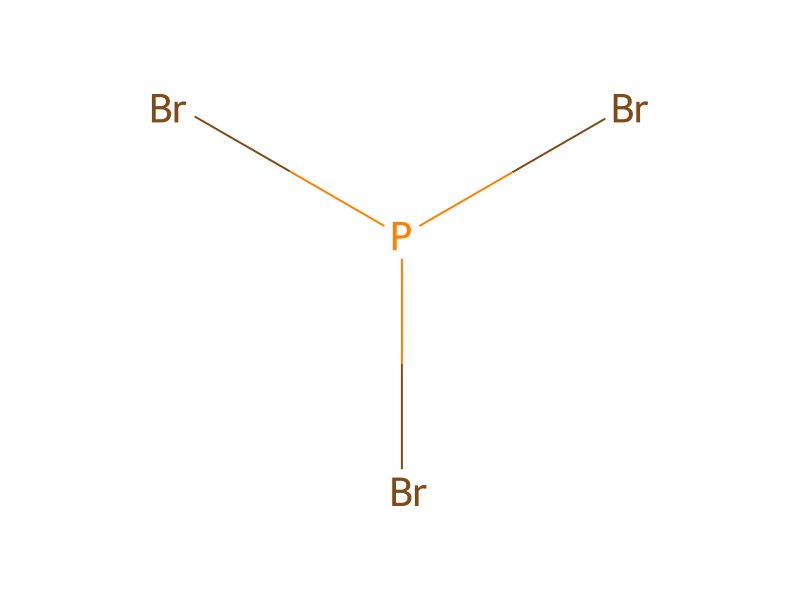

Product 1

Reagents, catalysts & solvents 1

Procedure
12 g of the N-(4-chloro-3-hydroxymethylphenyl)-2-methyl-3-furancarboxamide prepared in Step 5 above, was dissolved in 180 mL ethyl acetate. 1.8 mL of phosphorus tribromide was then added. The resultant mixture was stirred for 90 minutes at room temperature. 100 mL of water was then added to the mixture. The resultant organic phase was separated, washed with water, aqueous sodium bicarbonate solution and water, and then dried over magnesium sulfate. The solvent was evaporated off to produce 12.97 g of N-(3-bromomethyl-4-chlorophenyl)-2-methyl-3-furancarboxamide as a solid.
Workup
- customThe resultant organic phase was separated
- washwashed with water, aqueous sodium bicarbonate solution and water
- dry with materialdried over magnesium sulfate
- customThe solvent was evaporated off
Sources & evidence
- ORD record
- ord-30e64d734a854e429ff97b4ea019e6aa
- Source dataset
- uspto-grants-2008_12
- Patent number
- US07462608B2
Reaction notes
Loading…