4-Chloro-7-(3-chloropropoxy)quinazoline → HCID 68545232, compound
Reaction equation

Cl[C:2]1[C:11]2[C:6](=[CH:7][C:8]([O:12][CH2:13][CH2:14][CH2:15][Cl:16])=[CH:9][CH:10]=2)[N:5]=[CH:4][N:3]=1.[NH2:17][C:18]1[C:23]([Cl:24])=[CH:22][N:21]=[C:20]2[O:25][CH2:26][O:27][C:19]=12>>[Cl:24][C:23]1[C:18]([NH:17][C:2]2[C:11]3[C:6](=[CH:7][C:8]([O:12][CH2:13][CH2:14][CH2:15][Cl:16])=[CH:9][CH:10]=3)[N:5]=[CH:4][N:3]=2)=[C:19]2[O:27][CH2:26][O:25][C:20]2=[N:21][CH:22]=1Participants
3

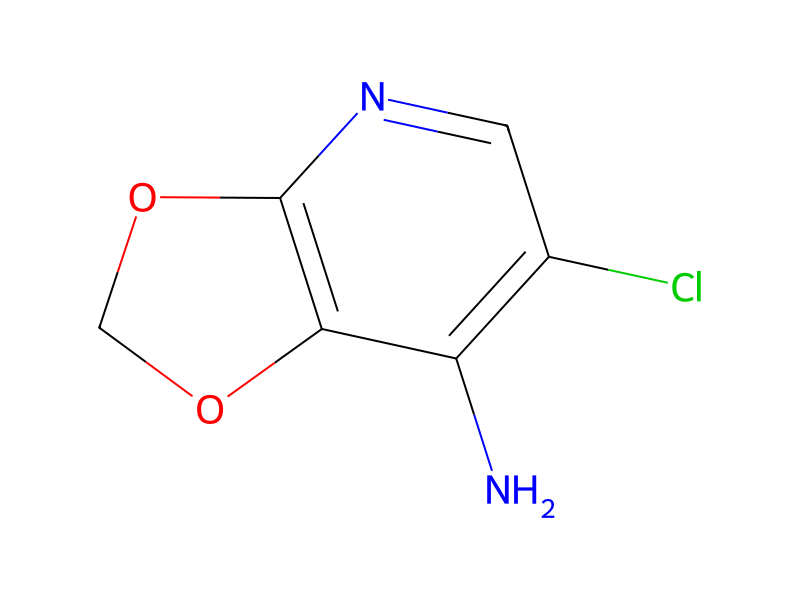

Procedure
Using an analogous procedure to that described in Example 1, 4-chloro-7-(3-chloropropoxy)quinazoline was reacted with 4-amino-5-chloro-2,3-methylenedioxypyridine to give the title compound in 89% yield; NMR Spectrum: (DMSOd6 and CF3CO2D) 2.25 (m, 2H), 3.8 (t, 2H), 4.35 (t, 2H), 6.25 (s, 2H), 7.35 (s, 1H), 7.6 (d, 1H), 7.9 (s, 1H), 8.7 (d, 1H), 9.0 (s, 1H).
Sources & evidence
- ORD record
- ord-4af11563eb124daa9a447614afbcdb62
- Source dataset
- uspto-grants-2008_12
- Patent number
- US07462623B2
Reaction notes
Loading…