3-Chloro-4-morpholinoaniline → 7-{3-[(3-chloro-4-morpholin-4-ylphenyl)amino]phenyl}-5-methyl-N-(3,4,5-trimethoxyphenyl)imidazo[5,1-f][1,2,4]triazin-2-amine
Reaction equation

Br[C:2]1[CH:3]=[C:4]([C:8]2[N:16]3[C:11]([CH:12]=[N:13][C:14]([NH:17][C:18]4[CH:23]=[C:22]([O:24][CH3:25])[C:21]([O:26][CH3:27])=[C:20]([O:28][CH3:29])[CH:19]=4)=[N:15]3)=[C:10]([CH3:30])[N:9]=2)[CH:5]=[CH:6][CH:7]=1.[Cl:31][C:32]1[CH:33]=[C:34]([CH:36]=[CH:37][C:38]=1[N:39]1[CH2:44][CH2:43][O:42][CH2:41][CH2:40]1)[NH2:35].C1C=CC(P(C2C=CC3C(=CC=CC=3)C=2C2C3C(=CC=CC=3)C=CC=2P(C2C=CC=CC=2)C2C=CC=CC=2)C2C=CC=CC=2)=CC=1.CC(C)([O-])C.[Na+]>O1CCOCC1>[Cl:31][C:32]1[CH:33]=[C:34]([NH:35][C:2]2[CH:3]=[C:4]([C:8]3[N:16]4[C:11]([CH:12]=[N:13][C:14]([NH:17][C:18]5[CH:23]=[C:22]([O:24][CH3:25])[C:21]([O:26][CH3:27])=[C:20]([O:28][CH3:29])[CH:19]=5)=[N:15]4)=[C:10]([CH3:30])[N:9]=3)[CH:5]=[CH:6][CH:7]=2)[CH:36]=[CH:37][C:38]=1[N:39]1[CH2:40][CH2:41][O:42][CH2:43][CH2:44]1Participants
Reactant 4



Product 1

Reagents, catalysts & solvents 1

Conditions
- Temperature
- 130 °C
Procedure
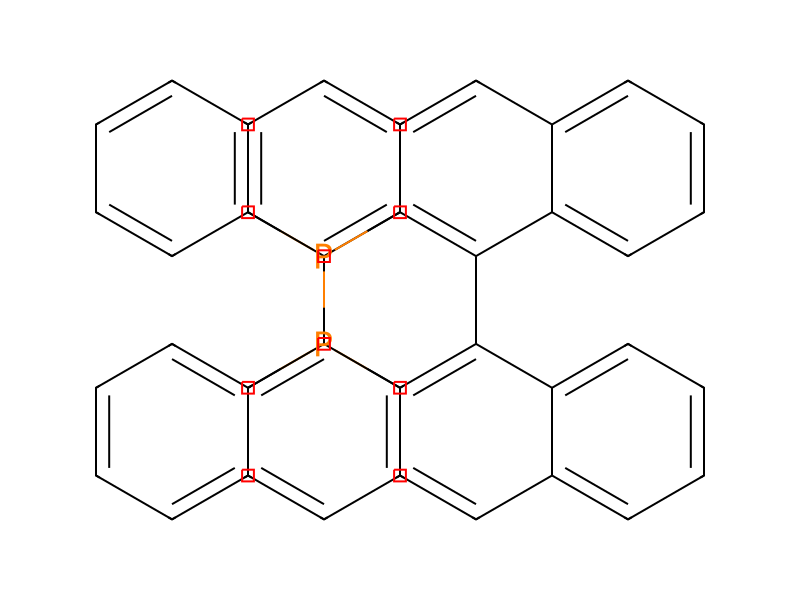
To a mixture of 7-(3-bromophenyl)-5-methyl-N-(3,4,5-trimethoxyphenyl)imidazo[5,1-f][1,2,4]triazin-2-amine (Example 9) (40 mg, 0.085 mmol), 3-chloro-4-morpholin-4-ylaniline (21.7 mg, 0.102 mmol), (S)-(−)-2,2′-Bis(diphenylphosphino)-1,1′-binaphthyl ((S)-BINAP) (15.9 mg, 0.026 mmol), Tris(dibenzylidineacetone)dipalladium (0) (7.8 mg, 0.008 mmol) and sodium t-butoxide (11.4 mg, 0.12 mmol) was added 1,4-dioxane (1.5 mL). In a sealed reaction vessel, the mixture was heated with microwave radiation at 130° C. for 30 minutes. After cooling to room temperature, removed solvent under reduced pressure and diluted residue in DMSO (1.0 mL). Filtered and injected (2×0.5 mL) on an Agilent reverse phase prep LC subjected to a gradient elution using acetonitrile (0.1% Formic acid):water (0.1% Formic acid) (10:90 to 90:10). Combined appropriate fractions and removed solvent under reduced pressure. Added methanol, dichloromethane and silica gel (100 mg) followed by evaporation of the volatiles under reduced pressure. The pre-adsorbed solids were loaded into a solid loading cartridge and subjected to a gradient elution using ethyl acetate:hexanes (30:70) to ethyl acetate:hexanes (90:10) using a RediSep silica gel cartridge (4.2 g; ISCO). The appropriate fractions were combined and concentrated under reduced pressure to give 7-{3-[(3-chloro-4-morpholin-4-ylphenyl)amino]phenyl}-5-methyl-N-(3,4,5-trimethoxyphenyl)imidazo[5,1-f][1,2,4]triazin-2-amine (0.020 g) as a yellow solid. 1H NMR (CDCl3): δ8.79 (s, 1H), 8.09 (dd, J=2.0, 1.9 Hz, 1H), 8.01-7.98 (m, 1H), 7.33 (dd, J=8.0, 7.9 Hz, 1H), 7.18 (d, J=2.6 Hz, 1H), 7.15 (ddd, J=8.2, 2.3, 0.9 Hz, 1H), 7.02 (dd, J=8.6, 2.5 Hz, 1H), 6.95-6.93 (m, 3H), 6.90 (s, 1H), 5.95 (s, 1H), 3.88-3.86 (m, 4H), 3.84 (s, 9H), 3.01-2.98 (m, 4H) 2.60 (s, 3H). MS m/z 602 (M+1).
Workup
- customIn a sealed reaction vessel
- temperatureAfter cooling to room temperature
- customremoved solvent under reduced pressure and diluted residue in DMSO (1.0 mL)
- filtrationFiltered
- washsubjected to a gradient elution
- customremoved solvent under reduced pressure
- customAdded methanol, dichloromethane and silica gel (100 mg) followed by evaporation of the volatiles under reduced pressure
- washsubjected to a gradient elution
- concentrationconcentrated under reduced pressure
Sources & evidence
- ORD record
- ord-8b24426842d64b858eb4a052a902477c
- Source dataset
- uspto-grants-2008_12
- Patent number
- US07462614B2
Reaction notes
Loading…