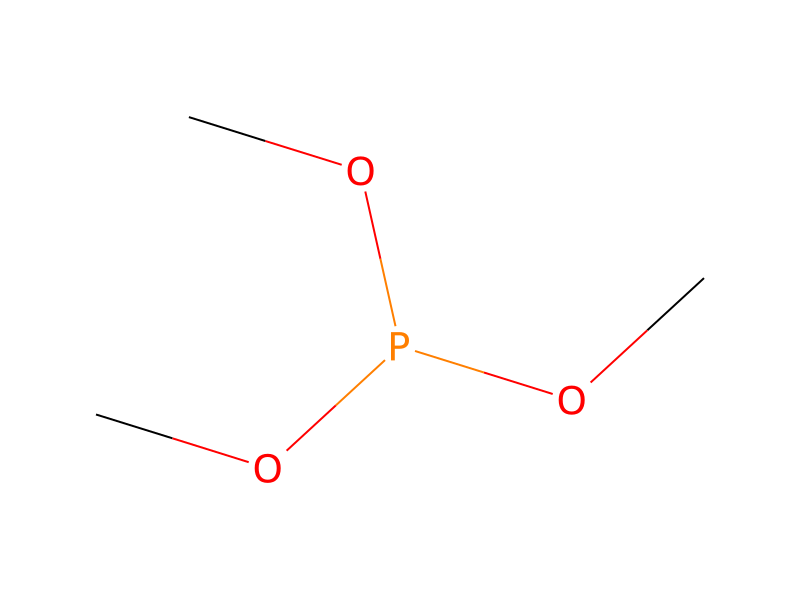
Trimethyl phosphite → HCID 53693742, compound
Reaction equation

Br[CH2:2][C:3]1[C:12]([CH2:13]Br)=[CH:11][C:10]2[C:5](=[CH:6][CH:7]=[CH:8][CH:9]=2)[CH:4]=1.C[O:16][P:17]([O:20][CH3:21])[O:18][CH3:19]>C1(C)C=CC=CC=1>[CH3:19][O:18][P:17]([CH2:2][C:3]1[C:12]([CH2:13][P:17](=[O:16])([O:20][CH3:21])[O:18][CH3:19])=[CH:11][C:10]2[C:5]([CH:4]=1)=[CH:6][CH:7]=[CH:8][CH:9]=2)(=[O:16])[O:20][CH3:21]Participants
4
Reactant 2

Product 1

Reagents, catalysts & solvents 1

Procedure
A flask is charged with 2,3-bis(bromomethyl)naphthalene (Example 22(b), 2.80 g, 8.9 mmol) and toluene (50 mL). The solution is heated at reflux and 25 mL of the toluene is collected in a Dean-Stark trap. The solution is then cooled to room temperature and trimethylphosphite (4.0 mL, 0.034 mol) is added. The reaction is heated to reflux temperature for 24 hours. The excess trimethylphosphite and toluene are removed at reduced pressure, giving a white solid (3.24 g). The solid is recrystallized from ethyl acetate-hexane to give 2.55 g of white crystals, mp 119.5°-120.5° C.
Workup
- temperatureThe solution is heated
- temperatureat reflux
- custom25 mL of the toluene is collected in a Dean-Stark trap
- temperatureThe reaction is heated
- temperatureto reflux temperature for 24 hours
- customThe excess trimethylphosphite and toluene are removed at reduced pressure
Sources & evidence
- ORD record
- ord-0fb972fbf37649cea934837c7452b477
- Source dataset
- uspto-grants-1994_11
- Patent number
- US05360797
Reaction notes
Loading…