Hydrochloric Acid → 4,6-Dichloro-1H-indole
Reaction equation

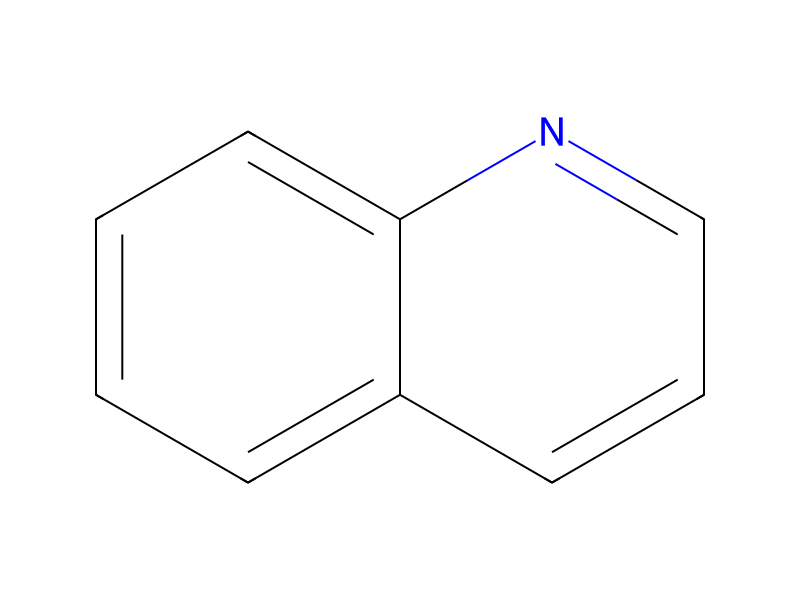
[Cl:1][C:2]1[CH:10]=[C:9]([Cl:11])[CH:8]=[C:7]2[C:3]=1[CH:4]=[C:5](C(O)=O)[NH:6]2.Cl>N1C2C(=CC=CC=2)C=CC=1.[Cu]>[Cl:1][C:2]1[CH:10]=[C:9]([Cl:11])[CH:8]=[C:7]2[C:3]=1[CH:4]=[CH:5][NH:6]2Participants
5
Reactant 2


Product 1

Reagents, catalysts & solvents 2

Procedure
Dissolve 4,6-dichloro-indole-2-carboxylic acid (1.0g, 4.35mmol) in quinoline (25mL). Add copper powder (100mg) and heat to 220° C. for 3 hours. Pour the resulting black solution into cold concentrated hydrochloric acid (300mL) and extract into ethyl ether (500mL). Filter, wash with 1M hydrochloric acid (2×200mL), water (100mL) and dry (MgSO4). Evaporate the solvent in vacuo to give a brown oil (0.76g). Purify by silica gel chromatography (17% ethyl acetate/hexane) to give the title compound as an amber oil (0.66g, 81%). 1H NMR (CDCl3 /TMS): 6.56-6.59 ppm (1H, m), 7.10-7.13 ppm (2H, m), 7.16-7.18 ppm (1H, m). 13C NMR (CDCl3), ppm: 101.48, 110.16, 120.24, 125.77, 125.94, 126.54, 122.79, 106.54.
Workup
- extractionextract into ethyl ether (500mL)
- filtrationFilter
- washwash with 1M hydrochloric acid (2×200mL), water (100mL)
- dry with materialdry (MgSO4)
- customEvaporate the solvent in vacuo
Sources & evidence
- ORD record
- ord-fe2f912407e94f44bddf7f315c6a36c2
- Source dataset
- uspto-grants-1994_11
- Patent number
- US05360814
Reaction notes
Loading…