Bisphenol A → 1,3-Bis(4-cyanophenyl)propane
Reaction equation

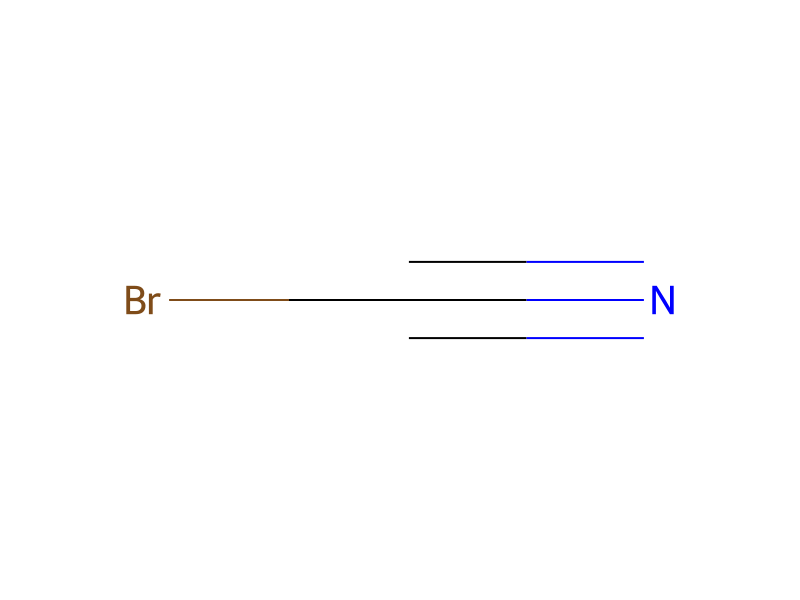
[N:1]#[C:2]Br.[OH:4][C:5]1[CH:10]=[CH:9][C:8]([C:11]([C:14]2[CH:19]=[CH:18][C:17]([OH:20])=[CH:16][CH:15]=2)([CH3:13])[CH3:12])=[CH:7][CH:6]=1.[CH2:21]([N:23](CC)CC)C>CC(C)=O>[O:4]([C:5]1[CH:6]=[CH:7][C:8]([C:11]([C:14]2[CH:15]=[CH:16][C:17]([O:20][C:2]#[N:1])=[CH:18][CH:19]=2)([CH3:13])[CH3:12])=[CH:9][CH:10]=1)[C:21]#[N:23]Participants
Reactant 3


Product 1

Reagents, catalysts & solvents 1

Procedure
A three necked flask equipped with a drip funnel, thermometer and stirrer was charged with 46.6 g of cyanogen bromide and 45.7 g of 2,2-bis(4-hydroxyphenyl)propane in 300 ml of acetone and cooled to a temperature of between -5° C. and +3°C. To the solution was added dropwise 43.5 g of triethylamine with stirring at a rate sufficient to maintain the inner temperature below 10° C. After the addition, the reaction mixture was stirred for an additional 2 hours at 10° C. and then filtered to remove white precipitates. The filtrate was poured into a large volume of water whereupon white crystals were precipitated. These crystals were recrystalized from ethanol to give 43.2 g (78% of theory) of the title compound. The product was identified by its NMR spectrum as well as by the absorption of the cyanato group at 2260 cm-1 in its IR spectrum.
Workup
- customA three necked flask equipped with a drip funnel
- temperaturecooled to a temperature of between -5° C. and +3°C
- temperatureto maintain the inner temperature below 10° C
- additionAfter the addition
- stirringthe reaction mixture was stirred for an additional 2 hours at 10° C.
- filtrationfiltered
- customto remove white precipitates
- additionThe filtrate was poured into a large volume of water whereupon white crystals
- customwere precipitated
- customThese crystals were recrystalized from ethanol
Sources & evidence
- ORD record
- ord-34380d58ad6340818a9a45faf881946d
- Source dataset
- uspto-grants-1994_11
- Patent number
- US05360887
Reaction notes
Loading…