Potassium Carbonate → Ethyl 2-(4-t-Butylphenylthio)octanoate
Reaction equation

Br[CH:2]([CH2:8][CH2:9][CH2:10][CH2:11][CH2:12][CH3:13])[C:3]([O:5][CH2:6][CH3:7])=[O:4].[C:14]([C:18]1[CH:23]=[CH:22][C:21]([SH:24])=[CH:20][CH:19]=1)([CH3:17])([CH3:16])[CH3:15].C(=O)([O-])[O-].[K+].[K+]>CC(C)=O>[C:14]([C:18]1[CH:19]=[CH:20][C:21]([S:24][CH:2]([CH2:8][CH2:9][CH2:10][CH2:11][CH2:12][CH3:13])[C:3]([O:5][CH2:6][CH3:7])=[O:4])=[CH:22][CH:23]=1)([CH3:17])([CH3:15])[CH3:16]Participants
5
Reactant 3


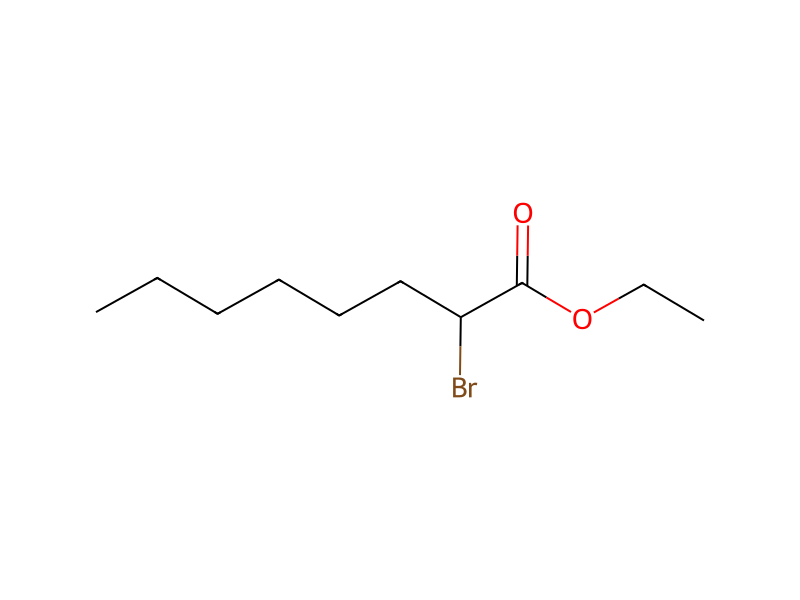
Product 1

Reagents, catalysts & solvents 1

Procedure
A mixture of 5.0 g (0.02 mole) ethyl 2-bromooctanoate, 3.37 g (0.02 mole) p-t-butylthiophenol and 3.31 g (0.24 mole) potassium carbonate in 70 ml acetone was refluxed under nitrogen overnight. The reaction mixture was cooled to room temperature and filtered and the filtrate was concentrated in vacuo. The residue was chromatographed on 500 g silica gel, eluting with 6:4 methylene chloride/hexane to yield 3.8 g (57% yield) of the desired product as an oil.
Workup
- temperaturewas refluxed under nitrogen overnight
- filtrationfiltered
- concentrationthe filtrate was concentrated in vacuo
- customThe residue was chromatographed on 500 g silica gel
- washeluting with 6:4 methylene chloride/hexane
Sources & evidence
- ORD record
- ord-5a1f13566d7547879dd523016277dc1c
- Source dataset
- uspto-grants-1994_11
- Patent number
- US05362878
Reaction notes
Loading…