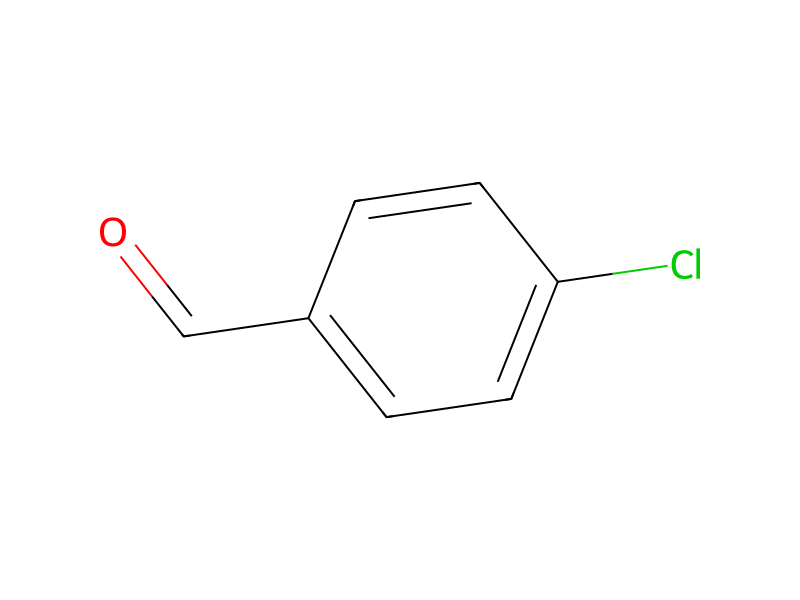
4-Chlorobenzaldehyde → 6-Chloroisoquinoline
Reaction equation

[Cl:1][C:2]1[CH:9]=[CH:8][C:5]([CH:6]=O)=[CH:4][CH:3]=1.C(O[CH:13](OCC)[CH2:14][NH2:15])C>>[Cl:1][C:2]1[CH:9]=[C:8]2[C:5](=[CH:4][CH:3]=1)[CH:6]=[N:15][CH:14]=[CH:13]2Participants


Procedure
Commercially available 4-chlorobenzaldehyde (10 g) was cyclized with aminoacetaldehyde diethyl acetal according to the procedure of Hendrickson, et al., J. Org. Chem., 48, 3344 (1983), to give 6-chloroisoquinoline (600 mg). Nitration of the obtained product using the procedure of Campbell et al., J. Am. Chem. Soc., 68, 1559 (1946) gave 6-chloro-5-nitroisoquinoline (700 mg). Substitution of 6-chloro for thiomethoxide according to the procedure of Massie, Iowa State Coll. J. Sci., 21, 41 (1946) (Ca 41:3033 g) gave 6-methylthio-5-nitroisoquinoline (632 mg). This material (200 mg) was reduced using stannous chloride (2.0 g) and concentrated hydrochloric acid (30 ml) to give 5-amino-6-(methylthio) isoquinoline (143 mg). This material (140 mg) was coupled with 2-hexylthiodecanoic acid (prepared according to the procedures described in Examples 1 and 3) using the procedure described in Example 25 to give the title compound (80 mg).
Sources & evidence
- ORD record
- ord-a4293716a5ef48fea198953eaa42a399
- Source dataset
- uspto-grants-1994_11
- Patent number
- US05362878
Reaction notes
Loading…