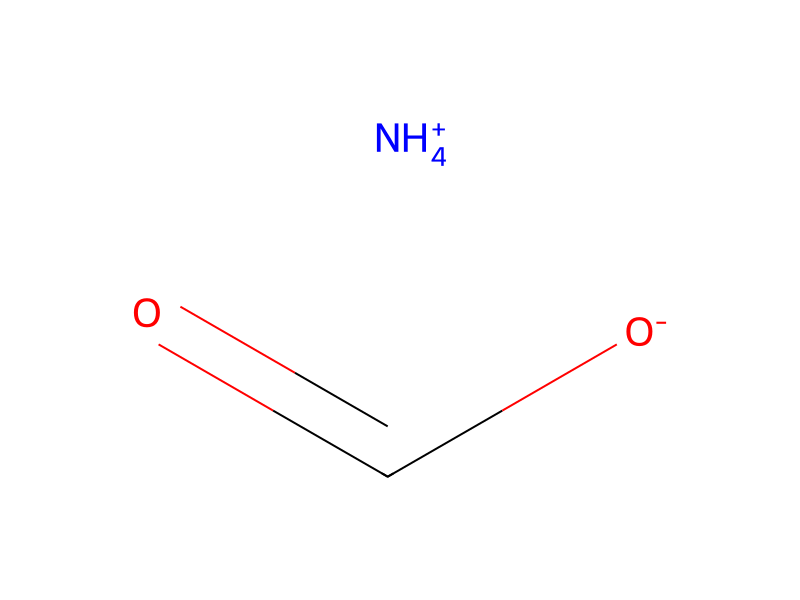
Ammonium formate → 2-(6-Oxo-1,6-dihydro-pyridazin-4-yloxy)-benzamide
Reaction equation

Cl[C:2]1[C:7](=[O:8])[NH:6][N:5]=[CH:4][C:3]=1[O:9][C:10]1[CH:18]=[CH:17][CH:16]=[CH:15][C:11]=1[C:12]([NH2:14])=[O:13].C([O-])=O.[NH4+]>C(O)C.[Pd]>[O:8]=[C:7]1[NH:6][N:5]=[CH:4][C:3]([O:9][C:10]2[CH:18]=[CH:17][CH:16]=[CH:15][C:11]=2[C:12]([NH2:14])=[O:13])=[CH:2]1Participants
5




Conditions
- Temperature
- 25 °C
Procedure
A solution of 2-(5-chloro-6-oxo-1,6-dihydro-pyridazin-4-yloxy)-benzamide (44.5 g, 0.17 mol) in ethanol (100 mL) was treated with 10% palladium on carbon (4.5 g) and ammonium formate (21.1 g, 0.34 mol). The resulting mixture was heated to reflux for 5 min. The reaction was then cooled to 25° C. and filtered. The filtrate was concentrated in vacuo. Silica gel column chromatography afforded 2-(6-oxo-1,6-dihydro-pyridazin-4-yloxy)-benzamide (31.1 g, 80%) as a white solid; ESI-MS 232 [M+H+]; HPLC: >95% (purity). 1H-NMR (300 MHz, CD3OD) δ 7.95-7.96 (d, 1H), 7.78-7.81 (m, 1H), 7.63-7.68 (m, 1H), 7.45-7.50 (m, 1H), 7.29-7.31 (d, 1H), 5.83-5.84 (d, 1H).
Workup
- temperatureThe resulting mixture was heated
- temperatureto reflux for 5 min
- filtrationfiltered
- concentrationThe filtrate was concentrated in vacuo
Sources & evidence
- ORD record
- ord-9dd2a81d8796414381a60058ae77118f
- Source dataset
- uspto-grants-2012_09
- Patent number
- US08258134B2
Reaction notes
Loading…