4-Toluenesulfonyl chloride → 5-fluoro-N-tosylindole
Reaction equation

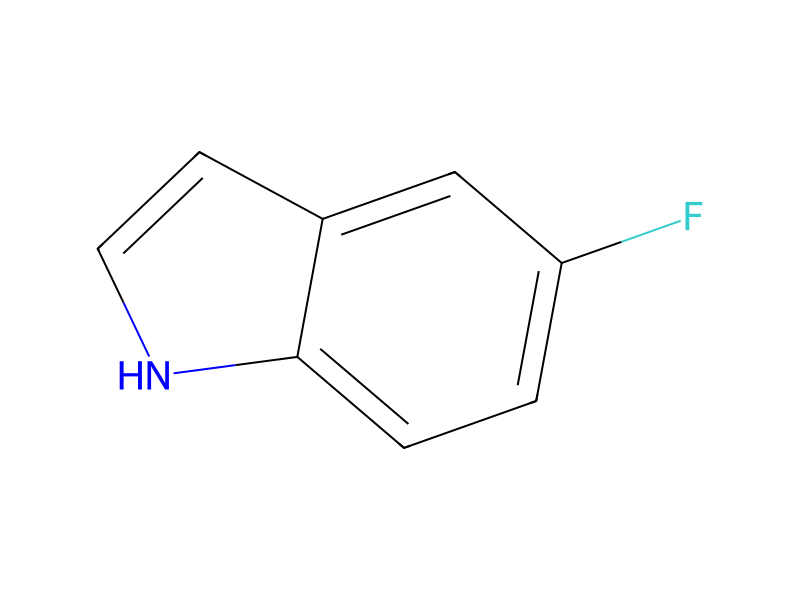
[F:1][C:2]1[CH:3]=[C:4]2[C:8](=[CH:9][CH:10]=1)[NH:7][CH:6]=[CH:5]2.[C:11]1([CH3:21])[CH:16]=[CH:15][C:14]([S:17](Cl)(=[O:19])=[O:18])=[CH:13][CH:12]=1.[OH-].[Na+]>C1(C)C=CC=CC=1.O.S([O-])(O)(=O)=O.C([N+](CCCC)(CCCC)CCCC)CCC>[F:1][C:2]1[CH:3]=[C:4]2[C:8](=[CH:9][CH:10]=1)[N:7]([S:17]([C:14]1[CH:15]=[CH:16][C:11]([CH3:21])=[CH:12][CH:13]=1)(=[O:19])=[O:18])[CH:6]=[CH:5]2Participants
7






Procedure
A solution of 5-fluoroindole (5.4 g) and toluene-4-sulphonyl chloride (9.12 g) in toluene (300 mL) is treated with a cooled solution of sodium hydroxide pellets (23.2 g) in water (200 mL) followed by the tetrabutylammonium hydrogen sulfate catalyst (400 mg). The mixture is stirred at rt for 24 h. The organic phase is separated, washed with water and brine, dried (MgSO4) and concentrated in vacuo to afford 5-fluoro-1-(toluene-4-sulfonyl)-1H-indole (10.7 g, 78%). MS: 290 (M+H)
Workup
- customThe organic phase is separated
- washwashed with water and brine
- dry with materialdried (MgSO4)
- concentrationconcentrated in vacuo
Sources & evidence
- ORD record
- ord-715a3f7af4f2497c920f97a280e35922
- Source dataset
- uspto-grants-2012_09
- Patent number
- US08258130B2
Reaction notes
Loading…