Phosphorus tribromide → 2-{2-[4-(2-Bromo-ethyl)-phenyl]-ethyl}-isoindole-1,3-dione
Reaction equation

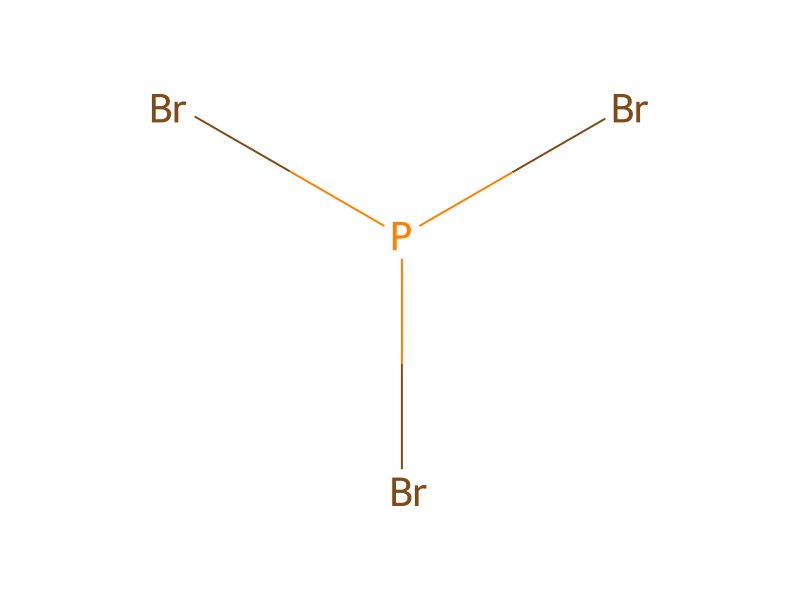
O[CH2:2][CH2:3][C:4]1[CH:9]=[CH:8][C:7]([CH2:10][CH2:11][N:12]2[C:20](=[O:21])[C:19]3[C:14](=[CH:15][CH:16]=[CH:17][CH:18]=3)[C:13]2=[O:22])=[CH:6][CH:5]=1.P(Br)(Br)[Br:24]>C1(C)C=CC=CC=1.C(OCC)(=O)C>[Br:24][CH2:2][CH2:3][C:4]1[CH:9]=[CH:8][C:7]([CH2:10][CH2:11][N:12]2[C:20](=[O:21])[C:19]3[C:14](=[CH:15][CH:16]=[CH:17][CH:18]=3)[C:13]2=[O:22])=[CH:6][CH:5]=1Participants
5




Procedure
A solution of 2-{2-[4-(2-Hydroxy-ethyl)-phenyl]-ethyl}-isoindole-1,3-dione (Preparation 10, 22.37 g) and phosphorus tribromide (8.20 g) in toluene (500 mL) was refluxed for 4 hours. The mixture was allowed to cool to room temperature, diluted with ethyl acetate (300 mL) and carefully quenched with sodium bisulphite/sodium bicarbonate (1:1) in water (100 mL). The organic layer was separated and washed with further sodium bisulphite/sodium bicarbonate (1:1) in water (100 mL), dried over sodium sulphate and concentrated in vacuo. The resulting solid (24.26 g) was triturated with heptane:tert-butyl methyl ether (100 mL; 9:1, by volume) to give the title compound as a pale green solid, 17.94 g.
Workup
- customcarefully quenched with sodium bisulphite/sodium bicarbonate (1:1) in water (100 mL)
- customThe organic layer was separated
- washwashed with further sodium bisulphite/sodium bicarbonate (1:1) in water (100 mL)
- dry with materialdried over sodium sulphate
- concentrationconcentrated in vacuo
- customThe resulting solid (24.26 g) was triturated with heptane
Sources & evidence
- ORD record
- ord-baeeb955d25f413f96b5f85e5816cdba
- Source dataset
- uspto-grants-2012_09
- Patent number
- US08263623B2
Reaction notes
Loading…