Triethylamine → 3-Bromo-4-fluorobenzyl methanesulfonate
Reaction equation

[Br:1][C:2]1[CH:3]=[C:4]([CH:7]=[CH:8][C:9]=1[F:10])[CH2:5][OH:6].[CH3:11][S:12](Cl)(=[O:14])=[O:13].C(N(CC)CC)C>C(Cl)Cl>[CH3:11][S:12]([O:6][CH2:5][C:4]1[CH:7]=[CH:8][C:9]([F:10])=[C:2]([Br:1])[CH:3]=1)(=[O:14])=[O:13]Participants
5
Reactant 3


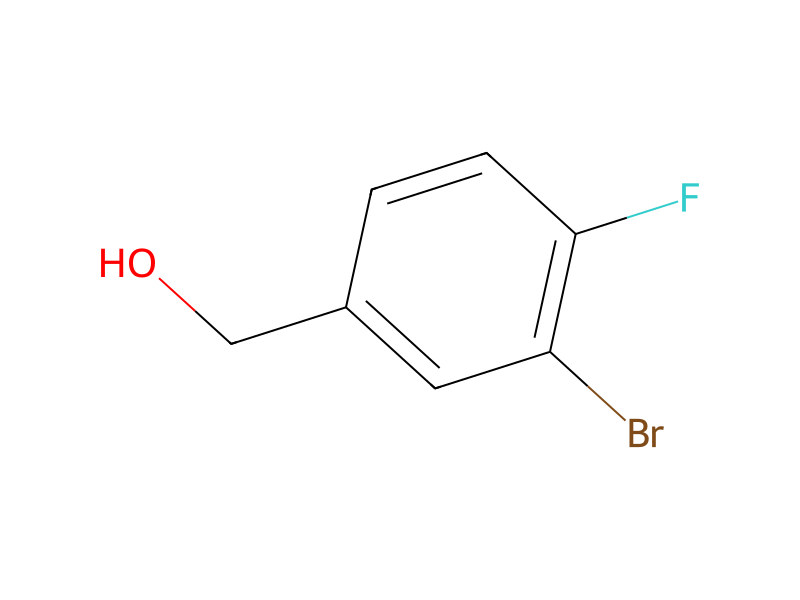
Product 1

Reagents, catalysts & solvents 1

Procedure
A cooled (−20° C.) solution of 3-bromo-4-fluorobenzyl alcohol (Oakwood; 500 mg; 2.44 mmol) and methanesulfonyl chloride (123 μL; 1.59 mmol) in DCM (5 mL) was treated with a solution of triethylamine (255 μL; 1.83 mmol) in DCM (2.5 mL). The reaction mixture was allowed to warm to RT and stirred for 30 minutes before being quenched with water. The phases were separated and the organic phase was washed with HCl (0.1N in water) and brine, dried over MgSO4, filtered and concentrated to dryness affording a residue, which was purified by flash column chromatography), eluting with cyclohexane containing increasing amounts of EtOAc, to give the title compound as a colorless liquid.
Workup
- custombefore being quenched with water
- customThe phases were separated
- washthe organic phase was washed with HCl (0.1N in water) and brine
- dry with materialdried over MgSO4
- filtrationfiltered
- concentrationconcentrated to dryness
- customaffording a residue, which
- customwas purified by flash column chromatography),
- washeluting with cyclohexane containing
- temperatureincreasing amounts of EtOAc
Sources & evidence
- ORD record
- ord-c81fab0741c24032a7d8ac0253f69aaf
- Source dataset
- uspto-grants-2012_09
- Patent number
- US08273769B2
Reaction notes
Loading…