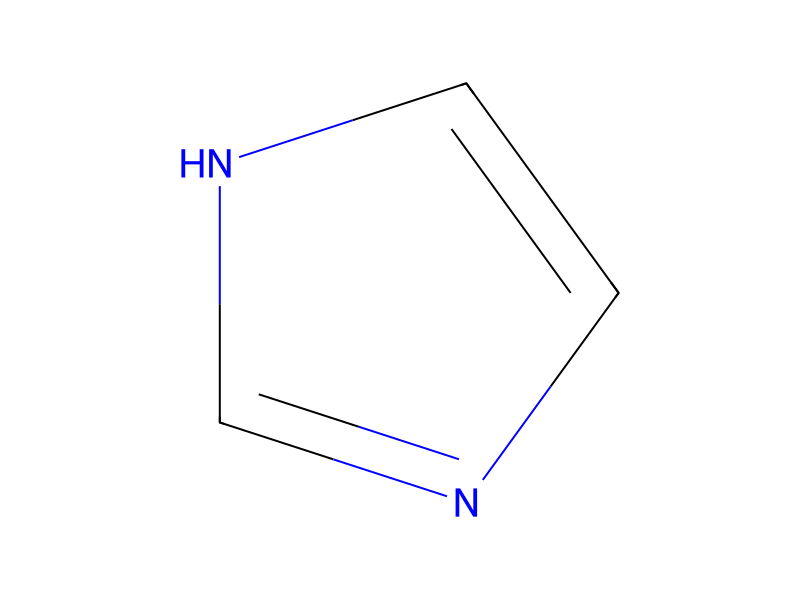
Imidazole → 1-(Dimethylphenylsilyloxy)-2-methylbutane
Reaction equation

[CH3:1][Si:2](Cl)([CH3:9])[C:3]1[CH:8]=[CH:7][CH:6]=[CH:5][CH:4]=1.N1C=CN=C1.[CH3:16][CH:17]([CH2:20][CH3:21])[CH2:18][OH:19]>CCCCCC>[CH3:1][Si:2]([CH3:9])([C:3]1[CH:8]=[CH:7][CH:6]=[CH:5][CH:4]=1)[O:19][CH2:18][CH:17]([CH3:16])[CH2:20][CH3:21]Participants
Reactant 3


Product 1

Reagents, catalysts & solvents 1
Procedure
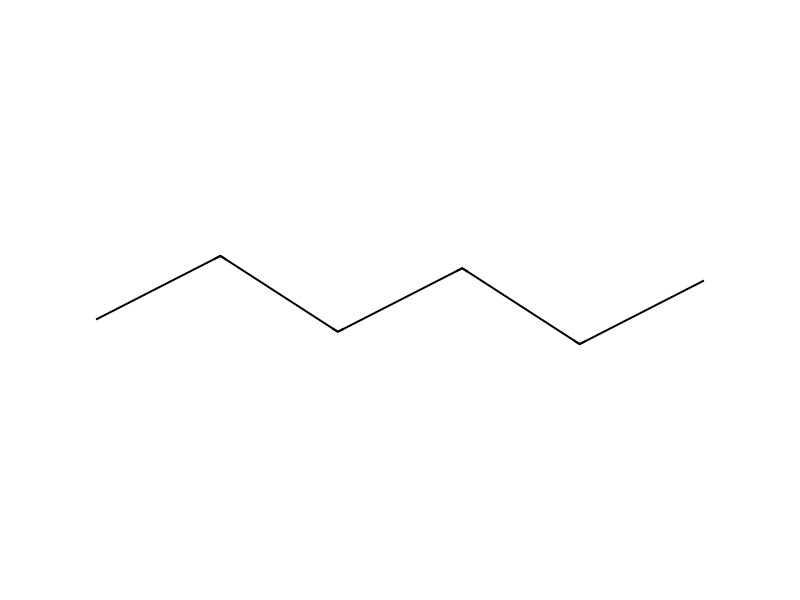
A 250 ml, three-necked flask was fitted with a large magnetic, egg-shaped stir bar, a small, pressure-equalizing addition funnel, a thermocouple connected to a THERM-O-WATCH®, a reflux condenser, and an argon inlet. This apparatus was dried in an oven overnight at 125° C., assembled hot, and allowed to cool to room temperature in a stream of argon. The flask was charged with 28.74 grams (0.168 mole, 1.01 equivalents) of dimethylphenylsilyl chloride, 11.69 grams (0.172 mole, 1.03 equivalents) of imidazole, and 100 mls of hexane. 2-Methyl-1-butanol, 14.69 grams (0.167 mole, 1.00 equivalent), was then added dropwise to the resultant slurry. A very mild exotherm was detected. The total feed time was twelve minutes. A fine white precipitate formed almost immediately. The reaction mixture was heated to 40° C. with a heating mantle, controlled by the THERM-O-WATCH®. A more vigorous exotherm was noted as the heat was applied. The heating mantle was removed. After the exotherm had subsided, the reaction mixture was again heated to 40° C. with the heating mantle. The reaction mixture was stirred overnight at 40° C. The progress of the reaction was monitored by gas chromatography (GC). An aliquot of the clear supernatant was injected into the GC. The sample at 15 hours indicated all the starting material had been consumed, with the formation of a single, higher boiling component. The reaction mixture was allowed to cool to room temperature, then it was transferred to a small, dry, Chemglass pressure filter. The filtrate was collected in a dry, 500 ml flask. The filter cake was rinsed with additional hexane (2×100 ml). The solvent was removed on the rotary evaporator, with the bath temperature set at 40° C.
Workup
- customA 250 ml, three-necked flask was fitted with a large magnetic, egg-shaped stir bar
- additiona small, pressure-equalizing addition funnel
- customThis apparatus was dried in an oven overnight at 125° C.
- waitThe total feed time was twelve minutes
- customA fine white precipitate formed almost immediately
- temperatureThe reaction mixture was heated to 40° C. with a heating mantle
- customThe heating mantle was removed
- temperaturethe reaction mixture was again heated to 40° C. with the heating mantle
- waitThe sample at 15 hours indicated
- customall the starting material had been consumed, with the formation of a single,
- temperatureto cool to room temperature
- customdry
- filtrationChemglass pressure filter
- customThe filtrate was collected in a dry, 500 ml flask
- washThe filter cake was rinsed with additional hexane (2×100 ml)
- customThe solvent was removed on the rotary evaporator, with the bath temperature
- customset at 40° C.
Sources & evidence
- ORD record
- ord-fae24f2daf0c46a7bdca07bf64e90cee
- Source dataset
- uspto-grants-1996_02
- Patent number
- US05493044
Reaction notes
Loading…