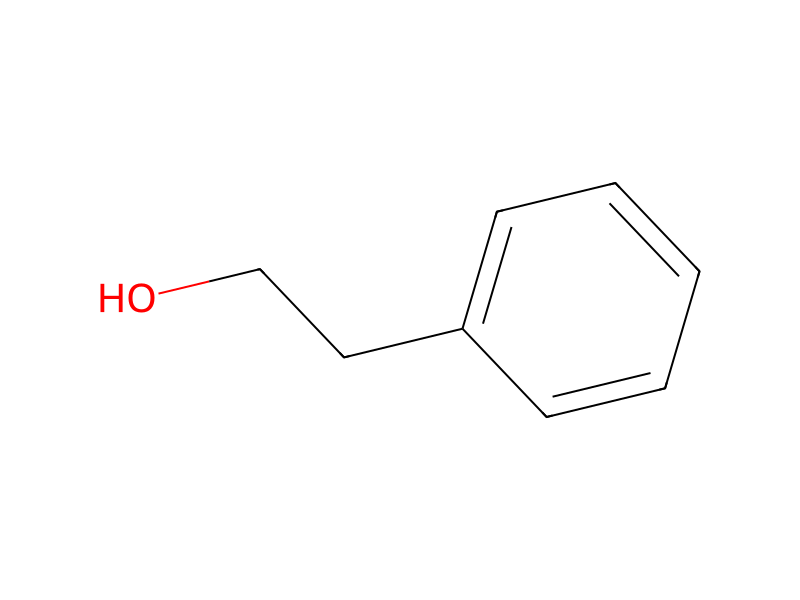
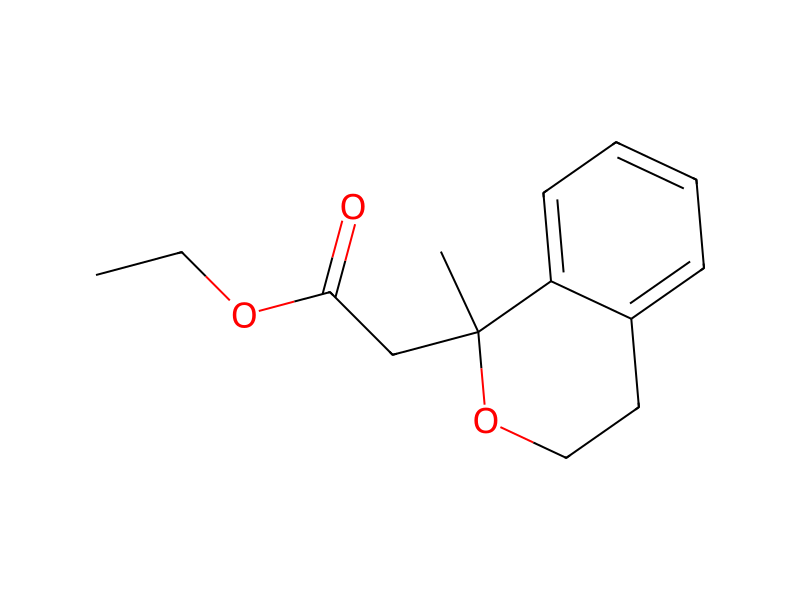
2-Phenylethanol → Ethyl Acetoacetate
Reaction equation

C[O:2][C:3]1[CH:4]=[C:5]([CH:9]=[CH:10][C:11]=1OC)[CH2:6][CH2:7][OH:8].[CH2:14]([O:16][CH:17]([O:20][CH2:21][CH3:22])[CH2:18]N)[CH3:15].[CH2:23]([OH:31])[CH2:24][C:25]1[CH:30]=CC=CC=1>>[C:17]([O:20][CH2:21][CH3:22])(=[O:16])[CH2:18][C:3]([CH3:11])=[O:2].[CH2:14]([O:16][C:23](=[O:31])[CH2:24][C:25]1([CH3:30])[C:4]2[C:5](=[CH:9][CH:10]=[CH:11][CH:3]=2)[CH2:6][CH2:7][O:8]1)[CH3:15]Participants
5


Procedure
In the same manner but replacing 3,4-dimethoxyphenethyl alcohol and aminoacetaldehyde diethyl acetal with equivalent amounts of phenethyl alcohol, Khafagy and Lambooy, cited above, and ethyl acetoacetate, respectively, 1-methyl-1-isochromanacetic acid ethyl ester, νmaxCDCl 3 1720 cm-1, nmr (CDCl 3) δ 1.5, 2.85, is obtained. Likewise, replacement with equivalent amounts of 1-naphthaleneethanol. M. Mousseron and Nguyen-Phuoc-Du. Bull. Soc. Chim. Fr., 91 (1948), and ethyl acetoacetate, gives 1,2-dihydro-4-methyl-4N-naphtho[2,1-c]pyran- 4-acetic acid ethyl ester, νmaxCHCl 3 1720 cm-1, nmr (CDCl 3) δ 1.5. Hydrogen bromide is a preferred acid catalyst for these latter two preparations.
Sources & evidence
- ORD record
- ord-f6f2f0f17d0048dbbb3b0eabc4cacd94
- Source dataset
- uspto-grants-1977_05
- Patent number
- US04021451
Reaction notes
Loading…