Sodium amide → 2-Amino-4-methyl-3-pyridinol
Reaction equation

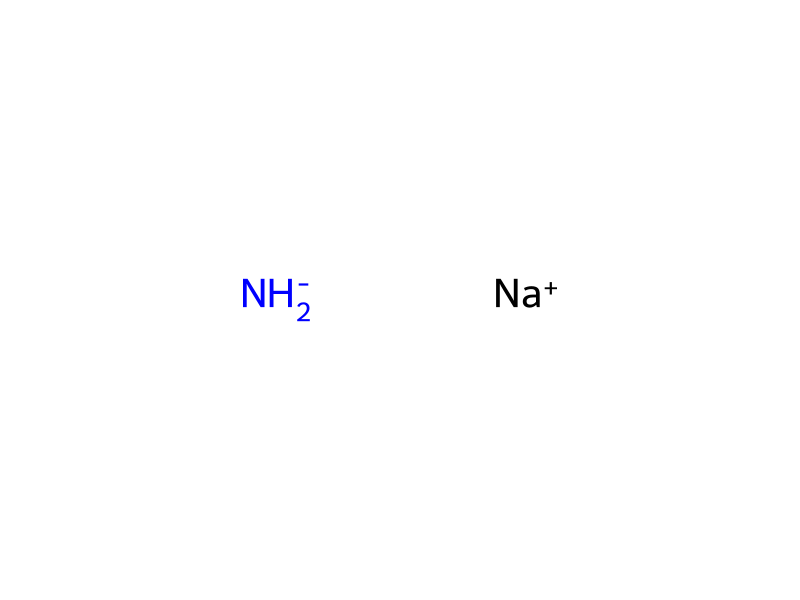
[CH3:1][C:2]1[CH:7]=[CH:6][N:5]=[CH:4][C:3]=1[OH:8].[NH2-:9].[Na+]>>[NH2:9][C:4]1[C:3]([OH:8])=[C:2]([CH3:1])[CH:7]=[CH:6][N:5]=1Participants
3


Procedure
A mixture of 218.0 g of 4-methyl-3-pyridinol and 78.0 g of sodium amide are placed in a pressure vessel and heated at 150° for 6 hours. The vessel is allowed to cool, the solid mass is removed and added portionwise to 1 l. of cold 2-propanol. Subsequently, 20% aqueous acetic acid is added until the pH is 5.5 and the whole concentrated to dryness in vacuo. The residue is extracted thoroughly with chloroform and the chloroform extracts washed with saturated aqueous sodium chloride, dried and concentrated. The residue is fractionally crystallized from ethyl acetate to give 2-amino-4-methyl-3-pyridinol.
Workup
- customare placed in a pressure vessel
- temperatureheated at 150° for 6 hours
- temperatureto cool
- customthe solid mass is removed
- additionadded portionwise to 1 l
- additionSubsequently, 20% aqueous acetic acid is added until the pH is 5.5
- concentrationthe whole concentrated to dryness in vacuo
- extractionThe residue is extracted thoroughly with chloroform
- washthe chloroform extracts washed with saturated aqueous sodium chloride
- customdried
- concentrationconcentrated
- customThe residue is fractionally crystallized from ethyl acetate
Sources & evidence
- ORD record
- ord-e7dbf053be1a4949880a8128c913112a
- Source dataset
- uspto-grants-1977_05
- Patent number
- US04022897
Reaction notes
Loading…